Kochumon Shihab, Arefanian Hossein, Azim Rafaat, Shenouda Steve, Jacob Texy, Abu Khalaf Nermeen, Al-Rashed Fatema, Hasan Amal, Sindhu Sardar, Al-Mulla Fahd, Ahmad Rasheed
Immunology & Microbiology Department, Dasman Diabetes Institute, Kuwait City 15462, Kuwait.
School of Medicine, Royal College of Surgeons in Ireland, Medical University of Bahrain, Adliya 15503, Bahrain.
Biomedicines. 2020 Oct 9;8(10):403. doi: 10.3390/biomedicines8100403.
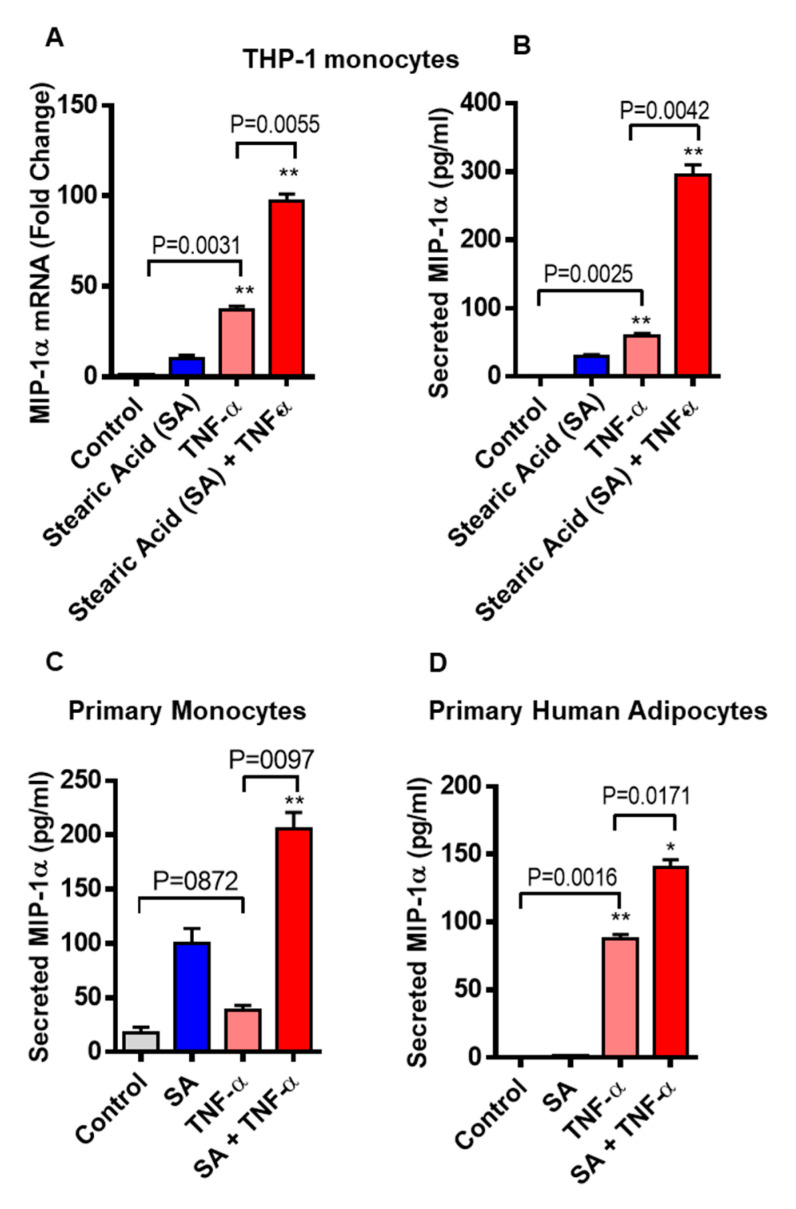
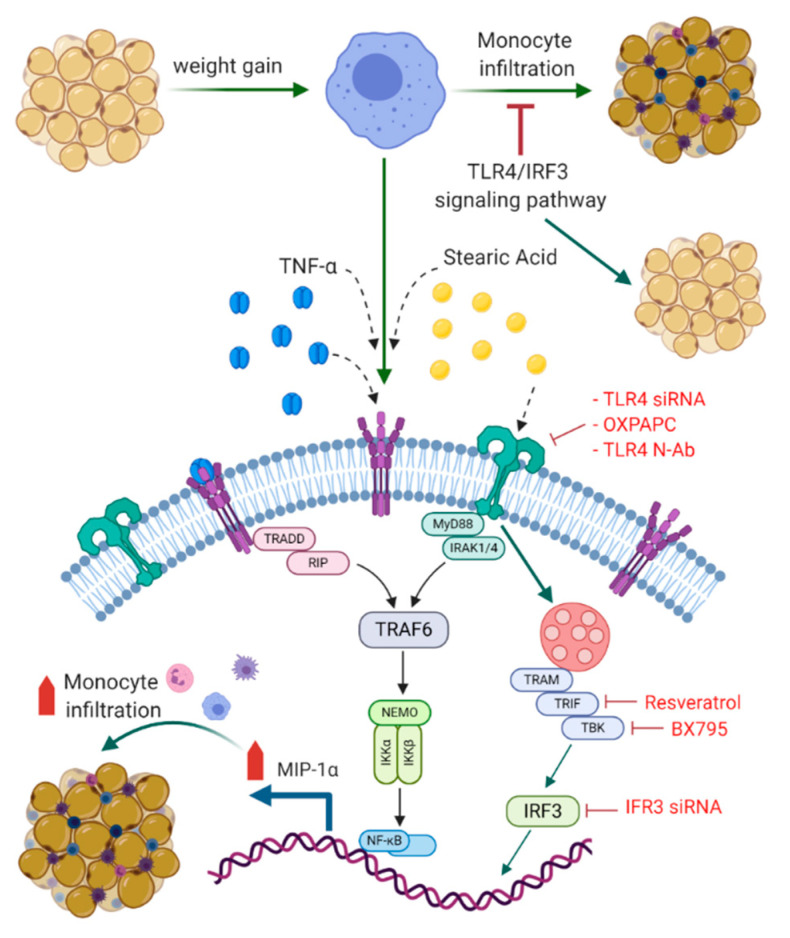
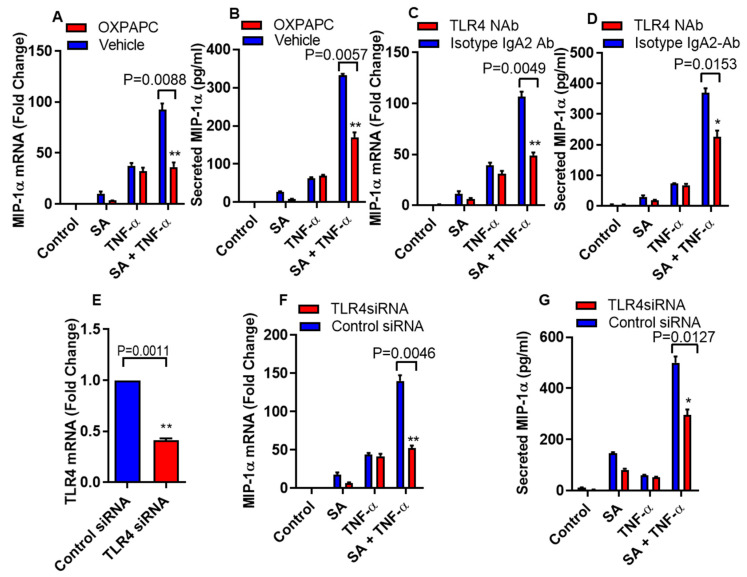
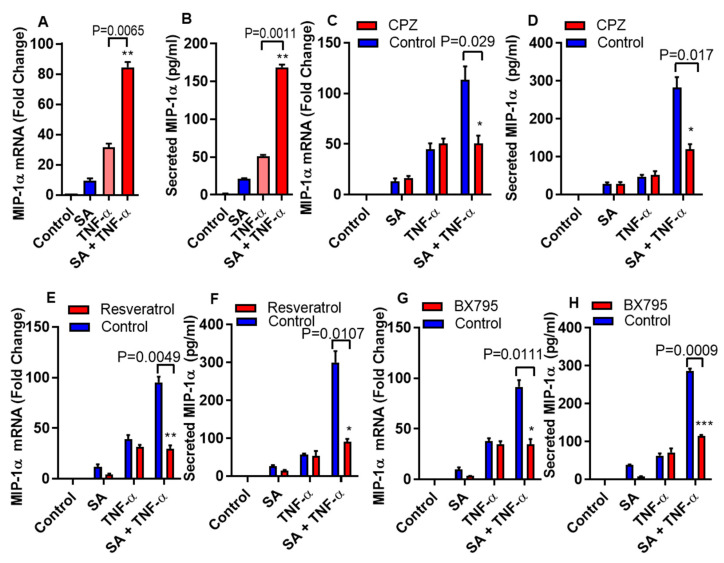
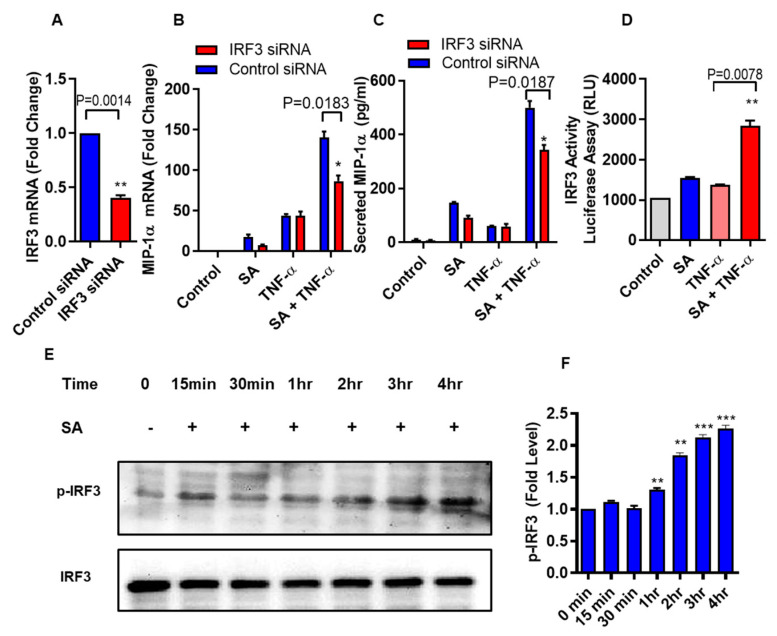
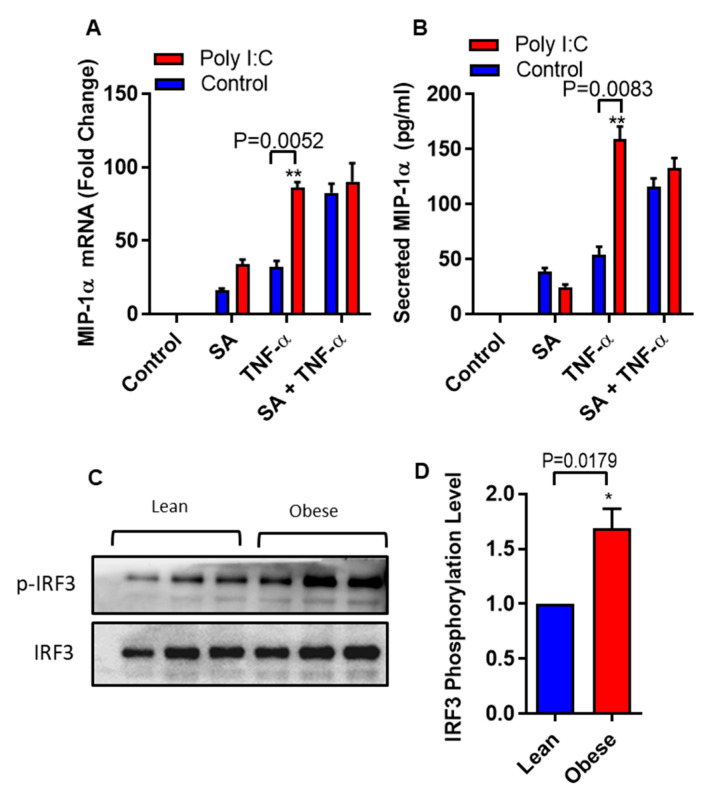
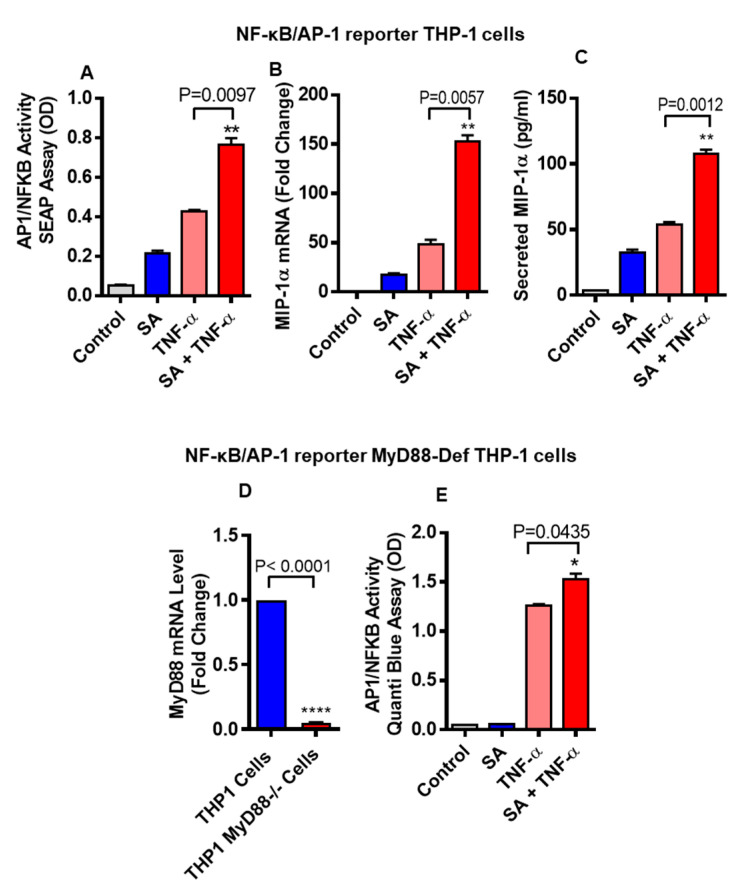
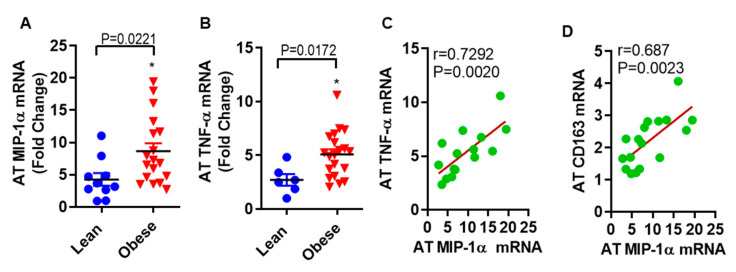
Increased circulatory and adipose tissue expression of macrophage inflammatory protein (MIP)-1α (CC motif chemokine ligand-3/CCL3) and its association with inflammation in the state of obesity is well documented. Since obesity is associated with increases in both stearic acid and tumor necrosis factor α (TNF-α) in circulation, we investigated whether stearic acid and TNF-α together could regulate MIP-1α/CCL3 expression in human monocytic cells, and if so, which signaling pathways were involved in MIP-1α/CCL3 modulation. Monocytic cells were treated with stearic acid and TNF-α resulted in enhanced production of MIP-1α/CCL3 compared to stearic acid or TNF-α alone. To explore the underlying mechanisms, cooperative effect of stearic acid for MIP-α/CCL3 expression was reduced by TLR4 blocking, and unexpectedly we found that the synergistic production of MIP-α/CCL3 in MyD88 knockout (KO) cells was not suppressed. In contrast, this MIP-α/CCL3 expression was attenuated by inhibiting TBK1/IRF3 activity. Cells deficient in IRF3 did not show cooperative effect of stearate/TNF-α on MIP-1α/CCL3 production. Furthermore, activation of IRF3 by polyinosinic-polycytidylic acid (poly I:C) produced a cooperative effect with TNF-α for MIP-1α/CCL3 production that was comparable to stearic acid. Individuals with obesity show high IRF3 expression in monocytes as compared to lean individuals. Furthermore, elevated levels of MIP-1α/CCL3 positively correlate with TNF-α and CD163 in fat tissues from individuals with obesity. Taken together, this study provides a novel model for the pathologic role of stearic acid to produce MIP-1α/CCL3 in the presence of TNF-α associated with obesity settings.
巨噬细胞炎性蛋白(MIP)-1α(CC基序趋化因子配体-3/CCL3)在循环系统和脂肪组织中的表达增加及其与肥胖状态下炎症的关联已有充分记录。由于肥胖与循环系统中硬脂酸和肿瘤坏死因子α(TNF-α)的增加有关,我们研究了硬脂酸和TNF-α是否共同调节人单核细胞中MIP-1α/CCL3的表达,如果是,哪些信号通路参与了MIP-1α/CCL3的调节。与单独使用硬脂酸或TNF-α相比,用硬脂酸和TNF-α处理单核细胞会导致MIP-1α/CCL3的产生增加。为了探究潜在机制,TLR4阻断降低了硬脂酸对MIP-α/CCL3表达的协同作用,出乎意料的是,我们发现MyD88基因敲除(KO)细胞中MIP-α/CCL3的协同产生并未受到抑制。相反,抑制TBK1/IRF3活性会减弱这种MIP-α/CCL3的表达。缺乏IRF3的细胞未显示硬脂酸盐/TNF-α对MIP-1α/CCL3产生的协同作用。此外,聚肌苷酸-聚胞苷酸(poly I:C)激活IRF3产生了与TNF-α对MIP-1α/CCL3产生的协同作用,这与硬脂酸相当。与瘦人相比,肥胖个体的单核细胞中IRF3表达较高。此外,肥胖个体脂肪组织中MIP-1α/CCL3水平的升高与TNF-α和CD163呈正相关。综上所述,本研究提供了一个新的模型,说明了在与肥胖相关的TNF-α存在的情况下,硬脂酸产生MIP-1α/CCL3的病理作用。