Ma Jie, Duan Yehui, Li Rui, Liang Xiaoxiao, Li Tiejun, Huang Xingguo, Yin Yulong, Yin Jie
Animal Nutritional Genome and Germplasm Innovation Research Center, College of Animal Science and Technology, Hunan Agricultural University, Changsha, 410128, China.
Institute of Subtropical Agriculture, Chinese Academy of Sciences, Changsha, 410125, China.
Anim Nutr. 2022 Jan 29;9:345-356. doi: 10.1016/j.aninu.2021.10.012. eCollection 2022 Jun.
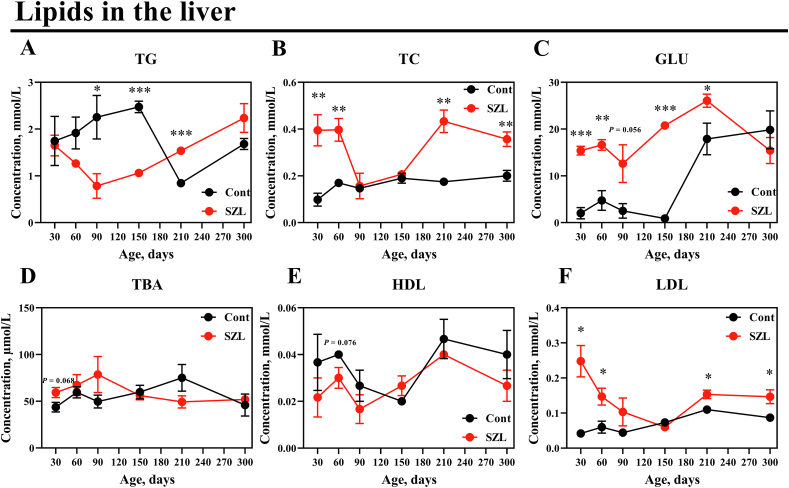
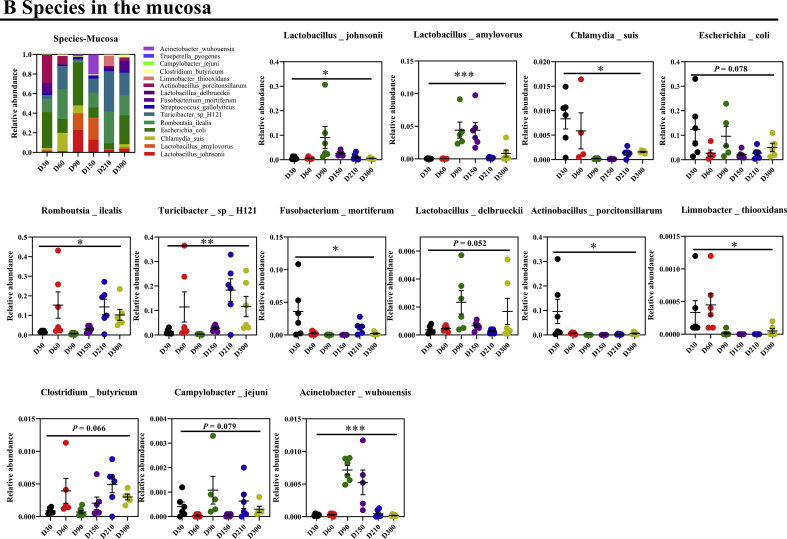
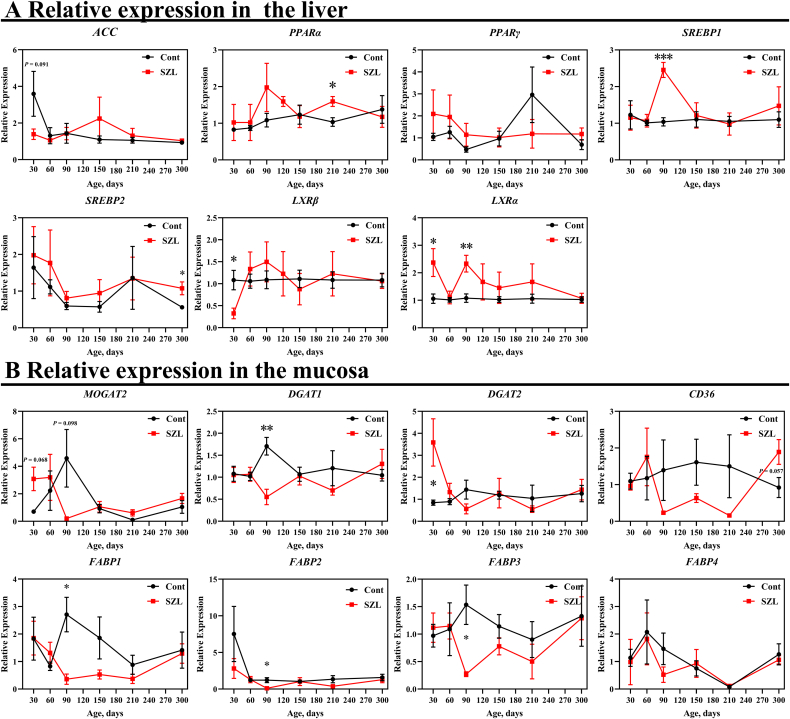
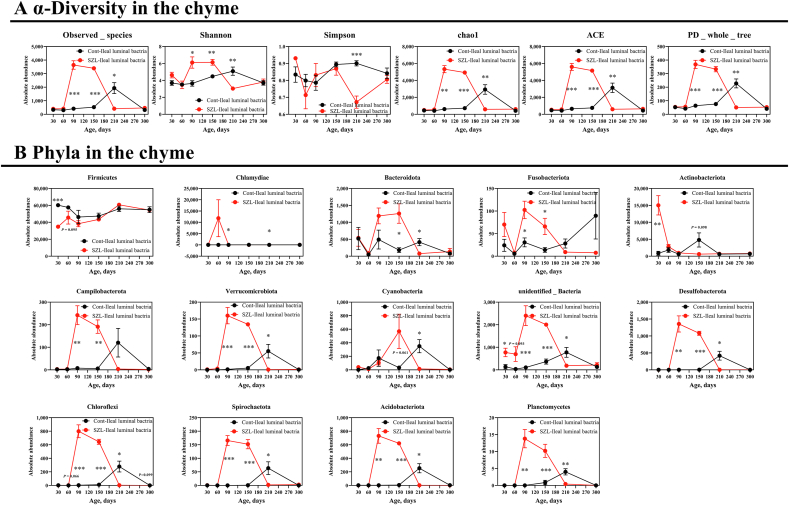
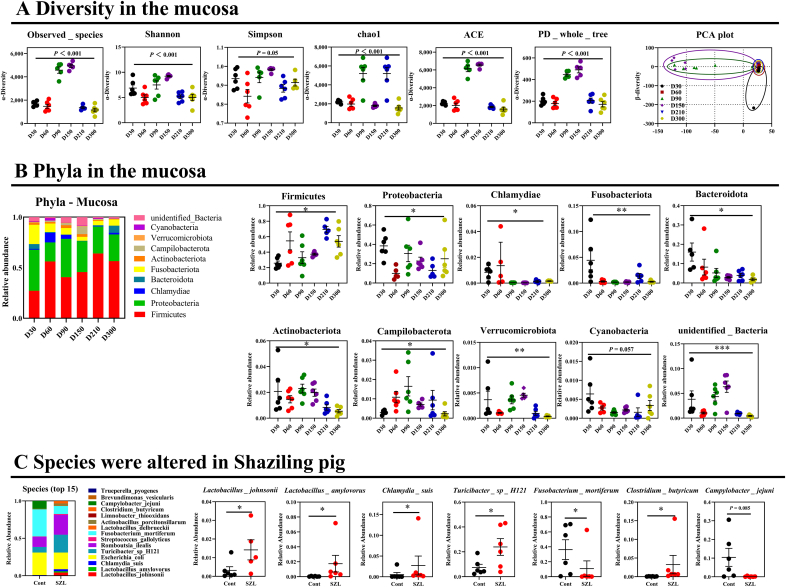
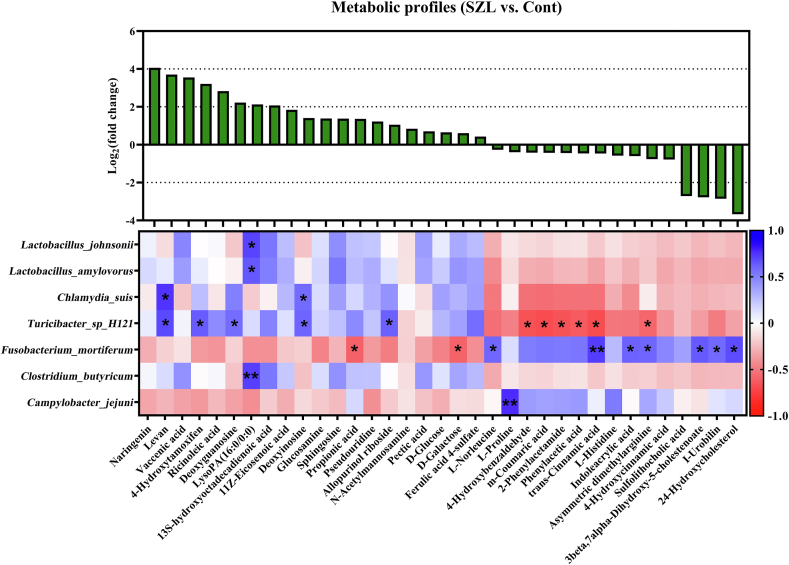
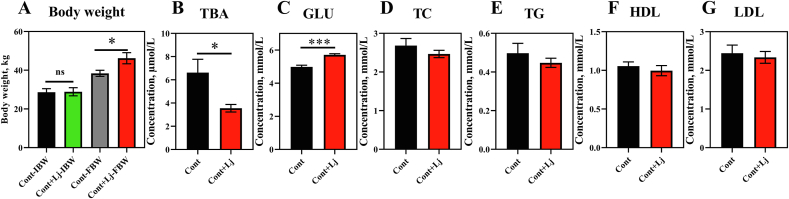
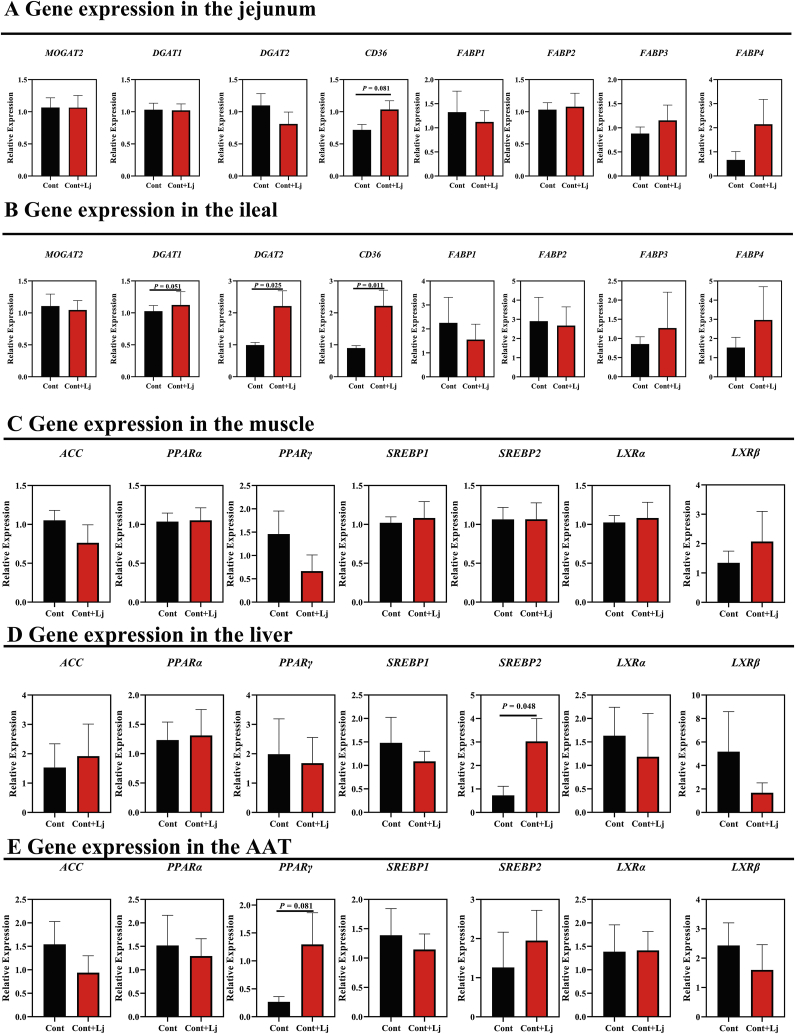
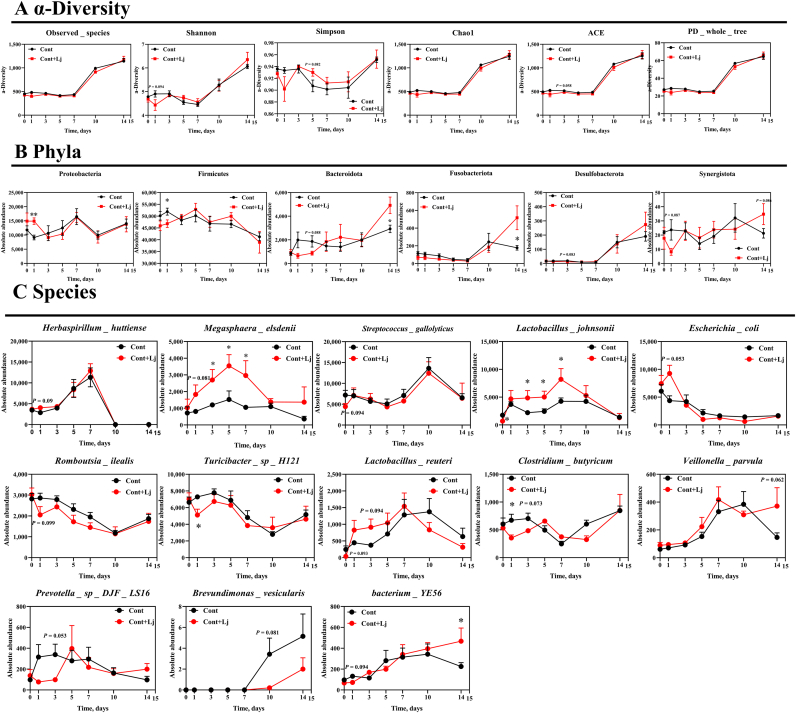
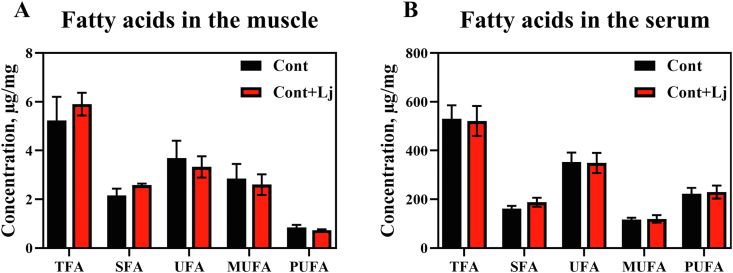
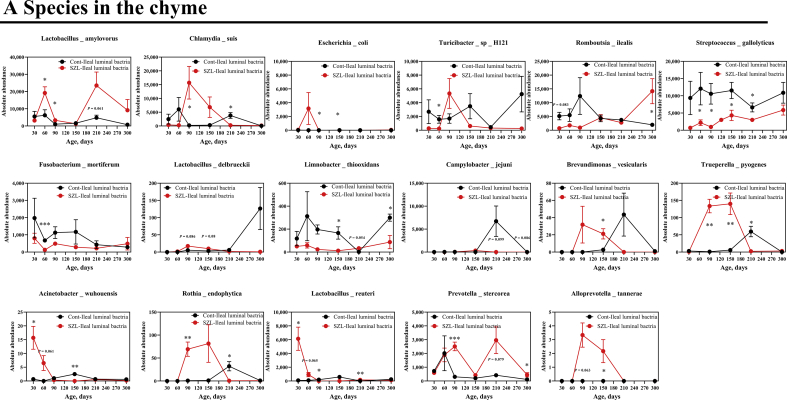
Shaziling pig, a Chinese indigenous breed, has been classified as a fatty pig model. However, the gut microbial development and role in lipid metabolism in Shaziling pigs has been rarely reported. Here, we compared the lipid metabolic and microbial profiles at 30, 60, 90, 150, 210, and 300 d of age between Shaziling and Yorkshire pigs. Predictably, there were marked differences in the liver lipids (i.e., cholesterol, glucose, and low-density lipoprotein) and the lipid related expressions (i.e., , /, /, and -) between Shaziling and Yorkshire pigs. Bacteria sequencing in the ileal digesta and mucosa showed that Shaziling pigs had a higher α-diversity and higher abundances of probiotics, such as , , and . Thirty-five differentiated metabolites were further identified in the mucosa between Shaziling and Yorkshire pigs, which were enriched in the carbohydrate, protein, glucose and amino acid metabolism and bile acid biosynthesis. Furthermore, 7 differentiated microbial species were markedly correlated with metabolites, indicating the role of gut microbiota in the host metabolism. Next, the role of differentiated in lipid metabolism was validated in Duroc × Landrace × Yorkshire (DLY) pigs and the results showed that mono-colonization promoted lipid deposition and metabolism by altering gut microbiota (i.e., and ) and // gene expressions. In conclusion, Shaziling pigs exhibited different metabolic and microbial profiles compared with Yorkshire pigs, which might have contributed to the diverse metabolic phenotypes, and the significant enrichment of in Shaziling pigs promoted lipid metabolism and obesity of DLY pigs, which provided a novel idea to improve the fat content of lean pigs.
沙子岭猪是中国本土品种,已被归类为脂肪型猪模型。然而,关于沙子岭猪肠道微生物的发育及其在脂质代谢中的作用鲜有报道。在此,我们比较了沙子岭猪和约克夏猪在30、60、90、150、210和300日龄时的脂质代谢和微生物谱。不出所料,沙子岭猪和约克夏猪在肝脏脂质(即胆固醇、葡萄糖和低密度脂蛋白)以及脂质相关表达(即 、/、/和-)方面存在显著差异。回肠食糜和黏膜中的细菌测序表明,沙子岭猪具有更高的α多样性和更高丰度的益生菌,如 、 和 。进一步鉴定出沙子岭猪和约克夏猪黏膜之间有35种差异代谢物,这些代谢物在碳水化合物、蛋白质、葡萄糖和氨基酸代谢以及胆汁酸生物合成中富集。此外,7种差异微生物物种与代谢物显著相关,表明肠道微生物群在宿主代谢中的作用。接下来,在杜洛克×长白×约克夏(DLY)猪中验证了差异 的在脂质代谢中的作用,结果表明 单一定植通过改变肠道微生物群(即 和 )以及// 基因表达促进了脂质沉积和代谢。总之,与约克夏猪相比,沙子岭猪表现出不同的代谢和微生物谱,这可能导致了不同的代谢表型,并且沙子岭猪中 的显著富集促进了DLY猪的脂质代谢和肥胖,这为提高瘦肉型猪的脂肪含量提供了新思路。