Department of Internal Medicine, Genetic Laboratories, Erasmus MC, University Medical Center, Rotterdam, The Netherlands.
Hebrew SeniorLife, Beth Israel Deaconess Medical Center. Harvard Medical School, Hinda and Arthur Marcus Institute for Aging Research, Boston, Massachusetts, USA.
Ann Rheum Dis. 2021 Mar;80(3):367-375. doi: 10.1136/annrheumdis-2020-217834. Epub 2020 Oct 14.
Despite recent advances in the understanding of the genetic architecture of osteoarthritis (OA), only two genetic loci have been identified for OA of the hand, in part explained by the complexity of the different hand joints and heterogeneity of OA pathology.
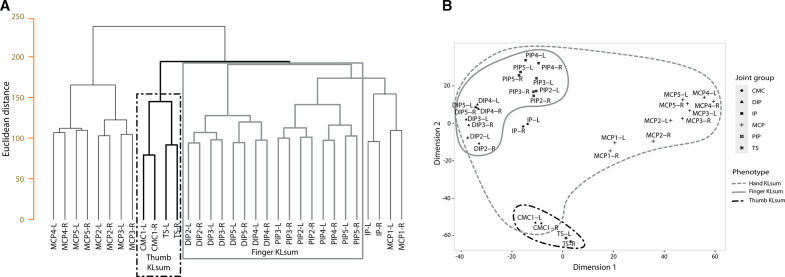
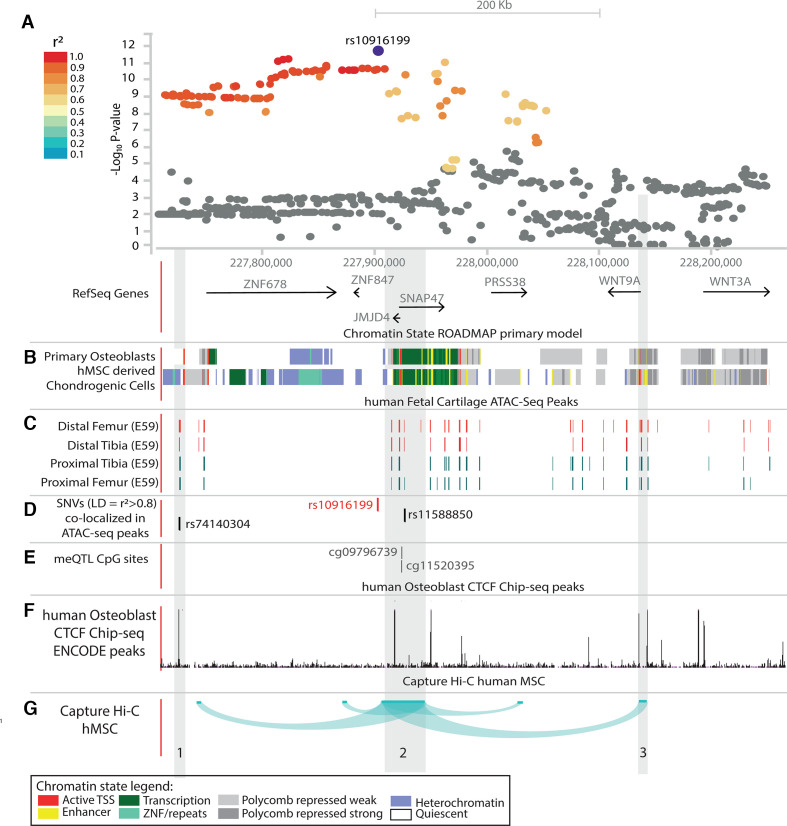
We used data from the Rotterdam Study (RSI, RSII and RSIII) to create three hand OA phenotypes based on clustering patterns of radiographic OA severity to increase power in our modest discovery genome-wide association studies in the RS (n=8700), and sought replication in an independent cohort, the Framingham Heart Study (n=1203). We used multiple approaches that leverage different levels of information and functional data to further investigate the underlying biological mechanisms and candidate genes for replicated loci. We also attempted to replicate known OA loci at other joint sites, including the hips and knees.
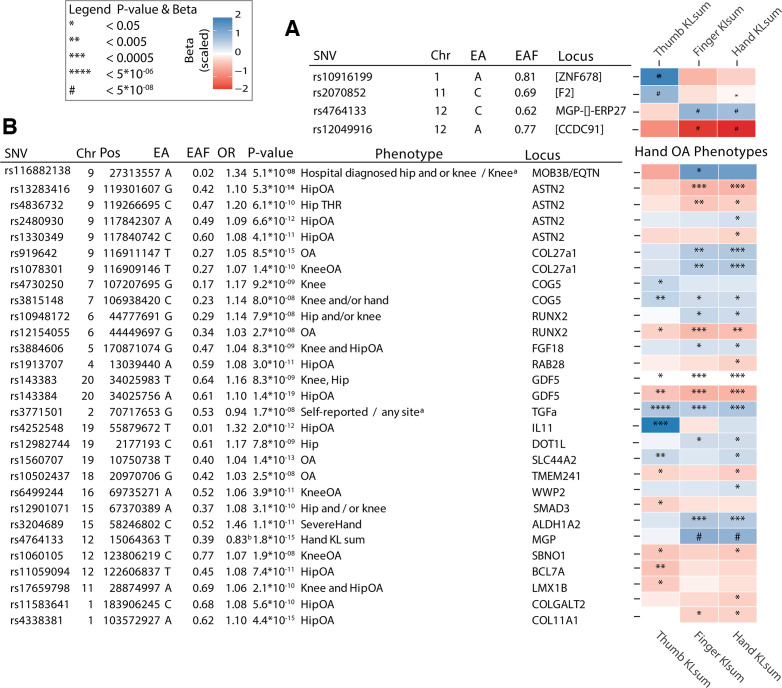
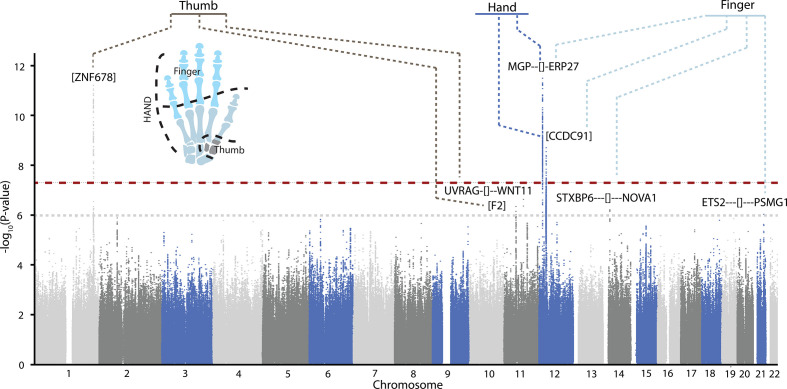
We found two novel genome-wide significant loci for OA in the thumb joints. We identified as a possible novel causal gene involved in OA pathogenesis. Furthermore, several previously identified genetic loci for OA seem to confer risk for OA across multiple joints: , , , , and loci.
We identified a robust novel genetic locus for hand OA on chromosome 1, of which is the most likely causal gene. In addition, multiple genetic loci were identified to be associated with OA across multiple joints. Our study confirms the potential for novel insight into the genetic architecture of OA by using biologically meaningful stratified phenotypes.
尽管近年来人们对骨关节炎(OA)的遗传结构有了更多的了解,但仅发现了两个与手部 OA 相关的遗传位点,这部分可以通过不同手部关节的复杂性和 OA 病理的异质性来解释。
我们使用来自鹿特丹研究(RSI、RSII 和 RSIII)的数据,根据放射学 OA 严重程度的聚类模式创建了三种手部 OA 表型,以增加我们在 RS 中进行适度的全基因组关联研究的效力(n=8700),并在独立队列弗雷明汉心脏研究(n=1203)中寻求复制。我们使用了多种方法,利用不同层次的信息和功能数据来进一步研究潜在的生物学机制和复制位点的候选基因。我们还试图复制其他关节部位(包括臀部和膝盖)的已知 OA 位点。
我们发现了两个新的与拇指关节 OA 相关的全基因组显著位点。我们确定 可能是参与 OA 发病机制的一个新的候选基因。此外,几个先前确定的与 OA 相关的遗传位点似乎在多个关节中都存在 OA 风险: 、 、 、 、 和 位点。
我们在 1 号染色体上确定了一个稳健的手部 OA 新遗传位点,其中 最有可能是其致病基因。此外,还确定了多个与多个关节 OA 相关的遗传位点。我们的研究通过使用具有生物学意义的分层表型,证实了在 OA 遗传结构方面有新的深入了解的潜力。