College of Agronomy, Northwest A & F University, Yangling, 712100, Shaanxi, People's Republic of China.
National Yangling Agricultural Biotechnology and Breeding Center, Yangling, 712100, Shaanxi, People's Republic of China.
Sci Rep. 2020 Oct 14;10(1):17250. doi: 10.1038/s41598-020-74417-x.
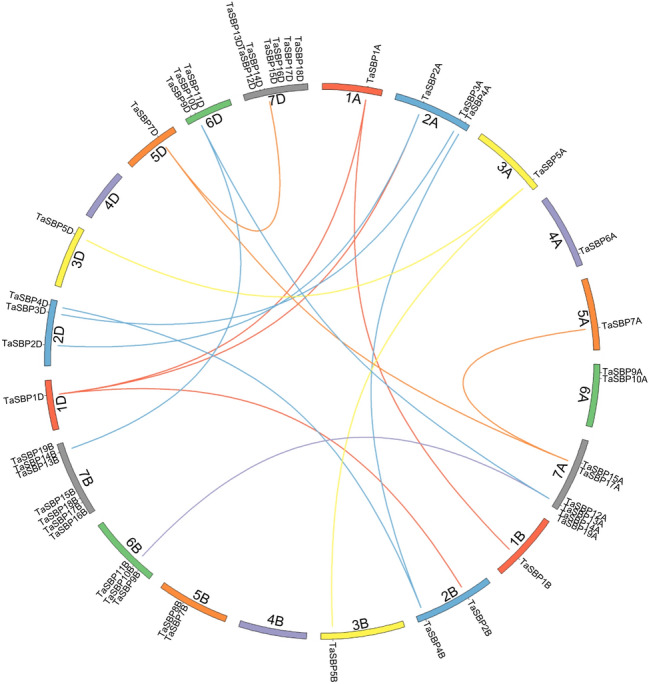
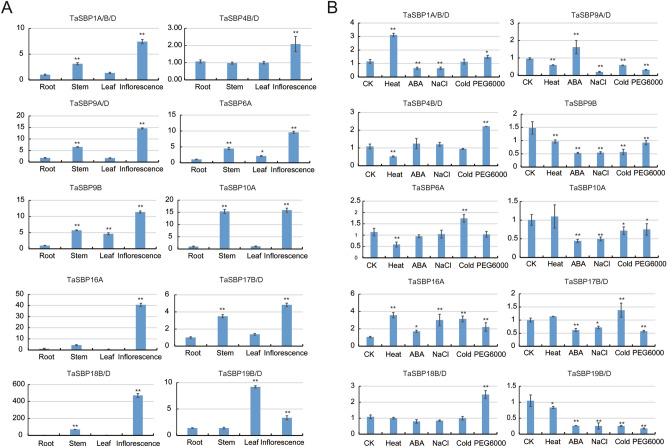
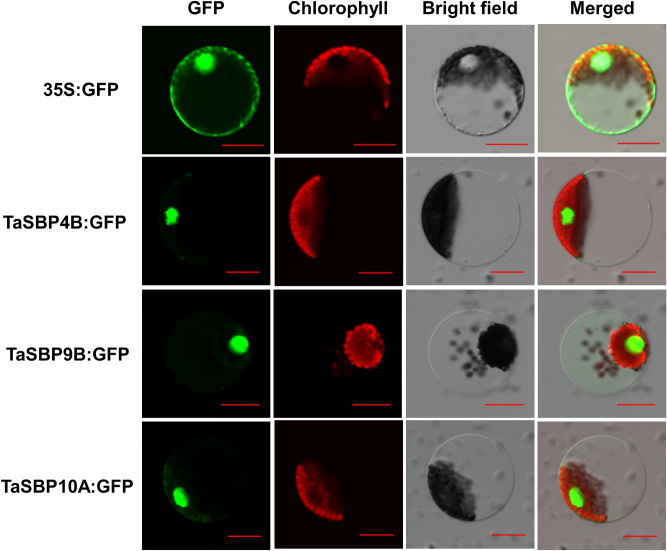
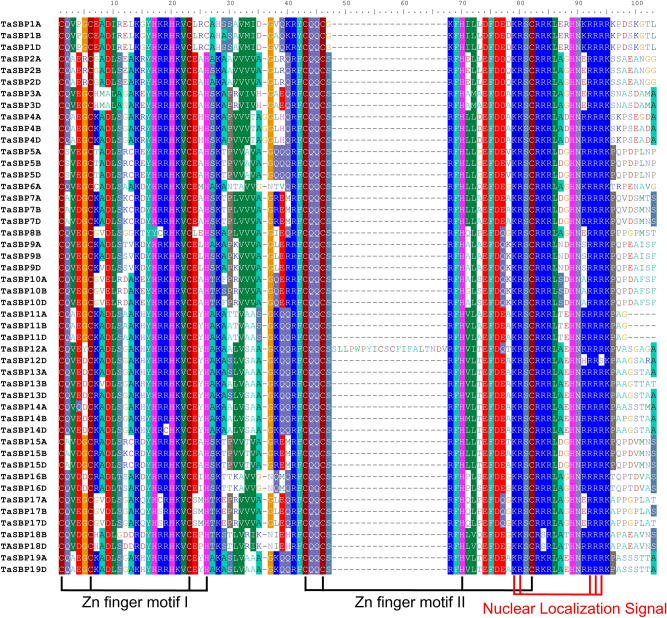
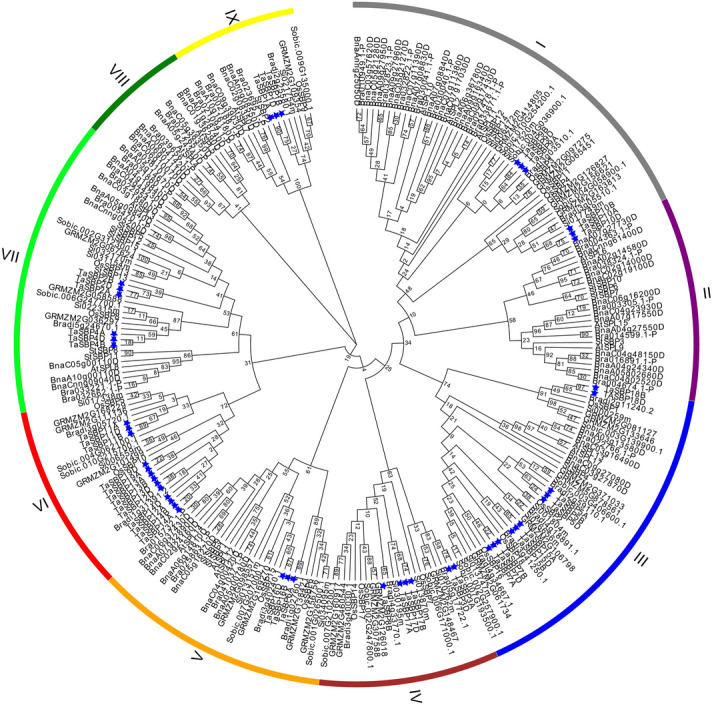
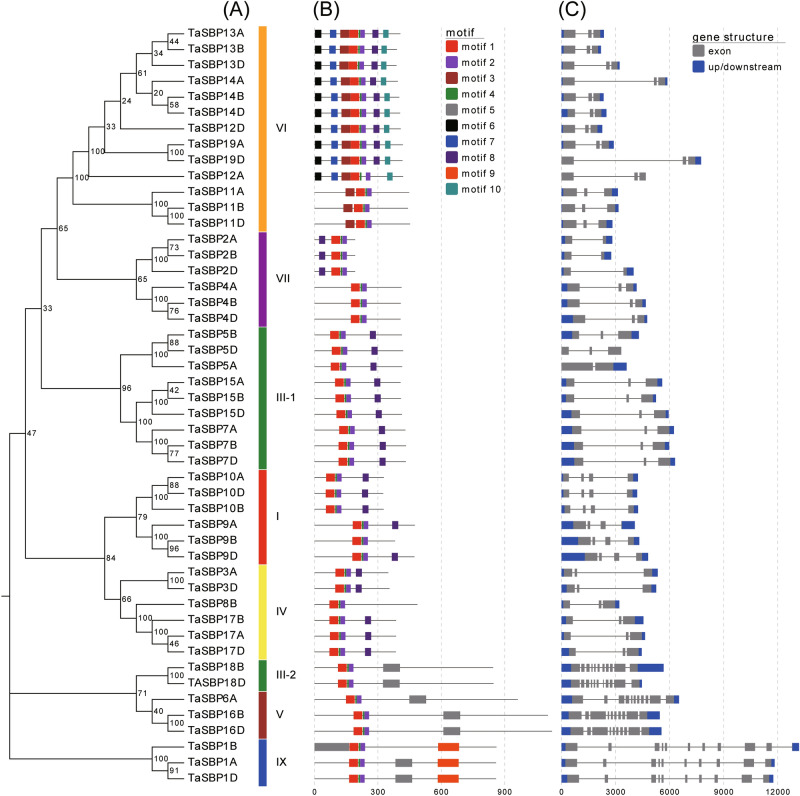
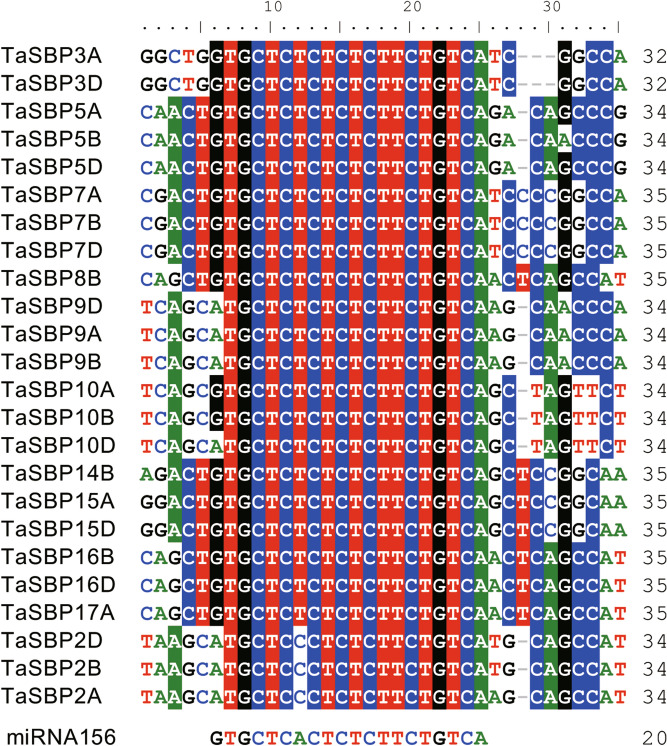
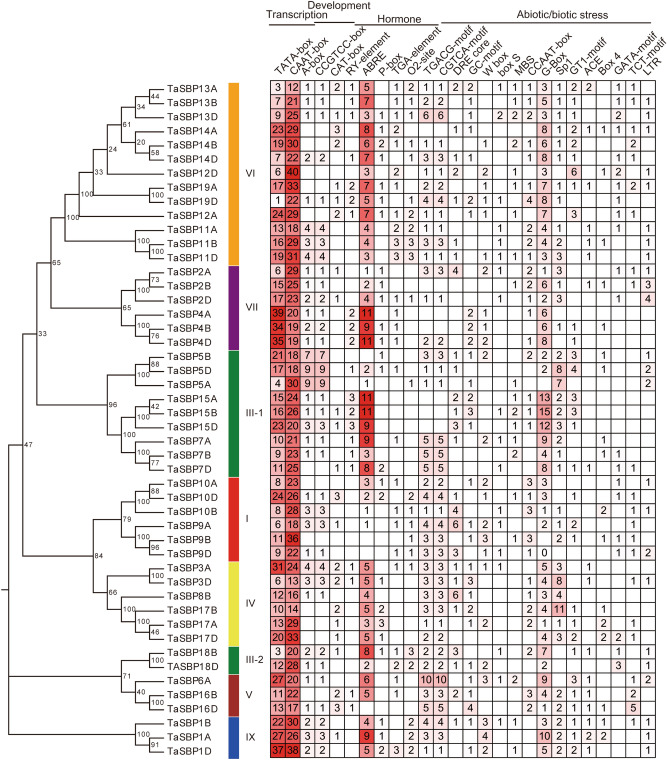
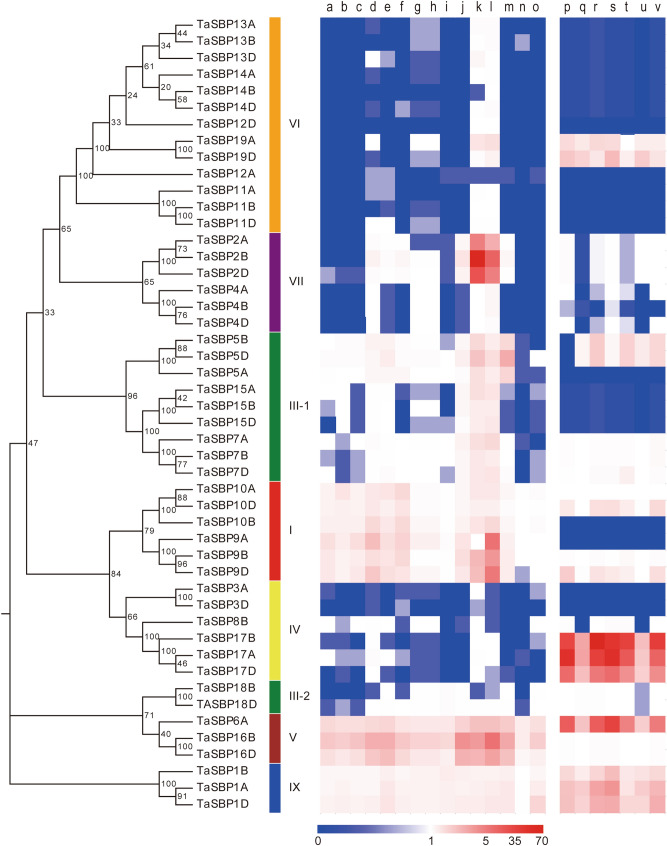
SQUAMOSA promoter-binding protein (SBP)-box genes encode a family of plant-specific transcription factors that play roles in plant growth and development. The characteristics of SBP-box genes in rice (Oryza sativa) and Arabidopsis have been reported, but their potential roles in wheat (Triticum aestivum) are not fully understood. In this study, 48 SBP-box genes (TaSBPs) were identified; they were located in all wheat chromosomes except for 4B and 4D. Six TaSBPs were identified as tandem duplication genes that formed three tandem duplication pairs, while 22 were segmentally duplicated genes that formed 16 segmental duplication pairs. Subcellular localization prediction showed TaSBPs were located in nucleus. Among the 48 TaSBPs, 24 were predicted to be putative targets of TamiR156. Phylogenetic analysis showed that TaSBPs, AtSBPs, and OsSBPs that shared similar functions were clustered into the same subgroups. The phylogenetic relationships between the TaSBPs were supported by the identification of highly conserved motifs and gene structures. Four types of cis-elements--transcription-related, development-related, hormone-related, and abiotic stress-related elements--were found in the TaSBP promoters. Expression profiles indicated most TaSBPs participate in flower development and abiotic stress responses. This study establishes a foundation for further investigation of TaSBP genes and provides novel insights into their biological functions.
SQUAMOSA 启动子结合蛋白(SBP)-框基因编码一类植物特异性转录因子,在植物生长发育中发挥作用。已报道了水稻(Oryza sativa)和拟南芥中 SBP-box 基因的特征,但它们在小麦(Triticum aestivum)中的潜在作用尚未完全了解。在这项研究中,鉴定了 48 个 SBP-box 基因(TaSBPs);它们位于除 4B 和 4D 之外的所有小麦染色体上。鉴定了 6 个 TaSBPs 为串联重复基因,形成了三个串联重复对,而 22 个是片段重复基因,形成了 16 个片段重复对。亚细胞定位预测表明 TaSBPs 位于细胞核中。在 48 个 TaSBPs 中,有 24 个被预测为 TamiR156 的潜在靶标。系统发育分析表明,具有相似功能的 TaSBPs、AtSBPs 和 OsSBPs 聚类到同一亚组中。通过鉴定高度保守的基序和基因结构,支持了 TaSBPs 之间的系统发育关系。在 TaSBP 启动子中发现了四种顺式元件——转录相关、发育相关、激素相关和非生物胁迫相关元件。表达谱表明,大多数 TaSBPs 参与花发育和非生物胁迫反应。本研究为进一步研究 TaSBP 基因奠定了基础,并为它们的生物学功能提供了新的见解。