Laboratory of Structural Biophysics and Mechanobiology, The Rockefeller University, New York, NY 10065, USA.
Laboratory of Macromolecular Interactions, Cell Biology and Physiology Center, Division of Intramural Research, National Heart Lung and Blood Institute, NIH, Bethesda, MD 20892, USA.
Dev Cell. 2020 Nov 23;55(4):468-482.e7. doi: 10.1016/j.devcel.2020.09.022. Epub 2020 Oct 14.
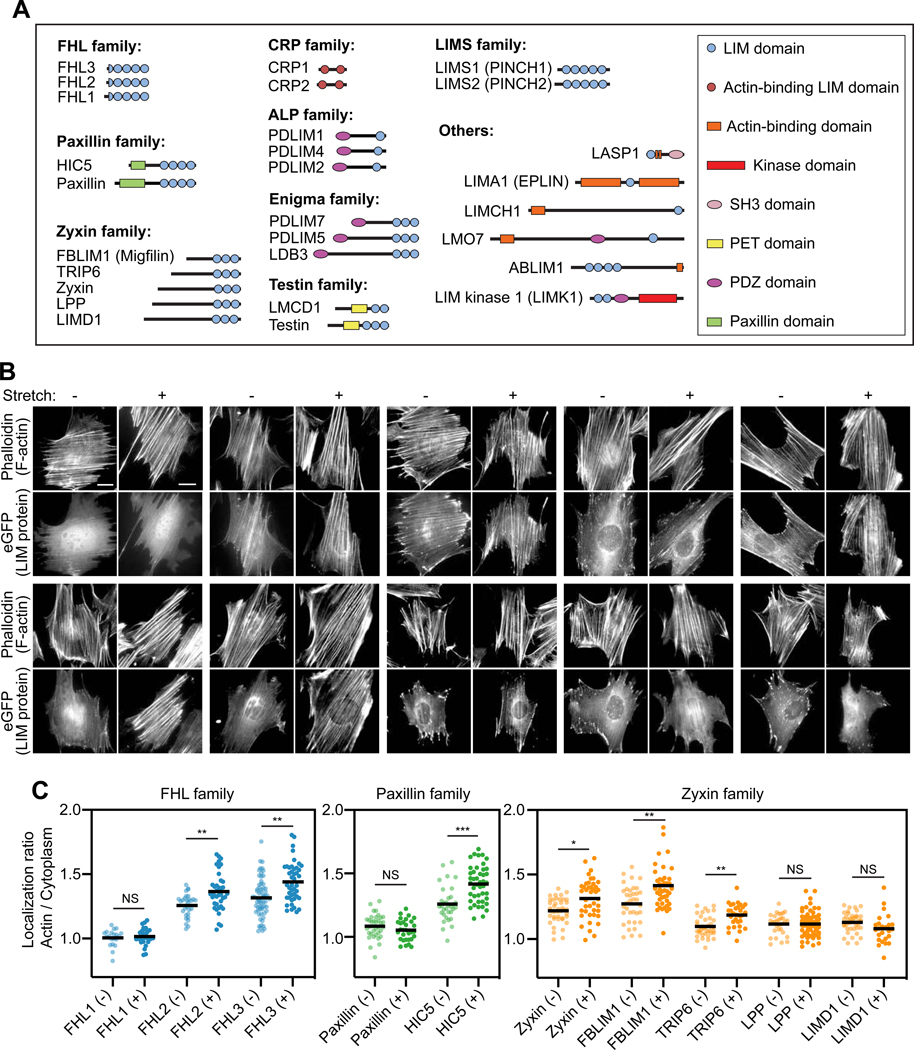
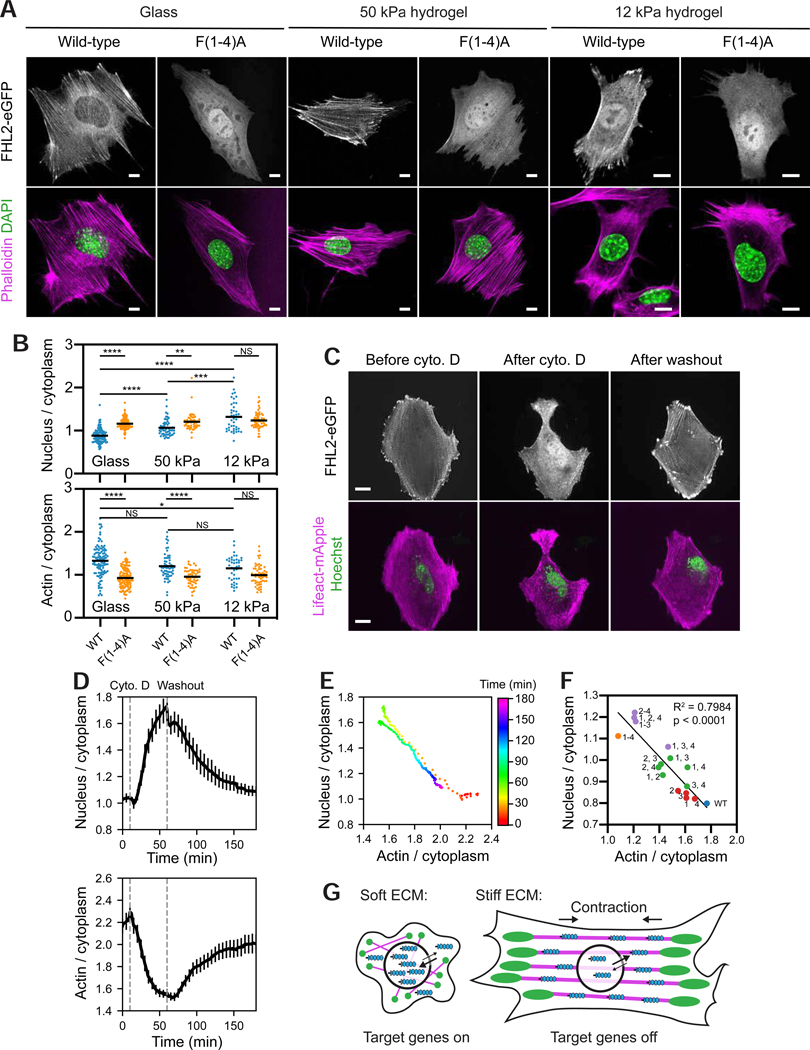
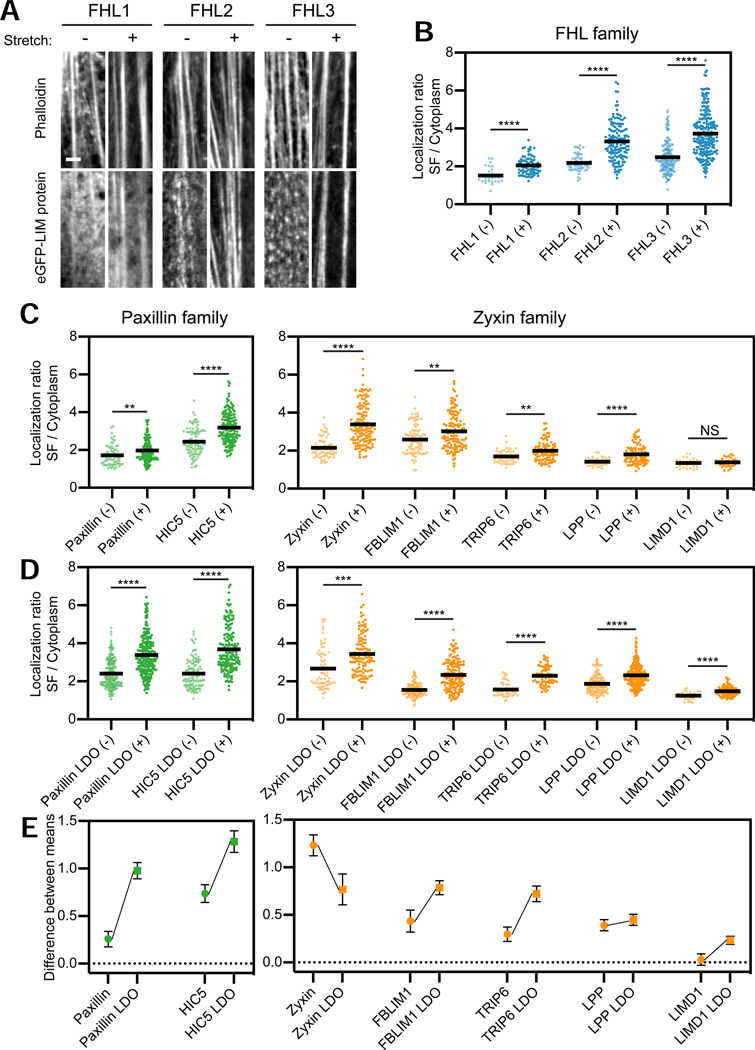
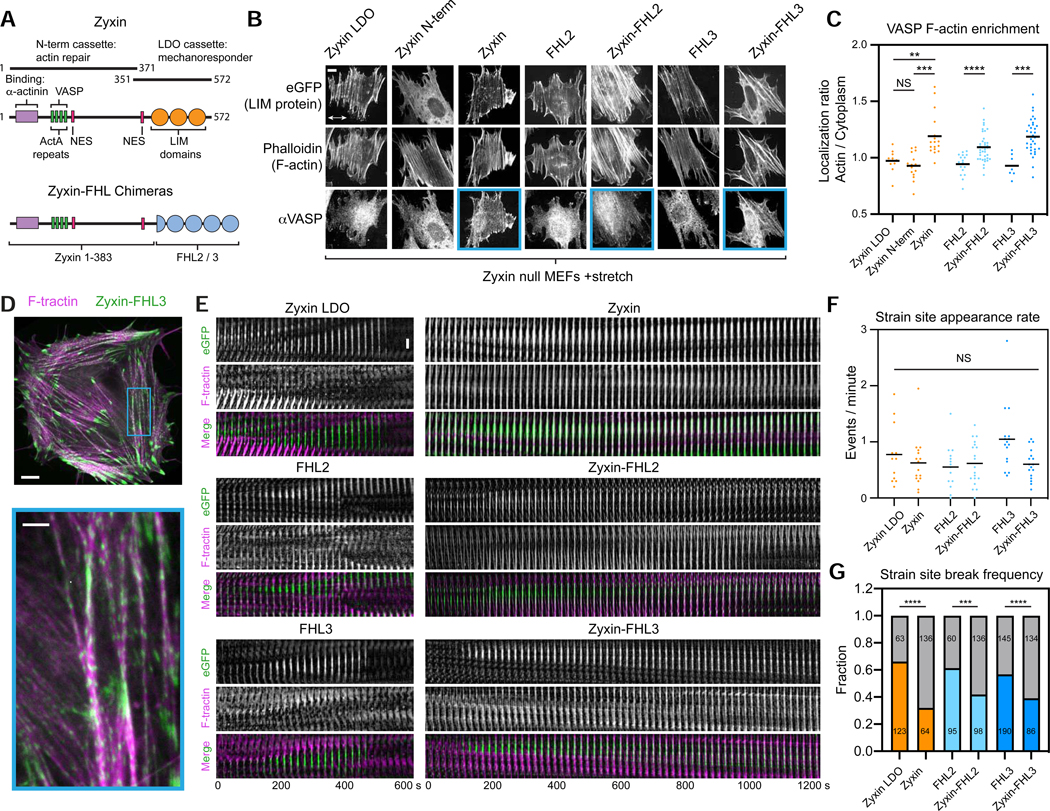
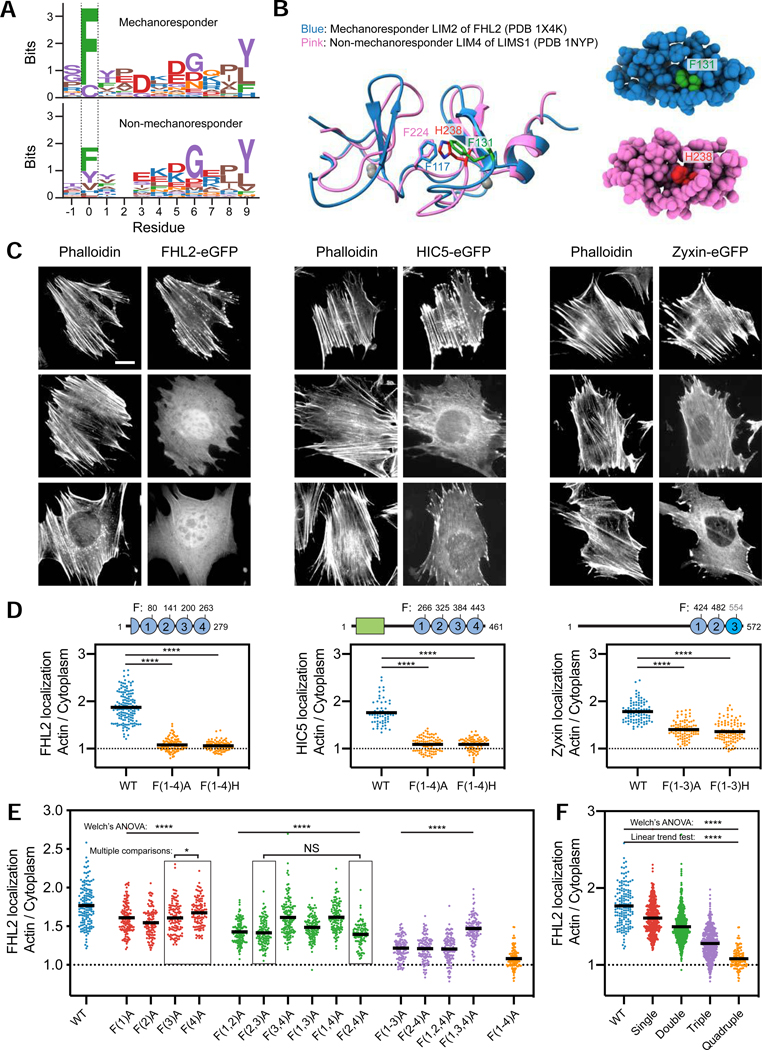
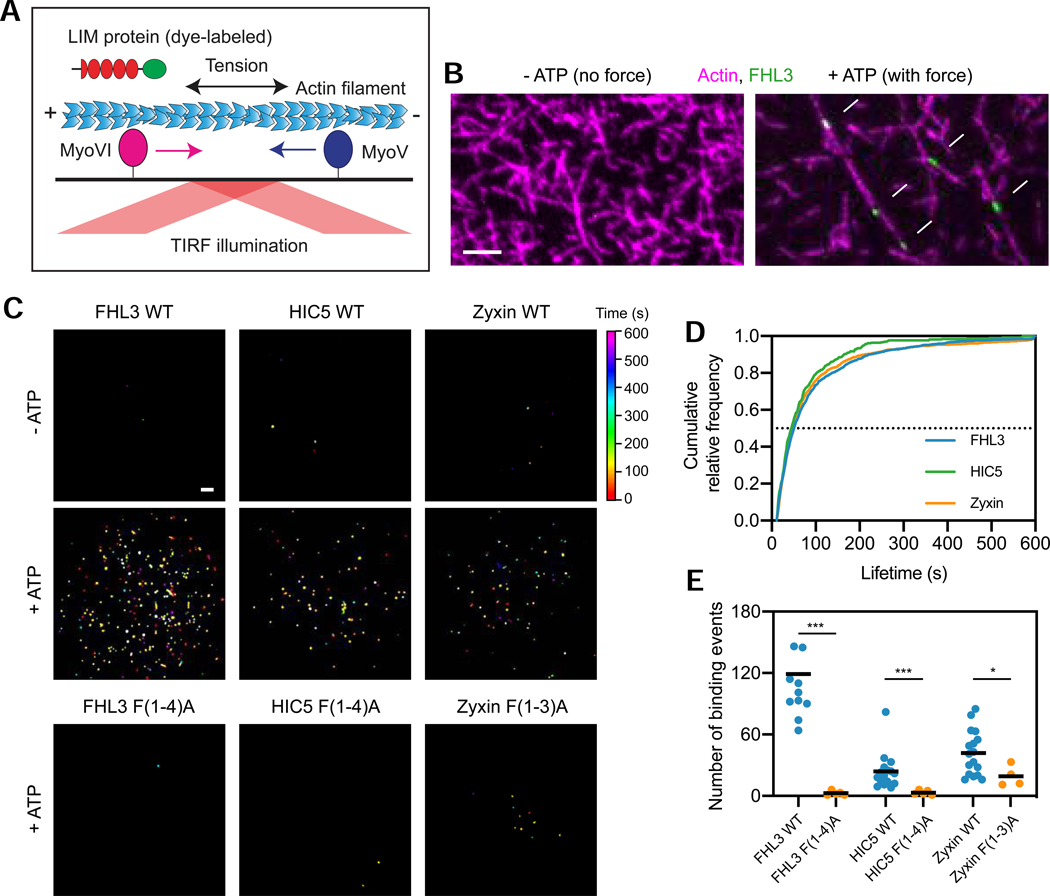
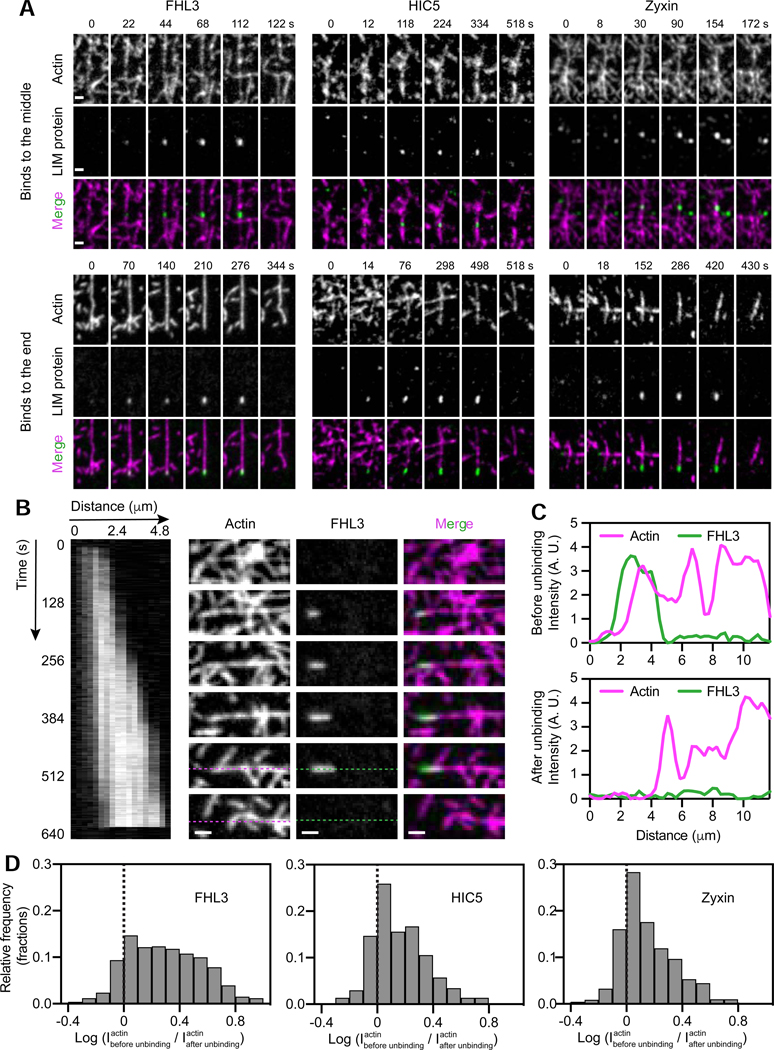
Mechanical signals transmitted through the cytoplasmic actin cytoskeleton must be relayed to the nucleus to control gene expression. LIM domains are protein-protein interaction modules found in cytoskeletal proteins and transcriptional regulators. Here, we identify three LIM protein families (zyxin, paxillin, and FHL) whose members preferentially localize to the actin cytoskeleton in mechanically stimulated cells through their tandem LIM domains. A minimal actin-myosin reconstitution system reveals that representatives of all three families directly bind F-actin only in the presence of mechanical force. Point mutations at a site conserved in each LIM domain of these proteins disrupt tensed F-actin binding in vitro and cytoskeletal localization in cells, demonstrating a common, avidity-based mechanism. Finally, we find that binding to tensed F-actin in the cytoplasm excludes the cancer-associated transcriptional co-activator FHL2 from the nucleus in stiff microenvironments. This establishes direct force-activated F-actin binding as a mechanosensing mechanism by which cytoskeletal tension can govern nuclear localization.
机械信号通过细胞质肌动蛋白细胞骨架传递,必须传递到细胞核以控制基因表达。LIM 结构域是细胞骨架蛋白和转录调节因子中发现的蛋白-蛋白相互作用模块。在这里,我们鉴定了三个 LIM 蛋白家族(zyxin、paxillin 和 FHL),它们的成员通过串联 LIM 结构域优先在机械刺激的细胞中定位于肌动蛋白细胞骨架。一个最小的肌球蛋白肌动蛋白重组系统表明,所有三个家族的代表仅在存在机械力的情况下直接结合 F-肌动蛋白。这些蛋白质中每个 LIM 结构域保守位点的点突变破坏了紧张 F-肌动蛋白结合的体外和细胞骨架定位,证明了一种常见的、基于亲和力的机制。最后,我们发现细胞质中与紧张 F-肌动蛋白的结合将与癌症相关的转录共激活因子 FHL2 排除在僵硬微环境中的细胞核之外。这确立了直接的力激活 F-肌动蛋白结合作为一种机械传感机制,通过该机制,细胞骨架张力可以控制核定位。