Department of Endocrinology, Guilin People's Hospital, Guilin, Guangxi 541002, People's Republic of China.
Department of Ultrasonography, Guilin People's Hospital, Guilin, Guangxi 541002, People's Republic of China.
Drug Des Devel Ther. 2020 Sep 22;14:3865-3874. doi: 10.2147/DDDT.S258857. eCollection 2020.
Nonalcoholic fatty liver disease (NAFLD) is one of the most common chronic liver diseases. The development of NAFLD is closely associated with hepatic lipotoxicity, inflammation, and oxidative stress. The new concept of NAFLD treatment is to seek molecular control of lipid metabolism and hepatic redox hemostasis. Phoenixin is a newly identified neuropeptide with pleiotropic effects. This study investigated the effects of phoenixin 14 against high-fat diet (HFD)-induced NAFLD in mice.
For this study, we used HFD-induced NAFLD mice models to analyze the effect of phonenixin14. The mice were fed on HFD and normal diet and also given phoenixin 14 (100 ng/g body weight) by gastrogavage for 10 weeks. The peripheral blood samples were collected for biochemical assays. The liver tissues were examined for HFD-induced tissue fibrosis, lipid deposition and oxidative activity including SOD, GSH, and MDA. The liver tissues were analyzed for the inflammatory cytokines and oxidative stress pathway genes.
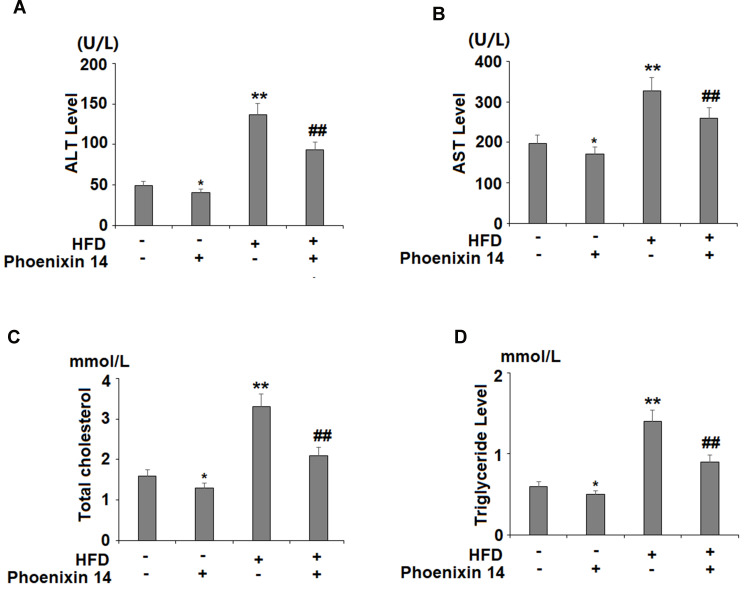
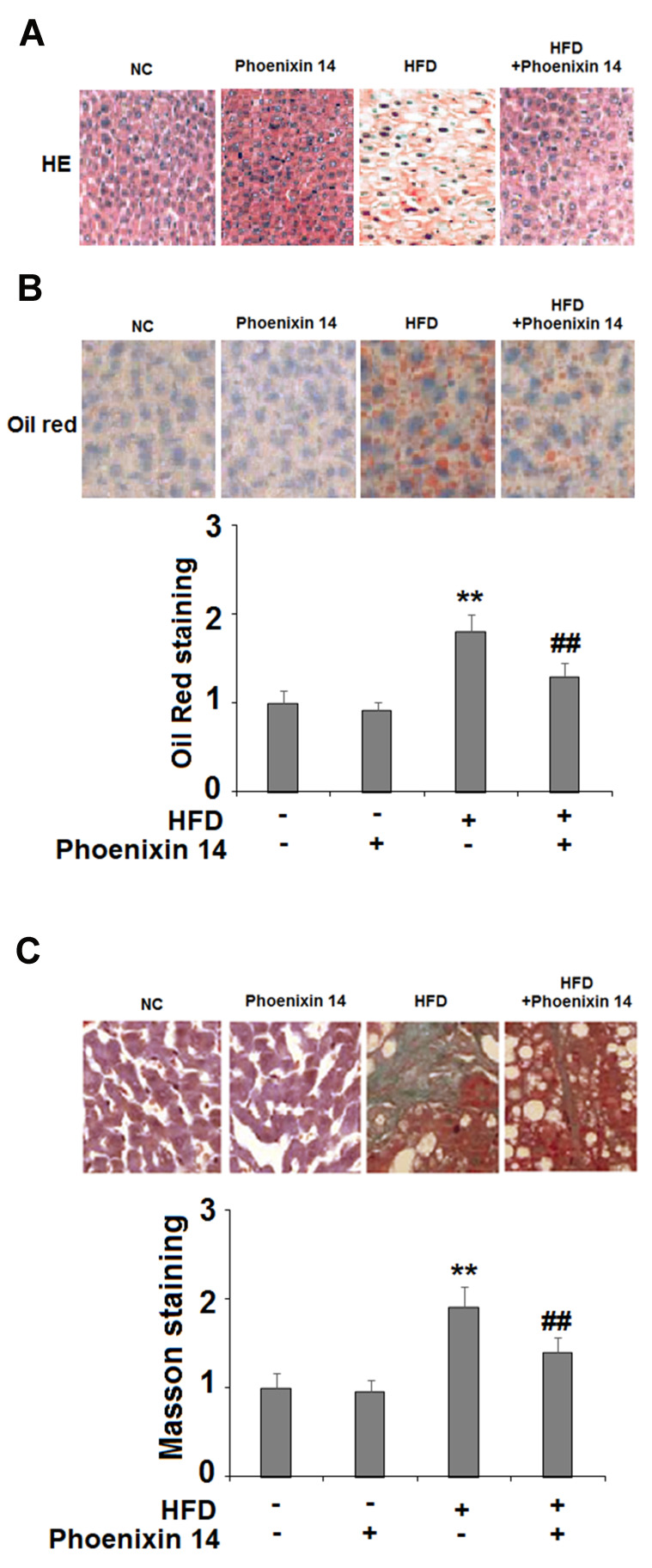
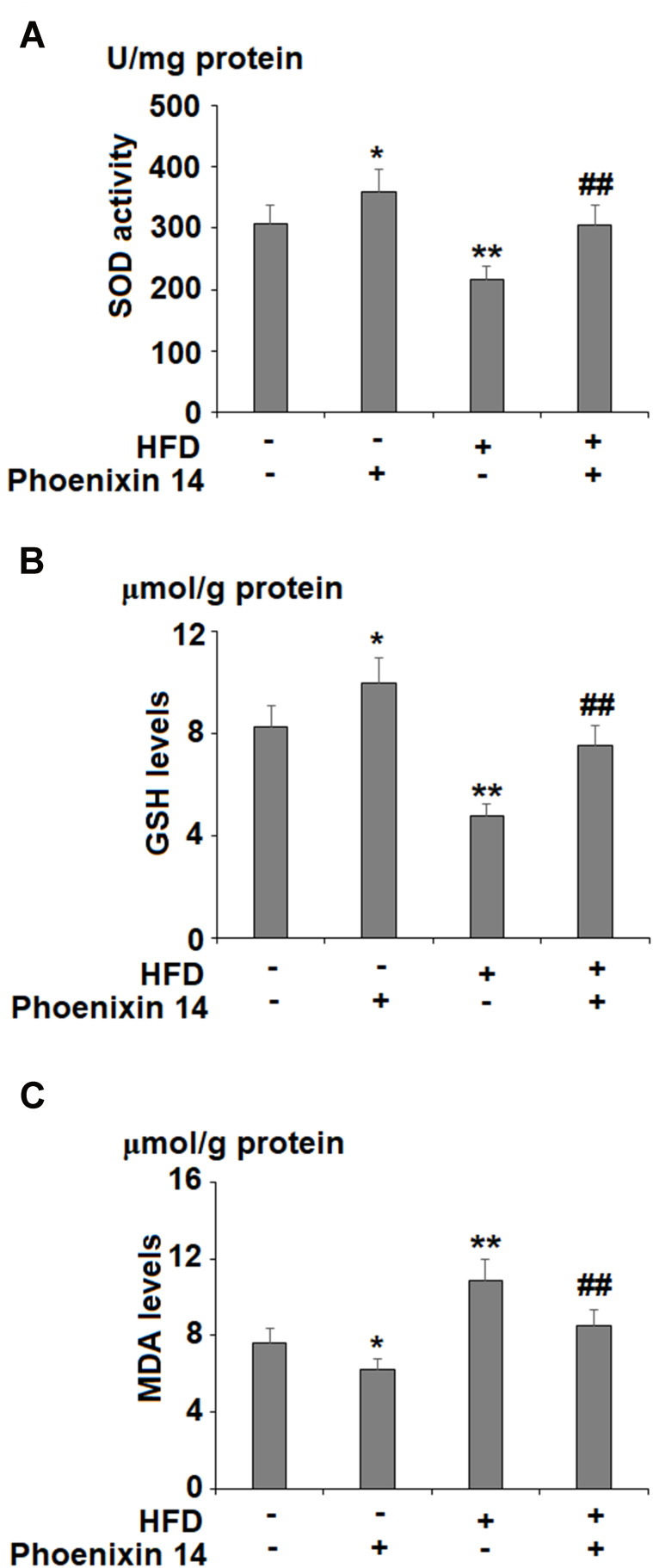
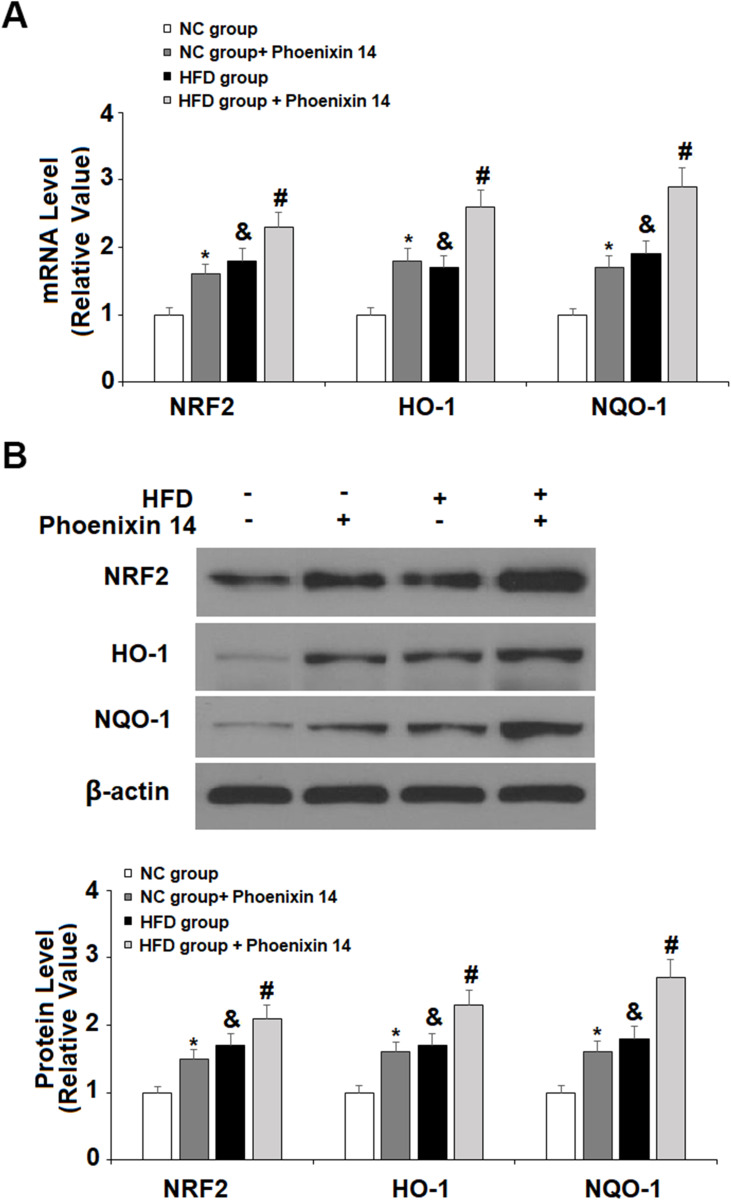
The results indicate that phoenixin 14 significantly ameliorated HFD-induced obesity and fatty liver. The biochemical analysis of blood samples revealed that phoenixin 14 ameliorated HFD-induced elevated circulating alanine aminotransferase (ALT), aspartate aminotransferase (AST), total cholesterol, and triglyceride levels, suggesting that phoenixin 14 has a protective role in liver function and lipid metabolism. Hematoxylin-eosin (HE) and Oil Red O staining of the liver showed that phoenixin 14 alleviated HFD-induced tissue damage and lipid deposition in the liver. Furthermore, the mice administered with phoenixin 14 had increased hepatic SOD activity, increased production of GSH and reduced MDA activity, as well as reduced production of TNF-α and IL-6 suggesting that phoenixin 14 exerts beneficial effects against inflammation and ROS. The findings suggest an explanation of how mechanistically phoenixin 14 ameliorated HFD-induced reduced activation of the SIRT1/AMPK and NRF2/HO-1 pathways.
Collectively, this study revealed that phoenixin 14 exerts a protective effect in experimental NAFLD mice. Phoenixin could be of the interest in preventive modulation of NAFLD.
非酒精性脂肪性肝病(NAFLD)是最常见的慢性肝病之一。NAFLD 的发展与肝脂毒性、炎症和氧化应激密切相关。NAFLD 治疗的新概念是寻求对脂质代谢和肝氧化还原平衡的分子控制。凤凰素是一种新发现的具有多种效应的神经肽。本研究探讨了凤凰素 14 对高脂肪饮食(HFD)诱导的小鼠 NAFLD 的影响。
在这项研究中,我们使用 HFD 诱导的 NAFLD 小鼠模型来分析凤凰素 14 的作用。将小鼠用 HFD 和正常饮食喂养,并通过胃管给予凤凰素 14(100ng/g 体重)10 周。采集外周血样进行生化分析。检查肝组织是否有 HFD 诱导的组织纤维化、脂肪沉积和氧化活性,包括 SOD、GSH 和 MDA。分析肝组织中炎症细胞因子和氧化应激途径基因。
结果表明,凤凰素 14 显著改善了 HFD 诱导的肥胖和脂肪肝。血液样本的生化分析表明,凤凰素 14 改善了 HFD 诱导的循环丙氨酸氨基转移酶(ALT)、天冬氨酸氨基转移酶(AST)、总胆固醇和甘油三酯水平升高,表明凤凰素 14 对肝功能和脂质代谢具有保护作用。肝组织苏木精-伊红(HE)和油红 O 染色显示,凤凰素 14 减轻了 HFD 诱导的肝组织损伤和脂肪沉积。此外,给予凤凰素 14 的小鼠肝 SOD 活性增加,GSH 生成增加,MDA 活性降低,TNF-α和 IL-6 生成减少,表明凤凰素 14 对炎症和 ROS 具有有益作用。研究结果解释了凤凰素 14 如何改善 HFD 诱导的 SIRT1/AMPK 和 NRF2/HO-1 途径活性降低的机制。
综上所述,本研究揭示了凤凰素 14 在实验性 NAFLD 小鼠中具有保护作用。凤凰素可能对预防 NAFLD 的调节具有重要意义。