Environmental Engineering, Aksaray University, Aksaray, 68100, Turkey.
Sci Rep. 2020 Oct 16;10(1):17570. doi: 10.1038/s41598-020-74553-4.
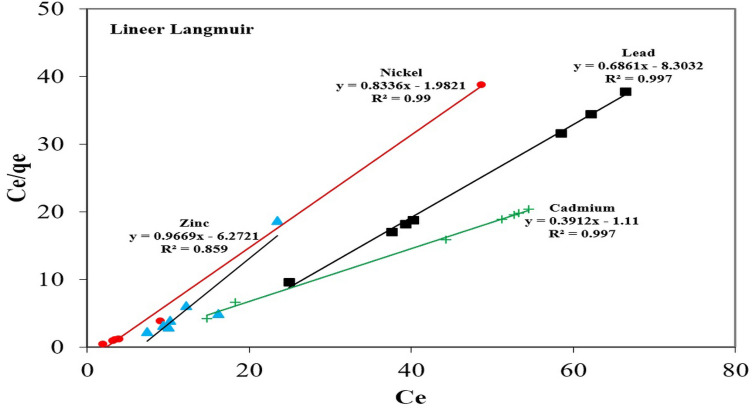
Recently, the search for low-cost eco-friendly adsorbents has become one of the main objectives of researchers. The aim of this study was to test the removal of four heavy metals, namely lead (Pb), zinc (Zn), nickel (Ni) and cadmium (Cd), from a simulated watery solution using brewed tea waste as a potentially suitable adsorbent. The effects of pH levels (2.0-6.0), adsorbent amount (0.1-5.0 g), contact times (1-150 min.) were examined throughout the adsorption process. The results of the experiments showed that the heavy metals elimination yields had an inverse relationship with pH and a linear relationship between the other parameters. The optimum pH for the removal of the heavy metals was between 4.0 and 5.0 in the case of the brewed tea waste. Equilibrium times of 2, 10, 30 and 5 min were required for the adsorption of Pb, Zn, Ni, Cd onto Camellia sinensis, respectively. Based on the results of this study it can be said that brewed tea waste has a high potential to remove heavy metals from aqueous solutions. The maximum adsorption capacities were calculated as 1.197, 1.457, 1.163 and 2.468 mg/g, for Pb, Zn, Ni and Cd, respectively, by fitting the equilibrium data to the Langmuir isotherm model.
最近,寻找低成本环保吸附剂已成为研究人员的主要目标之一。本研究旨在测试使用酿造茶渣作为潜在合适的吸附剂,从模拟水样中去除四种重金属,即铅(Pb)、锌(Zn)、镍(Ni)和镉(Cd)。在吸附过程中考察了 pH 值(2.0-6.0)、吸附剂用量(0.1-5.0 g)和接触时间(1-150 min)的影响。实验结果表明,重金属去除率与 pH 值呈反比关系,与其他参数呈线性关系。对于酿造茶渣,去除重金属的最佳 pH 值在 4.0 到 5.0 之间。Pb、Zn、Ni 和 Cd 分别在 Camellia sinensis 上的吸附平衡时间为 2、10、30 和 5 min。根据本研究的结果可以说,酿造茶渣具有从水溶液中去除重金属的高潜力。通过将平衡数据拟合到 Langmuir 等温线模型,计算出 Pb、Zn、Ni 和 Cd 的最大吸附容量分别为 1.197、1.457、1.163 和 2.468 mg/g。