Ding Xianglong, Xu Shulan, Li Shaobing, Guo Zehong, Lu Haibin, Lai Chunhua, Wu Jingyi, Wang Jingxun, Zeng Shuguang, Lin Xi, Zhou Lei
Center of Oral Implantology, Stomatological Hospital, Southern Medical University, Guangzhou 510280, China.
Stomatology Center, Shunde Hospital, Southern Medical University (The First People's Hospital of Shunde), Shunde 528000, China.
ACS Omega. 2020 Oct 2;5(40):25617-25624. doi: 10.1021/acsomega.0c02518. eCollection 2020 Oct 13.
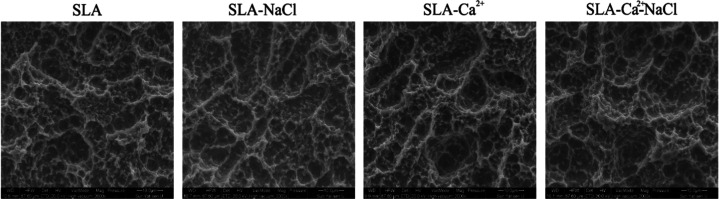
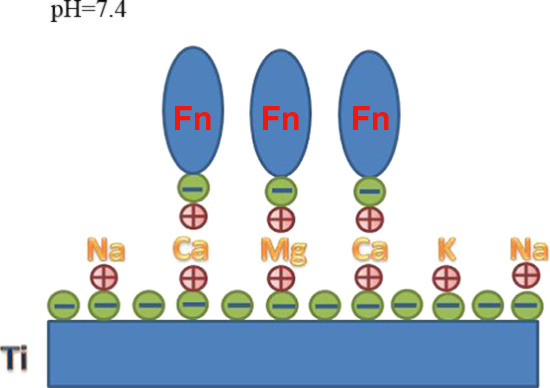
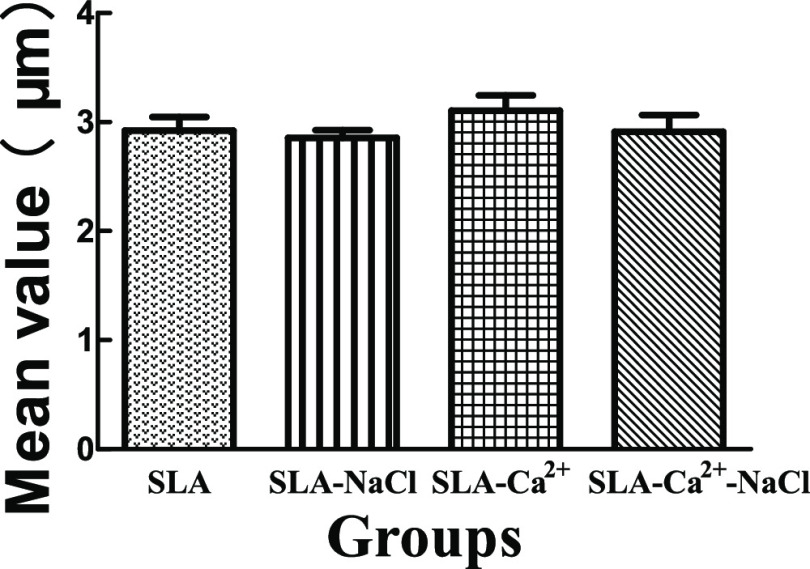
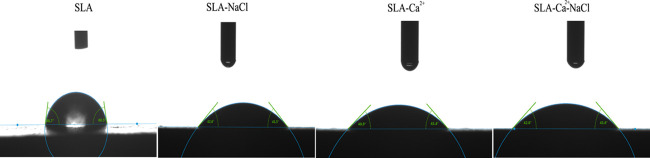
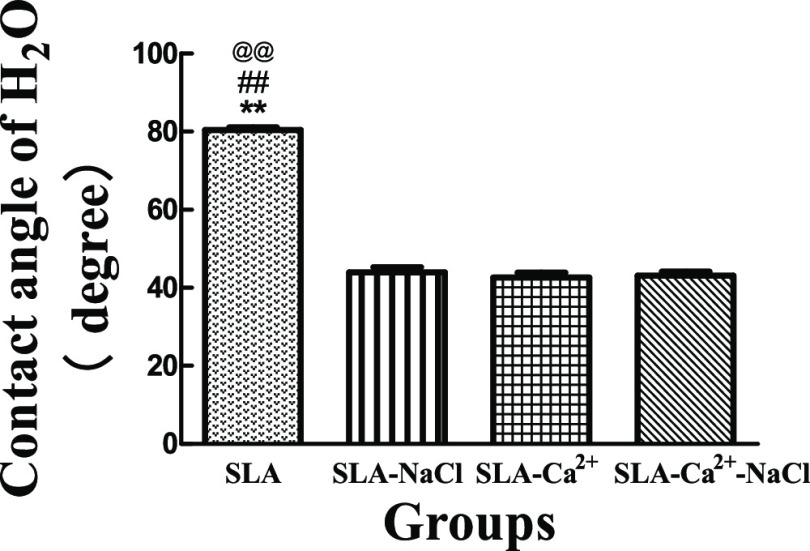
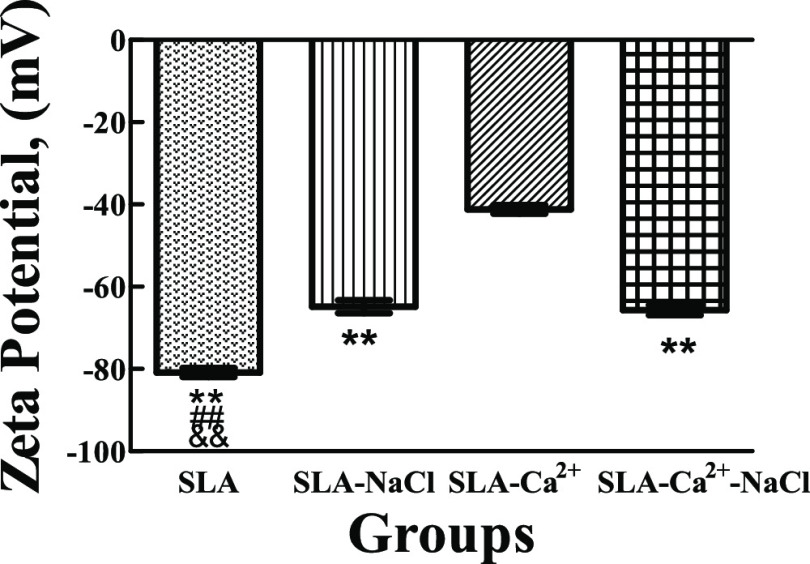
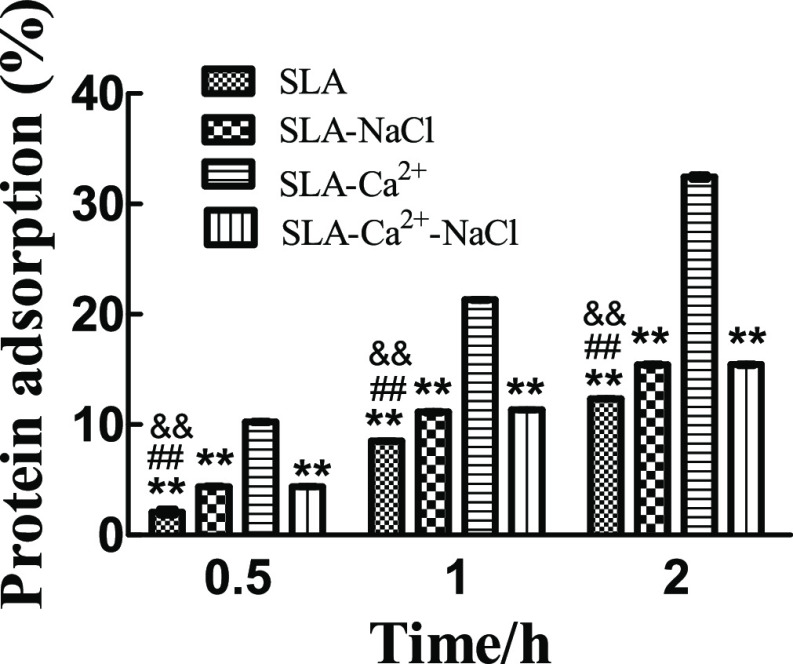
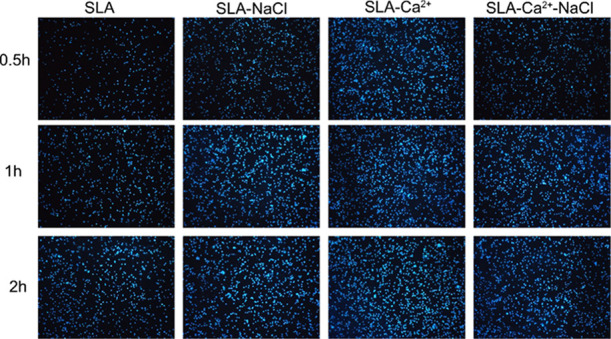
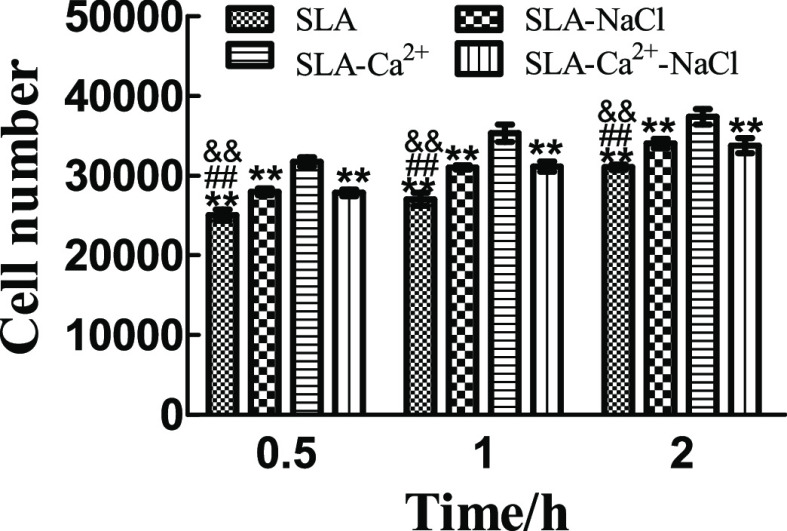
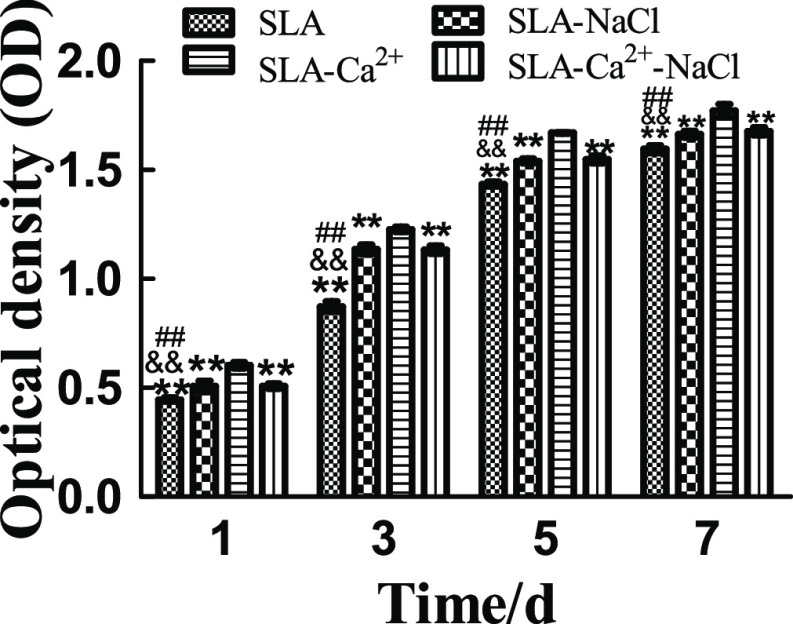
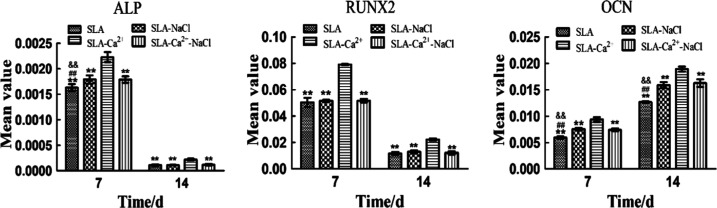
The effect of changes in surface charge on the biological properties of implants is not clear. The objective of this study was to evaluate the biological properties of the surface of titanium sheets with different charges due to different treatment methods. Titanium sheets were sandblasted with large grit and underwent acid etching before being subsequently divided into the following groups: SLA, no further treatment; SLA-Ca, immersed in 1% CaCl solution; SLA-NaCl, immersed in saline; and SLA-Ca-NaCl, immersed in 1% CaCl solution followed by saline. Surface characteristics were evaluated using field-emission scanning electron microscopy with energy-dispersive spectrometry, surface profilometry, and contact angle assays. Additionally, we used a ζ-potential analyzer to directly measure the electrostatic charge on the different group surfaces. The effect of changes in the Ti surface on biological processes after different treatments was determined by analyzing fibronectin adsorption, osteoblast-like MG63 cell adhesion and proliferation, and the expression of osteogenesis-related genes. Compared to the SLA surface, the other three groups contained corresponding trace elements because they were soaked in different liquids; the contact angles of the three groups were not significantly different, but they were significantly smaller than that of the SLA group; and there was no change in the surface topography or roughness. Furthermore, the SLA-Ca group had a significantly reduced negative charge compared to that of the other three groups. There were no differences between the SLA-NaCl and SLA-Ca-NaCl groups in terms of negative charge, and the SLA group surface carried the most negative charge. Fibronectin adsorption capacity and cytological performance testing further showed that the SLA-Ca group had the most significant change, followed by the SLA-NaCl and SLA-Ca-NaCl groups; the SLA group had significantly lower capacity and performance than the other three groups. These results suggest that the surface charge of the titanium sheet changed when immersed in different liquids and that this treatment enhanced biocompatibility by reducing the electrostatic repulsion between biomaterials and biomolecules.
表面电荷变化对植入物生物学特性的影响尚不清楚。本研究的目的是评估由于不同处理方法而具有不同电荷的钛板表面的生物学特性。钛板先用大颗粒进行喷砂处理,然后进行酸蚀,随后分为以下几组:SLA组,不进行进一步处理;SLA-Ca组,浸入1%氯化钙溶液中;SLA-NaCl组,浸入盐水中;SLA-Ca-NaCl组,先浸入1%氯化钙溶液,然后再浸入盐水中。使用场发射扫描电子显微镜结合能谱分析、表面轮廓测量和接触角测定来评估表面特性。此外,我们使用ζ电位分析仪直接测量不同组表面的静电荷。通过分析纤连蛋白吸附、成骨样MG63细胞粘附和增殖以及成骨相关基因的表达,确定不同处理后钛表面变化对生物学过程的影响。与SLA表面相比,其他三组因浸泡在不同液体中而含有相应的微量元素;三组的接触角无显著差异,但均显著小于SLA组;表面形貌和粗糙度没有变化。此外,SLA-Ca组的负电荷比其他三组显著减少。SLA-NaCl组和SLA-Ca-NaCl组在负电荷方面没有差异,SLA组表面携带的负电荷最多。纤连蛋白吸附能力和细胞学性能测试进一步表明,SLA-Ca组变化最显著,其次是SLA-NaCl组和SLA-Ca-NaCl组;SLA组的能力和性能显著低于其他三组。这些结果表明,钛板浸入不同液体时表面电荷发生变化,这种处理通过减少生物材料与生物分子之间的静电排斥增强了生物相容性。