Division of Family Medicine and Primary Care, Faculty of Medicine and Health Sciences, Stellenbosch University , Cape Town, South Africa.
Sport and Exercise Science, School of Health and Wellbeing, University of Southern Queensland , Ipswich, Queensland, Australia.
Glob Health Action. 2020 Dec 31;13(1):1827363. doi: 10.1080/16549716.2020.1827363.
Globally 71% of deaths are attributed to non-communicable diseases (NCD). The workplace is an opportune setting for health promotion programs and interventions that aim to prevent NCDs. However, much of the current evidence is from high-income countries.
The aim of this study was to evaluate changes in NCD risk factors, associated with the Healthy Choices at Work programme (HCWP), at a commercial power plant in South Africa.
This was a before-and-after study in a randomly selected sample of 156 employees at baseline and 137 employees at 2-years. The HCWP focused on food services, physical activity, health and wellness services and managerial support. Participants completed questionnaires on tobacco smoking, harmful alcohol use, fruit and vegetable intake, physical activity, psychosocial stress and history of NCDs. Clinical measures included blood pressure, total cholesterol, random blood glucose, body mass index, waist circumference and waist-to-hip ratio. The 10-year cardiovascular risk was calculated using a validated algorithm. Sample size calculations evaluated the power of the sample to detect meaningful changes in risk factors.
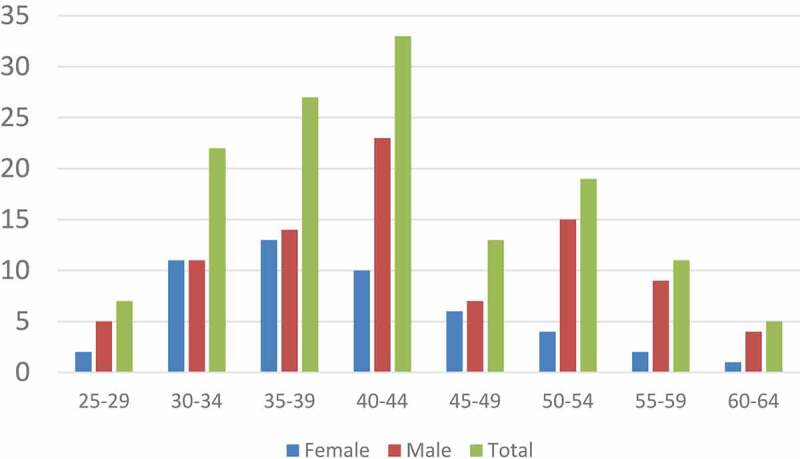
Paired data was obtained for 137 employees, the mean age was 42.7 years (SD 9.7) and 64% were male. The prevalence of sufficient fruit and vegetable intake increased from 27% to 64% (p < 0.001), those meeting physical activity guidelines increased from 44% to 65% (p < 0.001). Harmful alcohol use decreased from 21% to 5% (p = 0.001). There were clinical and statistically significant improvements in systolic and diastolic blood pressure (mean difference -10.2 mmHg (95%CI: -7.3 to -13.2); and -3.9 mmHg (95%CI: -1.8 to -5.8); p < 0.001) and total cholesterol (mean difference -0.45 mmol/l (-0.3 to -0.6)). There were no significant improvements in BMI. Psychosocial stress from relationships with colleagues, personal finances, and personal health improved significantly. The cardiovascular risk score decreased by 4.5% (> 0.05).
The HCWP was associated with clinically significant reductions in behavioural, metabolic and psychosocial risk factors for NCDs.
全球 71%的死亡归因于非传染性疾病(NCD)。工作场所是开展健康促进计划和干预措施的有利环境,旨在预防 NCD。然而,目前的大部分证据来自高收入国家。
本研究旨在评估南非一家商业发电厂开展“健康选择计划”(HCWP)前后,NCD 风险因素的变化。
这是一项在随机抽取的 156 名员工的基线和 137 名员工的 2 年时进行的前后研究。HCWP 侧重于食品服务、身体活动、健康和福利服务以及管理支持。参与者完成了关于吸烟、有害饮酒、水果和蔬菜摄入、身体活动、心理社会压力和 NCD 史的问卷。临床测量包括血压、总胆固醇、随机血糖、体重指数、腰围和腰臀比。使用经过验证的算法计算了 10 年心血管风险。样本量计算评估了样本检测危险因素变化的能力。
获得了 137 名员工的配对数据,平均年龄为 42.7 岁(标准差 9.7),64%为男性。充足的水果和蔬菜摄入量的比例从 27%增加到 64%(p<0.001),符合身体活动指南的比例从 44%增加到 65%(p<0.001)。有害饮酒的比例从 21%下降到 5%(p=0.001)。收缩压和舒张压均有临床和统计学意义上的改善(平均差异-10.2mmHg(95%可信区间:-7.3 至-13.2);-3.9mmHg(95%可信区间:-1.8 至-5.8);p<0.001),总胆固醇平均差异-0.45mmol/l(-0.3 至-0.6)。体重指数没有显著改善。与同事关系、个人财务和个人健康相关的心理社会压力显著改善。心血管风险评分降低了 4.5%(>0.05)。
HCWP 与 NCD 行为、代谢和心理社会危险因素的临床显著降低相关。