Immunonutrition Group, Department of Metabolism and Nutrition, Institute of Food Science, Technology and Nutrition (ICTAN), Spanish National Research Council (CSIC), C/Jose Antonio Novais, 28040 Madrid, Spain.
Molecules. 2020 Oct 17;25(20):4772. doi: 10.3390/molecules25204772.
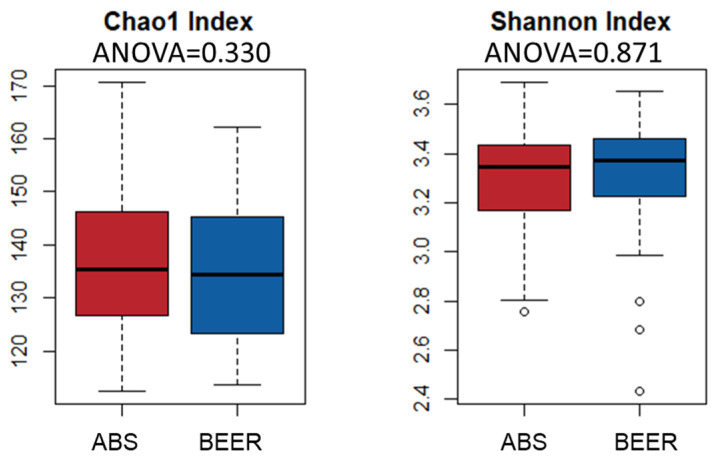
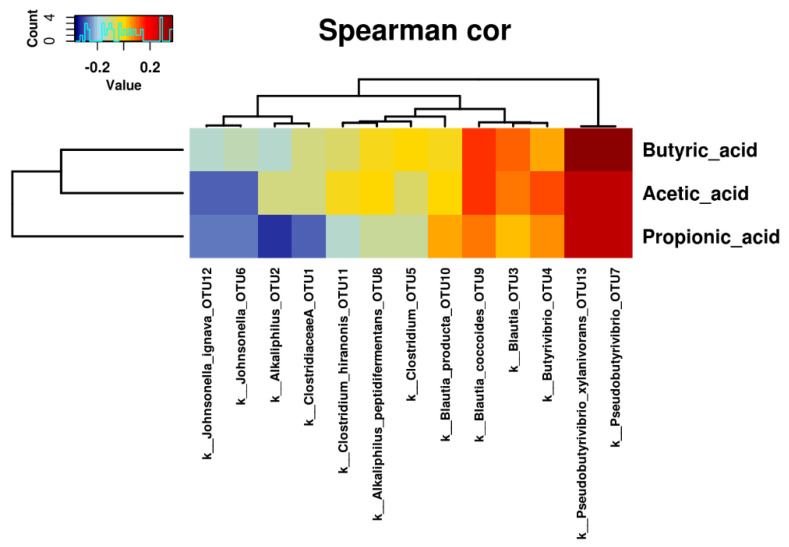
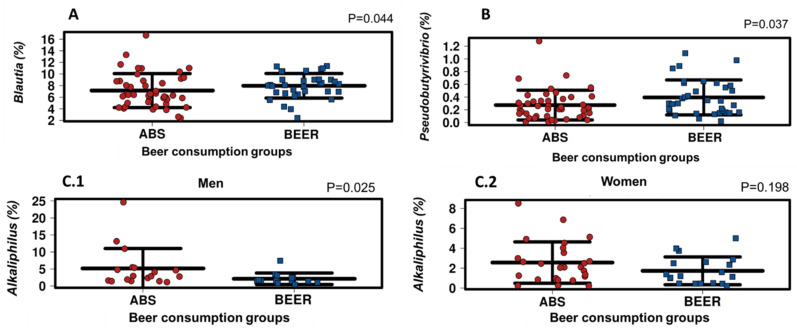
Fermented alcoholic drinks' contribution to the gut microbiota composition is mostly unknown. However, intestinal microorganisms can use compounds present in beer. This work explored the associations between moderate consumption of beer, microbiota composition, and short chain fatty acid (SCFA) profile. Seventy eight subjects were selected from a 261 healthy adult cohort on the basis of their alcohol consumption pattern. Two groups were compared: (1) abstainers or occasional consumption (ABS) ( = 44; <1.5 alcohol g/day), and (2) beer consumption ≥70% of total alcohol (BEER) ( = 34; 200 to 600 mL 5% vol. beer/day; <15 mL 13% vol. wine/day; <15 mL 40% vol. spirits/day). Gut microbiota composition (16S rRNA gene sequencing) and SCFA concentration were analyzed in fecal samples. No differences were found in α and β diversity between groups. The relative abundance of gut bacteria showed that was lower ( = 0.009), while and were higher ( = 0.044 and = 0.037, respectively) in BEER versus ABS. In addition, in men, showed lower abundance in BEER than in ABS ( = 0.025). Butyric acid was higher in BEER than in ABS ( = 0.032), and correlated with abundance. In conclusion, the changes observed in a few taxa, and the higher butyric acid concentration in consumers versus non-consumers of beer, suggest a potentially beneficial effect of moderate beer consumption on intestinal health.
发酵酒精饮料对肠道微生物群组成的贡献大多未知。然而,肠道微生物可以利用啤酒中存在的化合物。本研究探讨了适度饮用啤酒与微生物群组成和短链脂肪酸(SCFA)谱之间的关联。根据饮酒模式,从 261 名健康成年人队列中选择了 78 名受试者。比较了两组:(1)不饮酒者或偶尔饮酒者(ABS)(= 44;<1.5 克/天)和(2)啤酒饮用者≥总酒精的 70%(BEER)(= 34;200 至 600 毫升 5%vol. 啤酒/天;<15 毫升 13%vol. 葡萄酒/天;<15 毫升 40%vol. 烈酒/天)。分析粪便样本中的肠道微生物群组成(16S rRNA 基因测序)和 SCFA 浓度。两组间α和β多样性无差异。肠道细菌的相对丰度显示,BEER 组中 较低(= 0.009),而 和 较高(= 0.044 和= 0.037,分别)。此外,在男性中, 比 ABS 中的 丰度低(= 0.025)。BEER 中的丁酸高于 ABS(= 0.032),且与 丰度呈正相关。结论:少数分类群的变化,以及啤酒消费者与非消费者之间丁酸浓度的升高,提示适度饮用啤酒可能对肠道健康有益。