Syafiq R, Sapuan S M, Zuhri M Y M, Ilyas R A, Nazrin A, Sherwani S F K, Khalina A
Laboratory of Biocomposite Technology, Institute of Tropical Forestry and Forest Products (INTROP), Universiti Putra Malaysia, UPM Serdang, Selangor 43400, Malaysia.
Advanced Engineering Materials and Composites Research Centre (AEMC), Department of Mechanical and Manufacturing Engineering, Universiti Putra Malaysia, UPM Serdang, Selangor 43400, Malaysia.
Polymers (Basel). 2020 Oct 19;12(10):2403. doi: 10.3390/polym12102403.
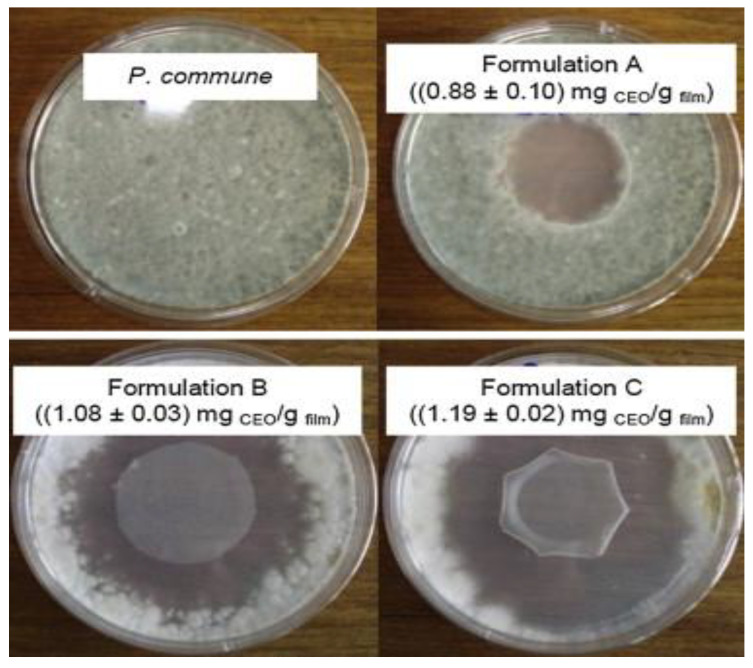
Recently, many scientists and polymer engineers have been working on eco-friendly materials for starch-based food packaging purposes, which are based on biopolymers, due to the health and environmental issues caused by the non-biodegradable food packaging. However, to maintain food freshness and quality, it is necessary to choose the correct materials and packaging technologies. On the other hand, the starch-based film's biggest flaws are high permeability to water vapor transfer and the ease of spoilage by bacteria and fungi. One of the several possibilities that are being extensively studied is the incorporation of essential oils (EOs) into the packaging material. The EOs used in food packaging films actively prevent inhibition of bacteria and fungi and have a positive effect on food storage. This work intended to present their mechanical and barrier properties, as well as the antimicrobial activity of anti-microbacterial agent reinforced starch composites for extending product shelf life. A better inhibition of zone of antimicrobial activity was observed with higher content of essential oil. Besides that, the mechanical properties of starch-based polymer was slightly decreased for tensile strength as the increasing of essential oil while elongation at break was increased. The increasing of essential oil would cause the reduction of the cohesion forces of polymer chain, creating heterogeneous matrix and subsequently lowering the tensile strength and increasing the elongation (E%) of the films. The present review demonstrated that the use of essential oil represents an interesting alternative for the production of active packaging and for the development of eco-friendly technologies.
最近,由于不可生物降解的食品包装所引发的健康和环境问题,许多科学家和聚合物工程师一直在致力于研发基于生物聚合物的、用于淀粉基食品包装的环保材料。然而,为了保持食品的新鲜度和质量,选择正确的材料和包装技术是必要的。另一方面,淀粉基薄膜最大的缺点是水蒸气透过率高,且容易被细菌和真菌破坏。正在广泛研究的几种可能性之一是将精油(EOs)加入包装材料中。用于食品包装薄膜的精油能有效防止细菌和真菌的滋生,对食品储存有积极作用。这项工作旨在展示抗菌剂增强淀粉复合材料的机械性能、阻隔性能以及抗菌活性,以延长产品保质期。随着精油含量的增加,观察到抗菌活性区域有更好的抑制效果。除此之外,随着精油含量的增加,淀粉基聚合物的拉伸强度略有下降,而断裂伸长率增加。精油含量的增加会导致聚合物链内聚力降低,形成非均匀基体,进而降低拉伸强度并增加薄膜的伸长率(E%)。本综述表明,使用精油是生产活性包装和开发环保技术的一个有趣选择。