Esmael Ahmed, Hassan Mervat G, Amer Mahmoud M, Abdelrahman Soheir, Hamed Ahmed M, Abd-Raboh Hagar A, Foda Mohamed F
State Key Laboratory of Agricultural Microbiology, College of Plant Science and Technology, College of Life Science and Technology, College of Science, Huazhong Agricultural University, Wuhan 430070, China.
Botany and Microbiology Department, Faculty of Science, Benha University, Qalubiya Governorate 13511, Egypt.
Saudi J Biol Sci. 2020 Jan;27(1):448-455. doi: 10.1016/j.sjbs.2019.11.006. Epub 2019 Nov 20.
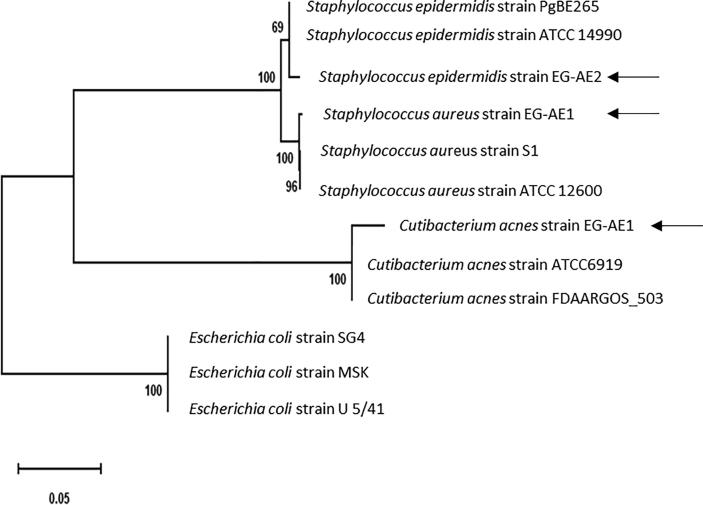
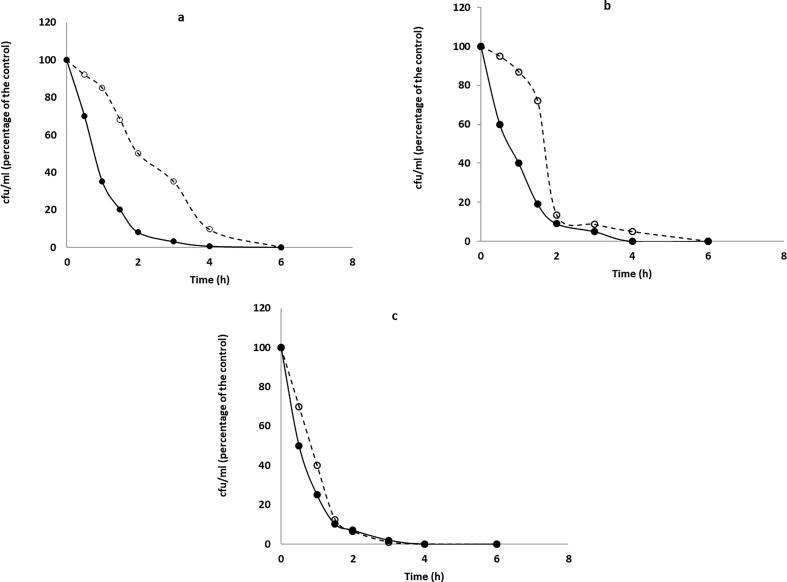
The unceasing emerging of multidrug-resistant bacteria imposes a global foremost human health threat and discovery of new alternative remedies are necessity. The use of plant essential oil in the treatment of many pathogenic bacteria is promising. Acne vulgaris is the most common skin complaint that fears many people about their aesthetic appearance. In this work we investigated the antibacterial activity of some plant oils against acne-inducing bacteria. Three bacterial isolates were identified from Egypt, biochemically and by means of 16s rRNA gene typing, and were designated as EG-AE1, EG-AE2 and EG-AE1. Antibiotic susceptibility test showed resistance of the isolates to at least six antibiotics, yet they are still susceptible to the last resort Vancomycin. investigations of eleven Egyptian plant oils, identified tea tree and rosemary oils to exhibit antibacterial activity against the antibiotic-resistant acne isolates. Inhibition zones of 15 ± 0.5, 21.02 ± 0.73 and 20.85 ± 0.76 mm was detected when tea tree oil applied against the above-mentioned bacteria respectively, while inhibition zones of 12.5 ± 1.5, 15.18 ± 0.38 and 14.77 ± 0.35 mm were detected by rosemary oils. Tea tree and rosemary oils exhibited bacteriostatic and bactericidal activity against all the strains with MICs/MBCs ranging between 39-78 mg/L for tea tree oil and 39-156 mg/L for rosemary oil. All the isolates were killed after 4 and 6 h upon growing with 200 mg/L of tea tree and rosemary oils, respectively. Additionally, gas chromatography mass spectrometry (GC/MS) profiling identified and detected a variable number of antimicrobial compounds in both oils.
多重耐药菌的不断出现对全球人类健康构成了首要威胁,因此发现新的替代疗法势在必行。植物精油在治疗多种病原菌方面具有广阔前景。寻常痤疮是最常见的皮肤问题,许多人因其影响美观而担忧。在本研究中,我们调查了一些植物油对致痤疮细菌的抗菌活性。从埃及分离出三株细菌,通过生化鉴定和16s rRNA基因分型,分别命名为EG - AE1、EG - AE2和EG - AE1。抗生素敏感性试验表明,这些分离株对至少六种抗生素耐药,但它们对最后手段万古霉素仍敏感。对11种埃及植物油的研究发现,茶树油和迷迭香油对耐抗生素的痤疮分离株具有抗菌活性。当茶树油分别作用于上述细菌时,检测到的抑菌圈直径为15±0.5、21.02±0.73和20.85±0.76毫米,而迷迭香油检测到的抑菌圈直径为12.5±1.5、15.18±0.38和14.77±0.35毫米。茶树油和迷迭香油对所有菌株均表现出抑菌和杀菌活性,茶树油的最低抑菌浓度/最低杀菌浓度范围为39 - 78毫克/升,迷迭香油为39 - 156毫克/升。分别用200毫克/升的茶树油和迷迭香油培养4小时和6小时后,所有分离株均被杀死。此外,气相色谱 - 质谱联用(GC/MS)分析鉴定并检测出两种油中含有数量不等的抗菌化合物。