Roche Pharma Research and Early Development, pRED Informatics, Roche Innovation Center Basel, F Hoffmann-La Roche Ltd., Grenzacherstrasse 124, 4070 Basel, Switzerland.
Inovigate, Aeschenvorstadt 55, 4051 Basel, Switzerland.
Sensors (Basel). 2020 Oct 19;20(20):5906. doi: 10.3390/s20205906.
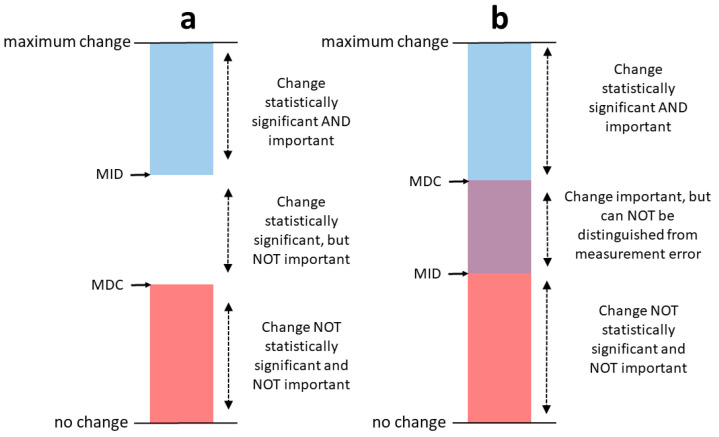
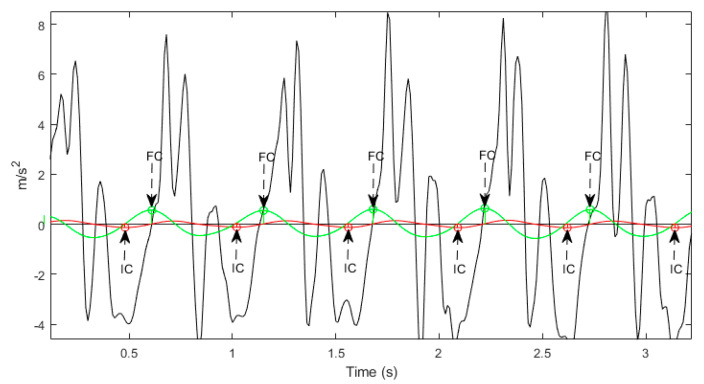
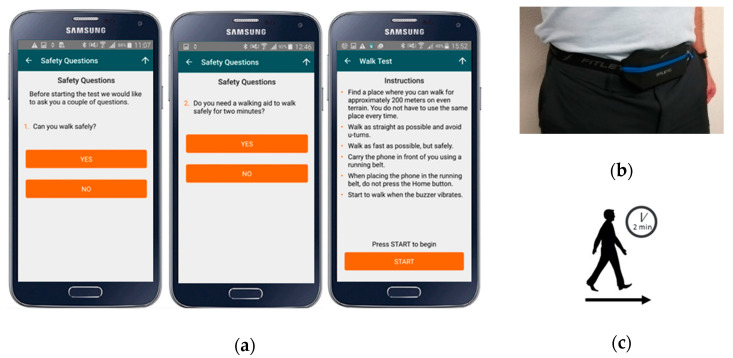
The measurement of gait characteristics during a self-administered 2-minute walk test (2MWT), in persons with multiple sclerosis (PwMS), using a single body-worn device, has the potential to provide high-density longitudinal information on disease progression, beyond what is currently measured in the clinician-administered 2MWT. The purpose of this study is to determine the test-retest reliability, standard error of measurement (SEM) and minimum detectable change (MDC) of features calculated on gait characteristics, harvested during a self-administered 2MWT in a home environment, in 51 PwMS and 11 healthy control (HC) subjects over 24 weeks, using a single waist-worn inertial sensor-based smartphone. Excellent, or good to excellent test-retest reliability were observed in 58 of the 92 temporal, spatial and spatiotemporal gait features in PwMS. However, these were less reliable for HCs. Low SEM% and MDC% values were observed for most of the distribution measures for all gait characteristics for PwMS and HCs. This study demonstrates the inter-session test-retest reliability and provides an indication of clinically important change estimates, for interpreting the outcomes of gait characteristics measured using a body-worn smartphone, during a self-administered 2MWT. This system thus provides a reliable measure of gait characteristics in PwMS, supporting its application for the longitudinal assessment of gait deficits in this population.
在多发性硬化症患者(PwMS)中,使用单个穿戴式设备进行自我管理的 2 分钟步行测试(2MWT)期间测量步态特征,有可能提供比临床医生管理的 2MWT 目前测量的更密集的疾病进展纵向信息。本研究的目的是确定在 24 周内,51 名 PwMS 和 11 名健康对照(HC)受试者在家环境中进行自我管理的 2MWT 期间,通过单个腰部佩戴的基于惯性传感器的智能手机,计算步态特征的可重复性、测量标准误差(SEM)和最小可检测变化(MDC)。在 PwMS 中,92 个时间、空间和时空步态特征中有 58 个表现出极好或良好至极好的可重复性。然而,这些对于 HC 来说不太可靠。对于 PwMS 和 HC 的大多数步态特征分布测量,都观察到低 SEM%和 MDC%值。本研究证明了在自我管理的 2MWT 期间,使用穿戴式智能手机测量的步态特征的会话间可重复性,并提供了临床重要变化估计的指示,用于解释这些结果。因此,该系统为 PwMS 中的步态特征提供了可靠的测量,支持其在该人群中进行步态缺陷的纵向评估中的应用。