Department of Behavioural Science and Health, University College London, UK.
SPECTRUM Consortium, London, UK.
Addiction. 2021 May;116(5):1233-1244. doi: 10.1111/add.15295. Epub 2020 Nov 26.
To examine changes in smoking, drinking and quitting/reduction behaviour following the COVID-19 lockdown in England.
DESIGN/SETTING: Monthly cross-sectional surveys representative of the adult population in England, aggregated before (April 2019-February 2020) versus after (April 2020) lockdown.
A total of 20 558 adults (≥ 16 years).
The independent variable was the timing of the COVID-19 lockdown (before versus after March 2020). Dependent variables were: prevalence of smoking and high-risk drinking, past-year cessation and quit attempts (among past-year smokers), past-year attempts to reduce alcohol consumption (among high-risk drinkers) and use of evidence-based (e.g. prescription medication/face-to-face behavioural support) and remote support [telephone support/websites/applications (apps)] for smoking cessation and alcohol reduction (among smokers/high-risk drinkers who made a quit/reduction attempt). Covariates included age, sex, social grade, region and level of nicotine and alcohol dependence (as relevant).
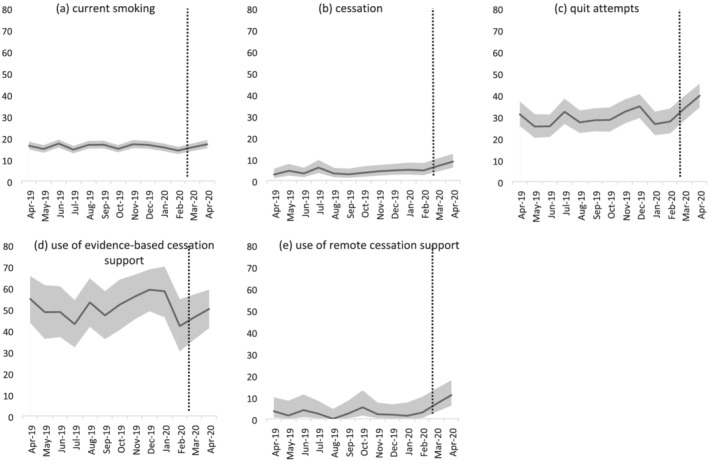
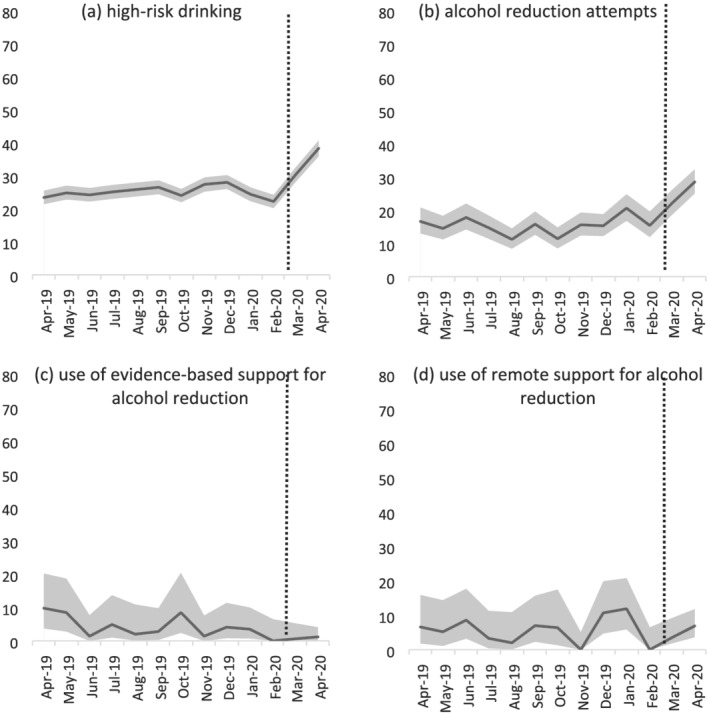
The COVID-19 lockdown was not associated with a significant change in smoking prevalence [17.0% (after) versus 15.9% (before), odds ratio (OR) = 1.09, 95% CI = 0.95-1.24], but was associated with increases in quit attempts [39.6 versus 29.1%, adjusted odds ratio (OR ) = 1.56, 95% CI = 1.23-1.98], quit success (21.3 versus 13.9%, OR = 2.01, 95% CI = 1.22-3.33) and cessation (8.8 versus 4.1%, OR = 2.63, 95% CI = 1.69-4.09) among past-year smokers. Among smokers who tried to quit, there was no significant change in use of evidence-based support (50.0 versus 51.5%, OR = 1.10, 95% CI = 0.72-1.68) but use of remote support increased (10.9 versus 2.7%, OR = 3.59, 95% CI = 1.56-8.23). Lockdown was associated with increases in high-risk drinking (38.3 versus 25.1%, OR = 1.85, CI = 1.67-2.06), but also alcohol reduction attempts by high-risk drinkers (28.5 versus 15.3%, OR = 2.16, 95% CI = 1.77-2.64). Among high-risk drinkers who made a reduction attempt, use of evidence-based support decreased (1.2 versus 4.0%, OR = 0.23, 95% CI = 0.05-0.97) and there was no significant change in use of remote support (6.9 versus 6.1%, OR = 1.32, 95% CI = 0.64-2.75).
Following the March 2020 COVID-19 lockdown, smokers and high-risk drinkers in England were more likely than before lockdown to report trying to quit smoking or reduce alcohol consumption and rates of smoking cessation and use of remote cessation support were higher. However, high-risk drinking prevalence increased post-lockdown and use of evidence-based support for alcohol reduction by high-risk drinkers decreased with no compensatory increase in use of remote support.
调查英格兰 COVID-19 封锁后吸烟、饮酒和戒烟/减少行为的变化。
设计/设置:在英格兰成年人中进行的具有代表性的每月横断面调查,在封锁前(2019 年 4 月至 2020 年 2 月)与封锁后(2020 年 4 月)进行汇总。
共 20558 名成年人(≥16 岁)。
自变量是 COVID-19 封锁的时间(3 月前与 2020 年后)。因变量是:吸烟和高危饮酒的流行率、过去一年的戒烟和戒烟尝试(在过去一年的吸烟者中)、过去一年减少酒精摄入量的尝试(在高危饮酒者中)以及使用循证(例如处方药/面对面行为支持)和远程支持[电话支持/网站/应用程序(应用程序)]戒烟和减少酒精(在吸烟者/高危饮酒者中谁作出戒烟/减少尝试)。协变量包括年龄、性别、社会等级、地区以及尼古丁和酒精依赖程度(如相关)。
COVID-19 封锁与吸烟流行率的显著变化无关[17.0%(后)与 15.9%(前),比值比(OR)=1.09,95%CI=0.95-1.24],但与戒烟尝试增加有关[39.6 与 29.1%,调整比值比(OR)=1.56,95%CI=1.23-1.98],戒烟成功率(21.3 与 13.9%,OR=2.01,95%CI=1.22-3.33)和戒烟(8.8 与 4.1%,OR=2.63,95%CI=1.69-4.09)在过去一年的吸烟者中。在尝试戒烟的吸烟者中,循证支持的使用没有显著变化(50.0 与 51.5%,OR=1.10,95%CI=0.72-1.68),但远程支持的使用增加(10.9 与 2.7%,OR=3.59,95%CI=1.56-8.23)。封锁与高危饮酒增加有关(38.3 与 25.1%,OR=1.85,CI=1.67-2.06),但也与高危饮酒者的酒精减少尝试有关(28.5 与 15.3%,OR=2.16,95%CI=1.77-2.64)。在高危饮酒者中进行了减少尝试,循证支持的使用减少(1.2 与 4.0%,OR=0.23,95%CI=0.05-0.97),而远程支持的使用没有显著变化(6.9 与 6.1%,OR=1.32,95%CI=0.64-2.75)。
在 2020 年 3 月 COVID-19 封锁之后,英格兰的吸烟者和高危饮酒者比封锁前更有可能报告试图戒烟或减少饮酒,戒烟率和使用远程戒烟支持率更高。然而,高危饮酒的流行率在封锁后增加,高危饮酒者使用循证支持减少酒精摄入量,但没有补偿性地增加远程支持的使用。