Allelopathy Group, Department of Organic Chemistry, Institute of Biomolecules (INBIO), Campus de Excelencia Internacional (ceiA3), School of Science, University of Cadiz, 11510 Puerto Real, Spain.
Confocal Microscopy Unit, Spanish National Cancer Research Center (CNIO), E-28029 Madrid, Spain.
Molecules. 2020 Oct 21;25(20):4861. doi: 10.3390/molecules25204861.
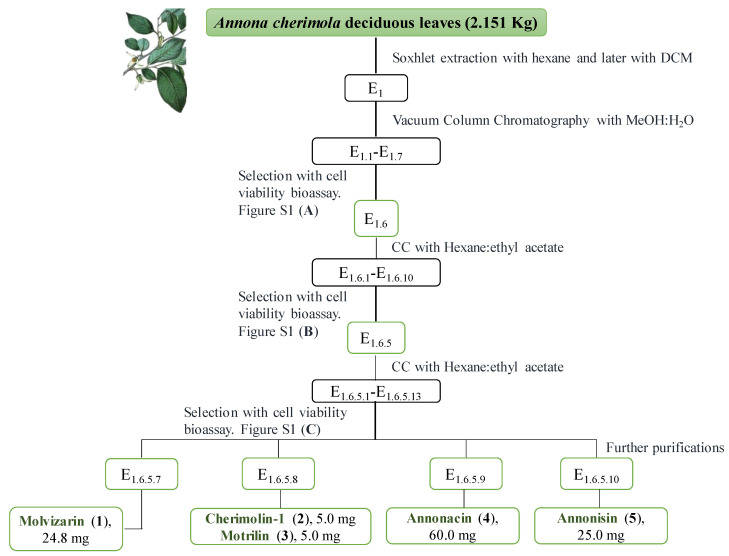
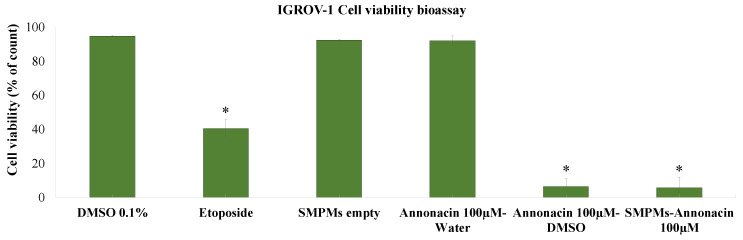
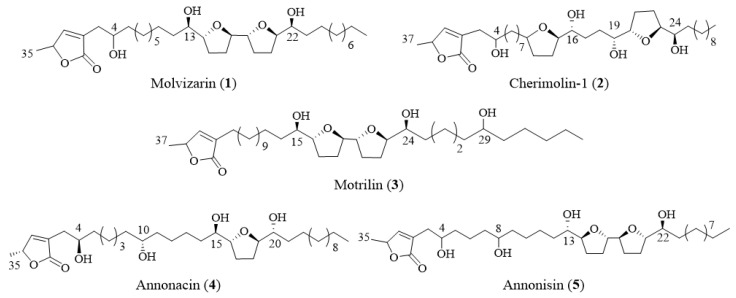
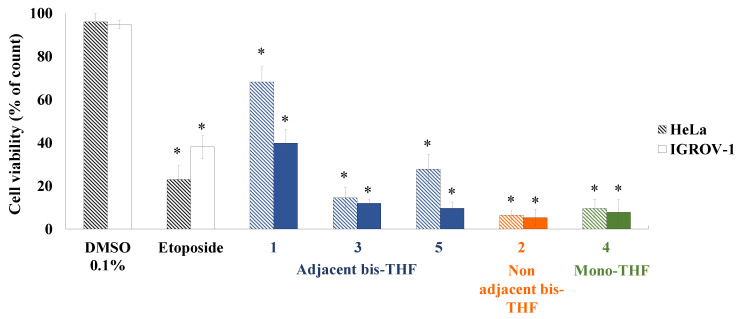
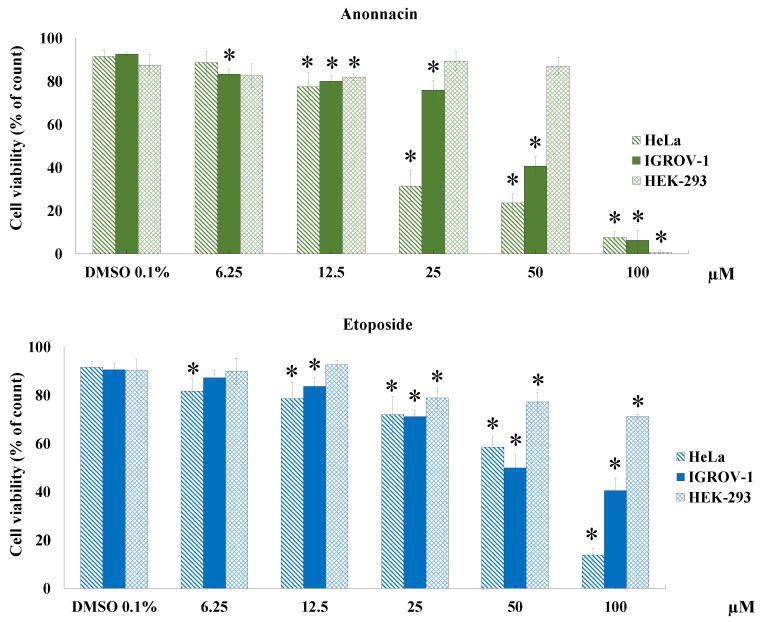
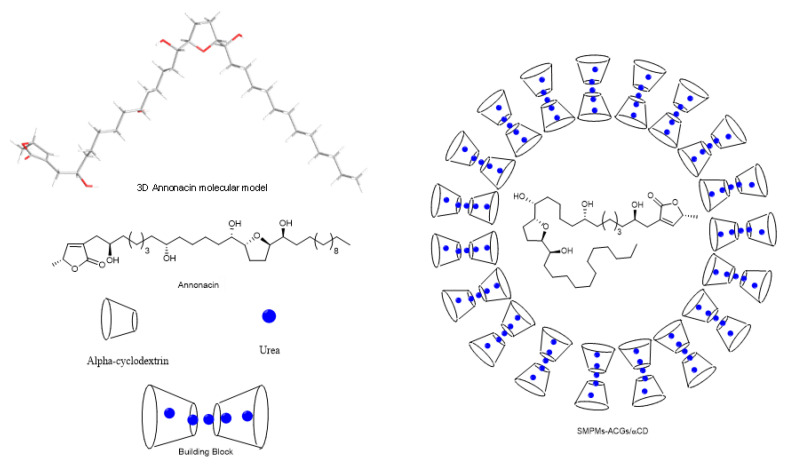
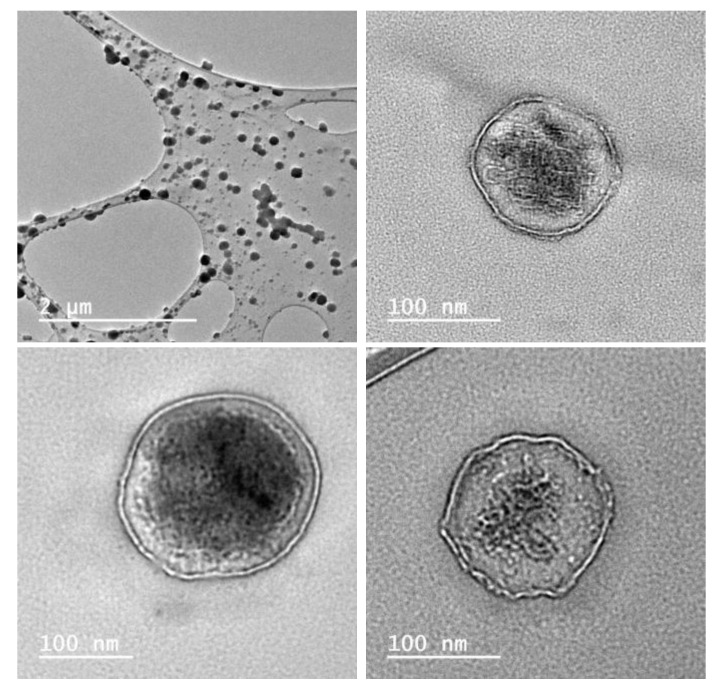
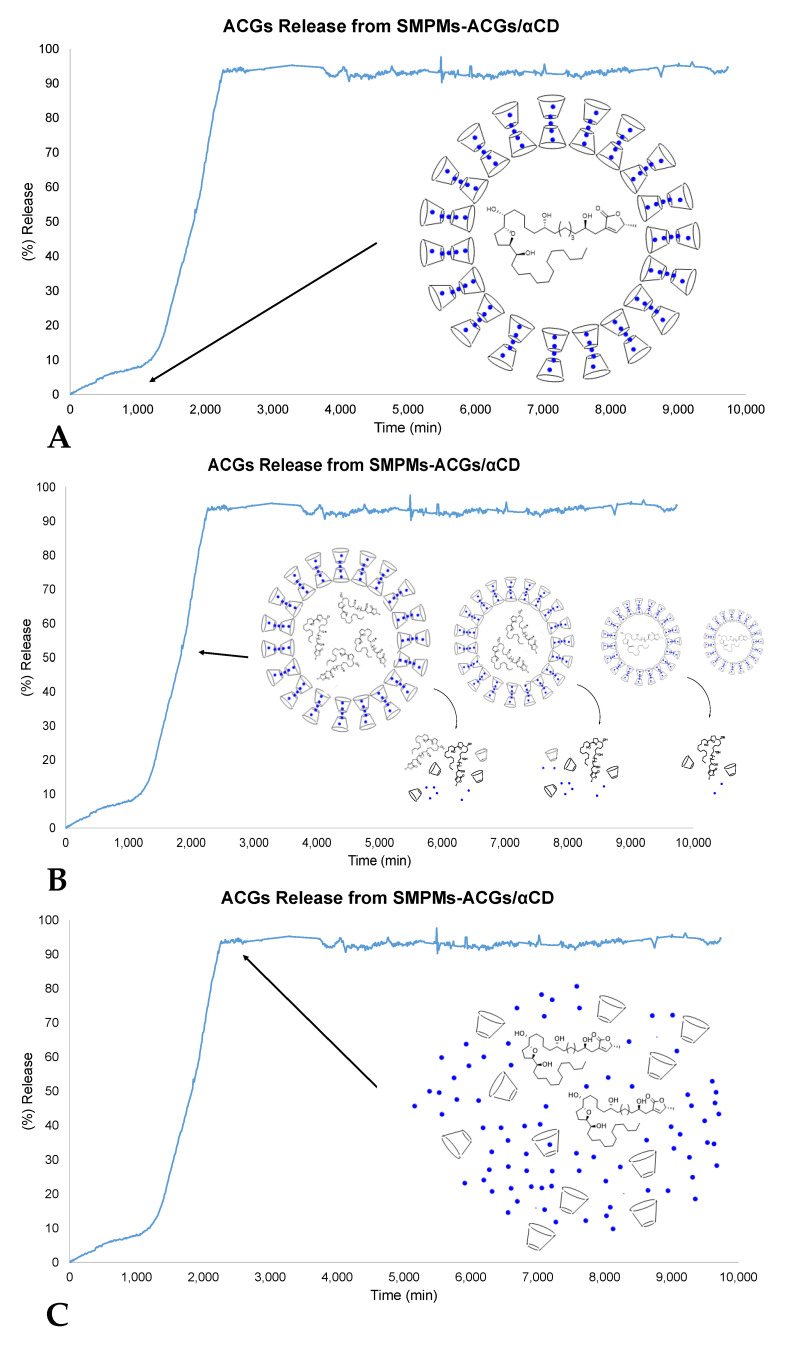
Annonaceous acetogenins (ACGs) are lipophilic polyketides isolated exclusively from Annonaceae. They are considered to be amongst the most potent antitumor compounds. Nevertheless, their applications are limited by their poor solubility. The isolation of ACGs from leaves, an agricultural waste, has not been reported to date. Molvizarin () cherimolin-1 (), motrilin (), annonacin () and annonisin () are isolated for the first time from deciduous leaves. Annonacin was found to be four- and two-times more potent in tumoral cells (HeLa, 23.6% live cells; IGROV-1, 40.8% live cells for 24 h) than in HEK-293 at 50 µM (24 h, 87.2% live cells). Supramolecular polymer micelles (SMPMs) were synthesized to encapsulate the major ACG isolated, annonacin, in order to improve its solubility in aqueous media. The bioavailability of this compound was increased by a factor of 13 in a simulated human digestive system when compared with free annonacin and an encapsulation efficiency of 35% was achieved. In addition, the cytotoxic activity of SMPMs that hosted annonacin (100 µM, 24 h, 5.8% live cells) was increased compared with free annonacin in water (100 µM, 24 h, 92% live cells). These results highlight the use of by-products of , and their pure compounds, as a promising source of anticancer agents. The use of SMPMs as nanocarriers of ACGs could be an alternative for their application in food field as nutraceutical to enhance the administration and efficacy.
番荔枝烷型乙酰二萜类化合物(ACGs)是从番荔枝科植物中分离得到的一类脂溶性聚酮化合物,被认为是最有效的抗肿瘤化合物之一。然而,由于其溶解度差,其应用受到限制。迄今为止,尚未有从番荔枝科植物的叶子(农业废弃物)中分离出 ACGs 的报道。首次从落叶中分离得到莫利维亚醇()、樱桃罗林-1()、莫特林()、annonacin()和 annonisin()。在 50µM 时,annonacin 在肿瘤细胞(HeLa,23.6%活细胞;IGROV-1,40.8%活细胞,24 小时)中的效力比在 HEK-293 中高出四倍和两倍(24 小时,87.2%活细胞)。为了提高水中主要分离得到的 ACG——annonacin 的溶解度,合成了超分子聚合物胶束(SMPMs)来包封它。与游离 annonacin 相比,当在模拟人体消化系统中时,该化合物的生物利用度提高了 13 倍,包封效率达到 35%。此外,与游离 annonacin 相比,载有 annonacin 的 SMPMs(100µM,24 小时,5.8%活细胞)的细胞毒性活性在水中有所提高(100µM,24 小时,92%活细胞)。这些结果突出了利用 的副产物及其纯化合物作为抗癌药物的有前途的来源。将 SMPMs 用作 ACGs 的纳米载体可能是在食品领域作为营养保健品应用的一种替代方法,以增强其给药和疗效。