Department of Marine Sciences, University of Georgia, Athens, GA, 30602, USA.
Department of Marine Chemistry and Geochemistry, Woods Hole Oceanographic Institution, Woods Hole, MA, 02543, USA.
ISME J. 2021 Mar;15(3):762-773. doi: 10.1038/s41396-020-00811-y. Epub 2020 Oct 23.
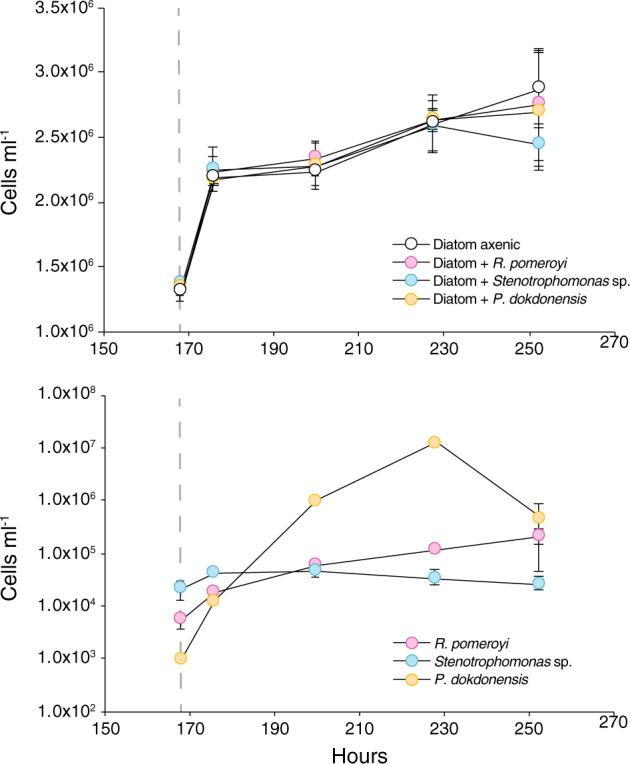
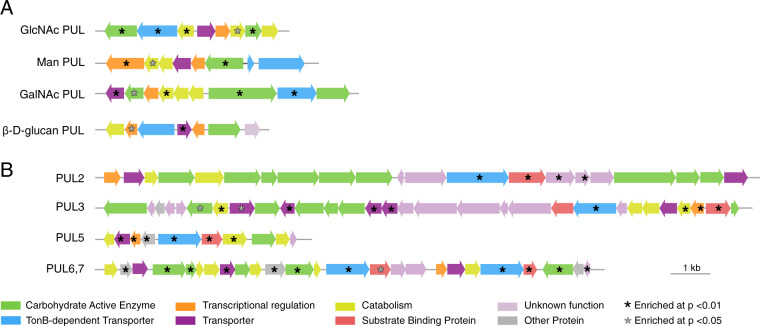
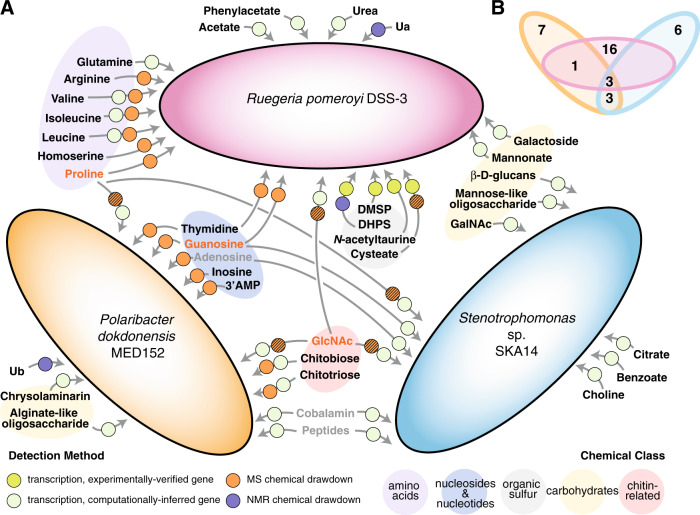
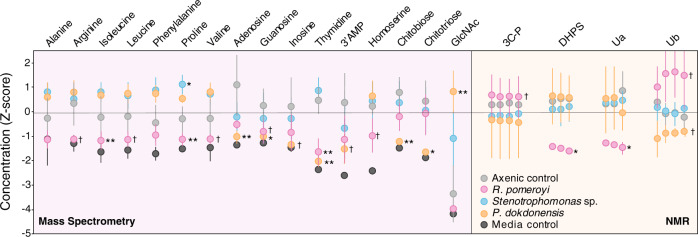
The communities of bacteria that assemble around marine microphytoplankton are predictably dominated by Rhodobacterales, Flavobacteriales, and families within the Gammaproteobacteria. Yet whether this consistent ecological pattern reflects the result of resource-based niche partitioning or resource competition requires better knowledge of the metabolites linking microbial autotrophs and heterotrophs in the surface ocean. We characterized molecules targeted for uptake by three heterotrophic bacteria individually co-cultured with a marine diatom using two strategies that vetted the exometabolite pool for biological relevance by means of bacterial activity assays: expression of diagnostic genes and net drawdown of exometabolites, the latter detected with mass spectrometry and nuclear magnetic resonance using novel sample preparation approaches. Of the more than 36 organic molecules with evidence of bacterial uptake, 53% contained nitrogen (including nucleosides and amino acids), 11% were organic sulfur compounds (including dihydroxypropanesulfonate and dimethysulfoniopropionate), and 28% were components of polysaccharides (including chrysolaminarin, chitin, and alginate). Overlap in phytoplankton-derived metabolite use by bacteria in the absence of competition was low, and only guanosine, proline, and N-acetyl-D-glucosamine were predicted to be used by all three. Exometabolite uptake pattern points to a key role for ecological resource partitioning in the assembly marine bacterial communities transforming recent photosynthate.
在海洋微藻周围聚集的细菌群落,通常以红杆菌目(Rhodobacterales)、黄杆菌目(Flavobacteriales)和γ-变形菌纲(Gammaproteobacteria)的科为主导。然而,这种一致的生态模式是否反映了基于资源的生态位分离或资源竞争的结果,需要更好地了解将微生物自养生物和异养生物联系起来的代谢物。我们使用两种策略,分别对与海洋硅藻共培养的三种异养细菌进行了特征描述,这两种策略通过细菌活性测定来检验外代谢物组的生物学相关性:表达诊断基因和净耗尽外代谢物,后者通过质谱和核磁共振检测,并使用新的样品制备方法。在具有细菌摄取证据的 36 多种有机分子中,有 53%含有氮(包括核苷和氨基酸),11%为有机硫化合物(包括二羟丙磺酸和二甲亚砜丙酸盐),28%为多糖成分(包括岩藻黄质、几丁质和褐藻酸盐)。在没有竞争的情况下,细菌对浮游植物衍生代谢物的利用存在低重叠,只有鸟苷、脯氨酸和 N-乙酰-D-葡萄糖胺被预测可被所有三种细菌利用。外代谢物摄取模式表明,生态资源分离在组装转化最近光合作用产物的海洋细菌群落中起着关键作用。