Gao Yuzhen, Chen Shipeng, Vafaei Somayeh, Zhong Xiaoli
Department of Molecular Diagnosis, Clinical Medical College, Yangzhou University, Yangzhou, China.
Department of Laboratory Medicine, Shanghai Eastern Hepatobiliary Surgery Hospital, Shanghai, China.
Front Oncol. 2020 Sep 25;10:557638. doi: 10.3389/fonc.2020.557638. eCollection 2020.
Tumor-infiltrating immune cells might add a predictive value for the prognostic stratification of patients with pancreatic ductal adenocarcinoma (PDAC) and chemotherapy response. We aimed to develop a prognostic model based on the tumor-infiltrating immune cell signature to improve the prediction of survival and chemotherapy benefits of patients with PDAC.
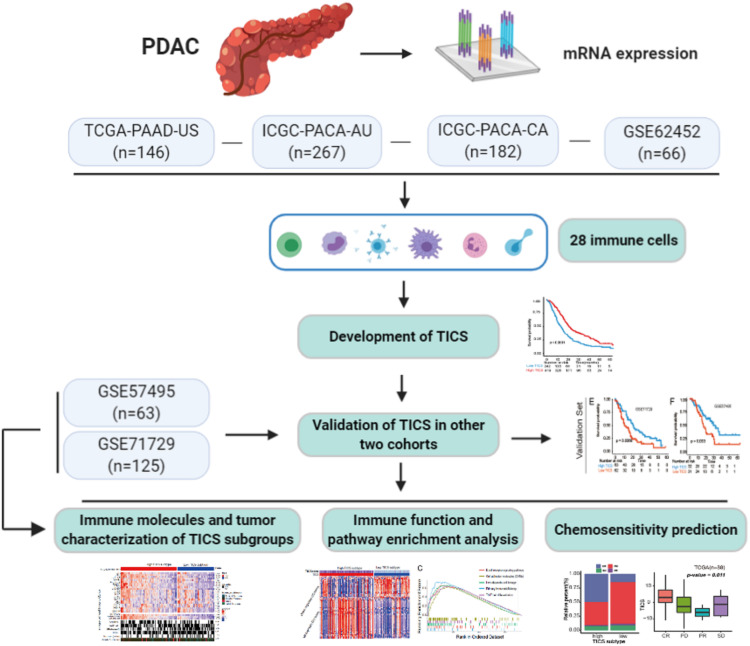
The abundance of tumor-infiltrating immune cells for 661 patients with PDAC from four different cohorts with survival data was collected in the training cohorts. Cox regression analysis and meta-analysis of immune cells were conducted to generate the tumor immune cell score (TICS) for prognostic stratification. Other two independent cohorts including 188 patients were then used to validate the model. Those patients who underwent chemotherapy were used to further analyze the value of TICS for predicting the chemotherapy response. Furthermore, the difference in the somatic mutations and immune-related molecules between the TICS subgroups was analyzed.
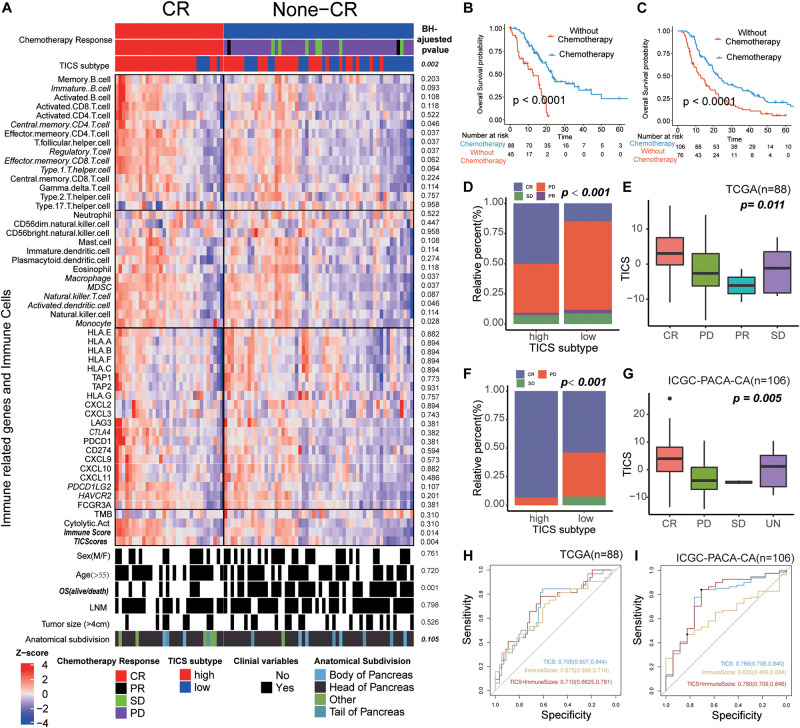
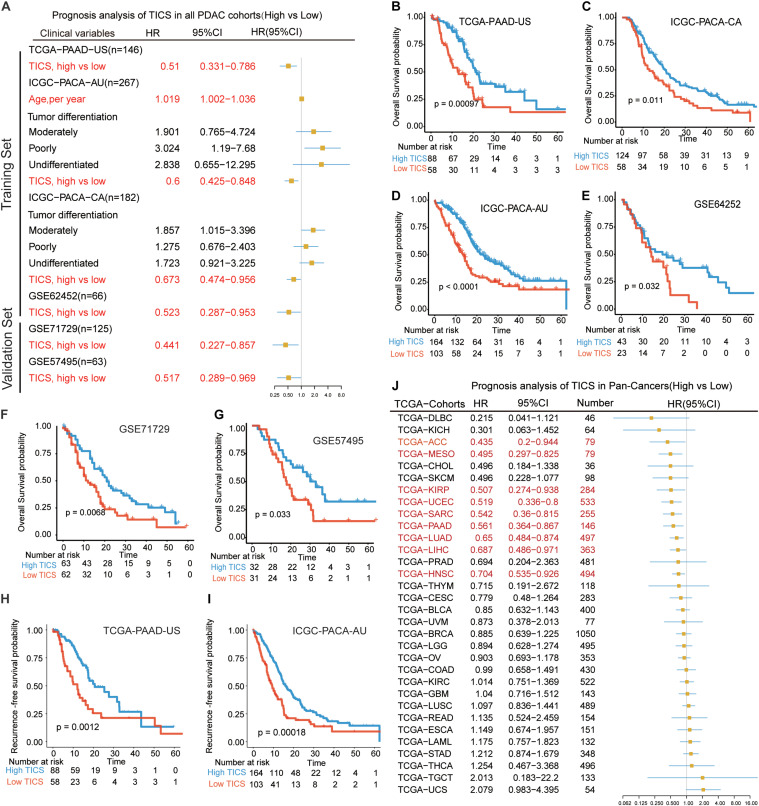
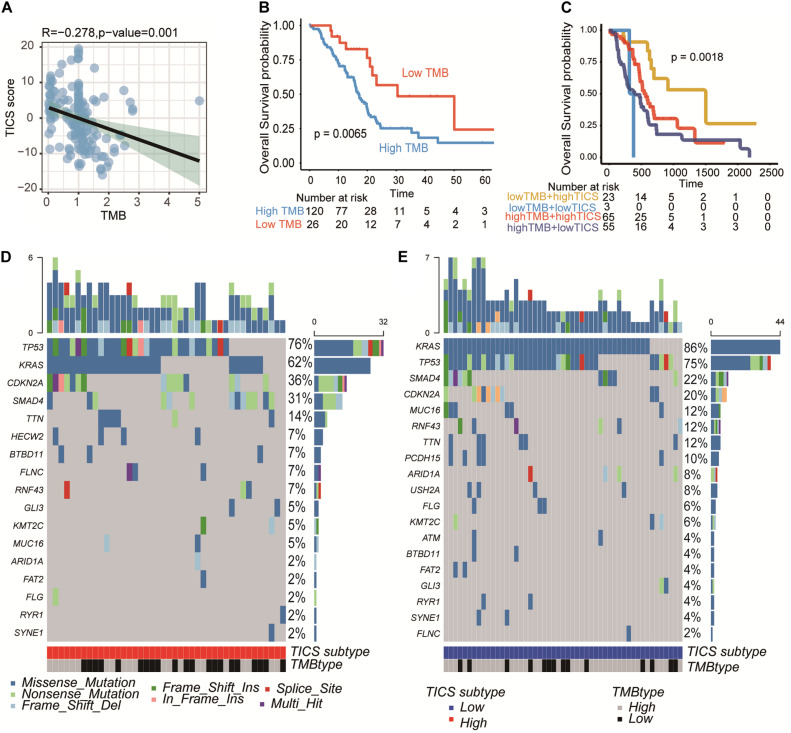
6 out of 28 immune cells were found to be significantly associated with PDAC prognosis in the training cohorts (all < 0.05). The developed TICS could significantly predict the PDAC survival and chemotherapy benefit both in the training and the external validation cohorts (log-rank test, < 0.05). Significant differences were found in different TICS subgroups in terms of the immune characteristics, checkpoint genes, and tumor mutational burden. Functional and pathway analyses further proved that the TICS was significantly related to the tumor immunity response in patients with PDAC.
TICS might be used to predict PDAC patients with a better survival and greater chemotherapy benefit.
肿瘤浸润免疫细胞可能为胰腺导管腺癌(PDAC)患者的预后分层及化疗反应增添预测价值。我们旨在基于肿瘤浸润免疫细胞特征开发一种预后模型,以改善对PDAC患者生存及化疗获益的预测。
在训练队列中收集了来自四个不同队列的661例有生存数据的PDAC患者的肿瘤浸润免疫细胞丰度。进行免疫细胞的Cox回归分析和荟萃分析以生成用于预后分层的肿瘤免疫细胞评分(TICS)。然后使用另外两个包括188例患者的独立队列来验证该模型。对接受化疗的患者进一步分析TICS对预测化疗反应的价值。此外,分析了TICS亚组之间体细胞突变和免疫相关分子的差异。
在训练队列中发现28种免疫细胞中有6种与PDAC预后显著相关(均P<0.05)。所开发的TICS在训练队列和外部验证队列中均能显著预测PDAC患者的生存及化疗获益(对数秩检验,P<0.05)。在不同TICS亚组的免疫特征(、)检查点基因和肿瘤突变负荷方面发现了显著差异。功能和通路分析进一步证明TICS与PDAC患者的肿瘤免疫反应显著相关。
TICS可用于预测生存较好且化疗获益更大的PDAC患者。