Koo Hyunmin, Crossman David K, Morrow Casey D
Department of Genetics, University of Alabama at Birmingham, Birmingham, AL, United States.
Department of Cell, Developmental and Integrative Biology, University of Alabama at Birmingham, Birmingham, AL, United States.
Front Pediatr. 2020 Sep 30;8:549844. doi: 10.3389/fped.2020.549844. eCollection 2020.
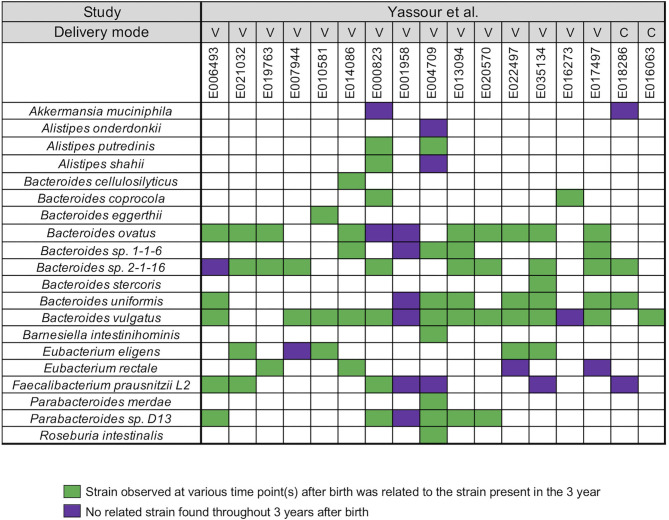
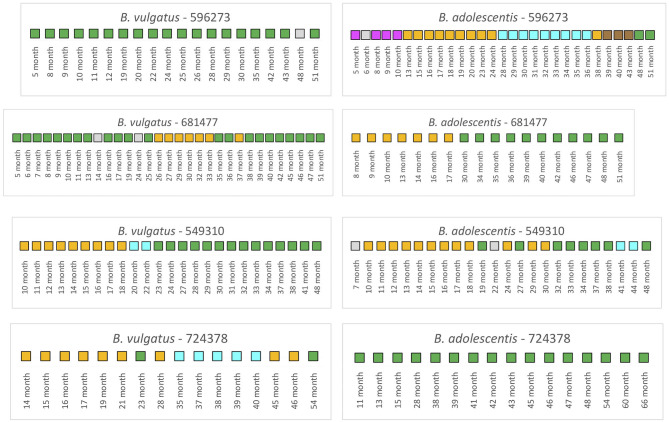
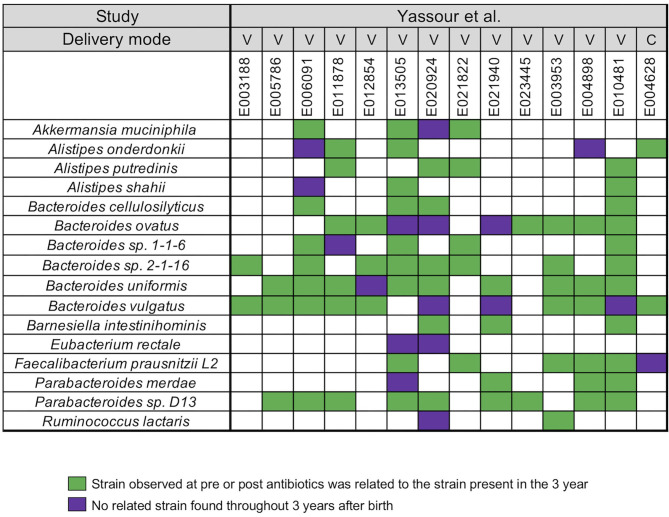
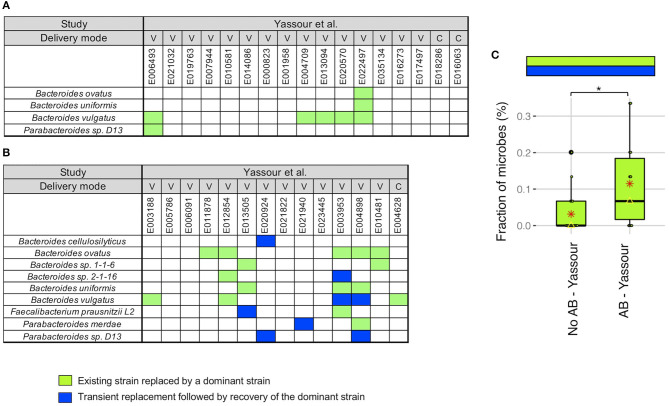
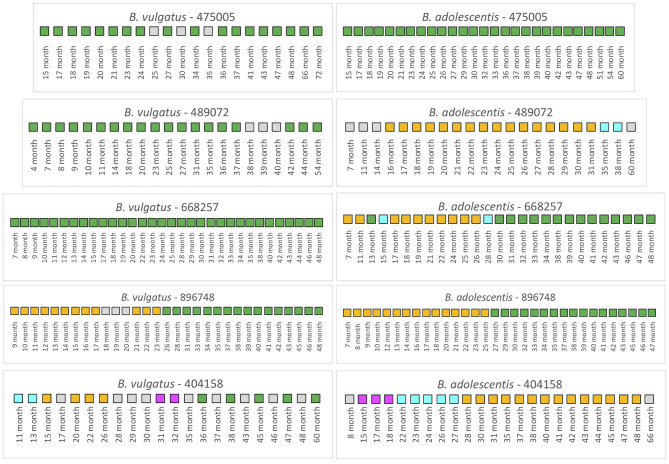
Stable microbe and host interactions are established during the development of the infant gut microbial community that provide essential functions for the efficient digestion of food, immune development, and resistance to colonization with pathogens. To further delineate the stability of the gut microbial community during this time, we have used microbial strain tracking analysis with published longitudinal metagenomic data sets to identify strains that persist in the developing infant gut ecosystem. In the first study, 17 infants were evaluated that had not received antibiotics for 3 years after birth. An infant specific pattern was seen for stable and unstable microbial strains during this time, with only one infant having no stable strains identified out of available strains during the first 3 years. Strain tracking was also applied to follow microbes in a separate set of 14 infants that had multiple doses of antibiotics over the 3 years. In 10 out of 14 infants given multiple antibiotics during the first 3 years, we identified a unique pattern of transient strains that appeared after multiple antibiotic treatments for a short time compared to that in infants not on antibiotics. In a second, independent study, we selected a subset of 9 infants from a previously published study consisting of high-density longitudinal fecal sampling to analyze the gut microbial strain stability of and for up to 6 years following birth. Individual specific patterns were found consisting of varying dominant microbial strains that were independent of antibiotic exposure and birth mode. Our analysis demonstrates an individual specific inherent variability of extinction and persistence of microbial strains in the infant gut community during a time of development that is critical for interactions necessary for establishing normal metabolism and the development of the host immune response.
在婴儿肠道微生物群落发育过程中建立了稳定的微生物与宿主相互作用,这些相互作用为食物的有效消化、免疫发育以及抵抗病原体定植提供了基本功能。为了进一步描绘这段时间肠道微生物群落的稳定性,我们利用已发表的纵向宏基因组数据集进行微生物菌株追踪分析,以识别在发育中的婴儿肠道生态系统中持续存在的菌株。在第一项研究中,对17名出生后3年未接受抗生素治疗的婴儿进行了评估。在此期间观察到了稳定和不稳定微生物菌株的婴儿特异性模式,在前3年中,只有一名婴儿在可用菌株中未鉴定出稳定菌株。菌株追踪还应用于另一组14名在3年内接受多次抗生素治疗的婴儿,以跟踪其体内的微生物。在14名在头3年接受多次抗生素治疗的婴儿中,有10名婴儿出现了独特的短暂菌株模式,与未使用抗生素的婴儿相比,这些菌株在多次抗生素治疗后短时间内出现。在第二项独立研究中,我们从之前一项包含高密度纵向粪便样本的已发表研究中选择了9名婴儿作为子集,分析出生后长达6年的肠道微生物菌株稳定性。发现了个体特异性模式,包括不同的优势微生物菌株,这些菌株与抗生素暴露和出生方式无关。我们的分析表明,在对建立正常新陈代谢和宿主免疫反应所需的相互作用至关重要的发育时期,婴儿肠道群落中微生物菌株的灭绝和持续存在具有个体特异性固有变异性。