Arrué Patricio, Toosizadeh Nima, Babaee Hessam, Laksari Kaveh
Department of Biomedical Engineering, University of Arizona, Tucson, AZ, United States.
Arizona Center on Aging (ACOA), Department of Medicine, University of Arizona, Tucson, AZ, United States.
Front Bioeng Biotechnol. 2020 Sep 25;8:555493. doi: 10.3389/fbioe.2020.555493. eCollection 2020.
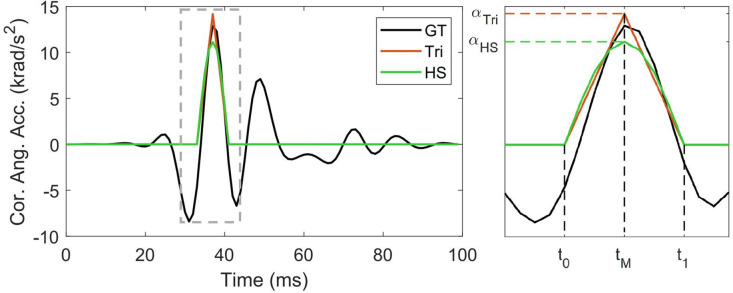
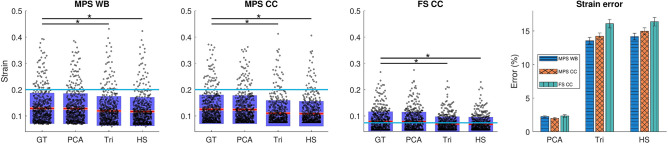
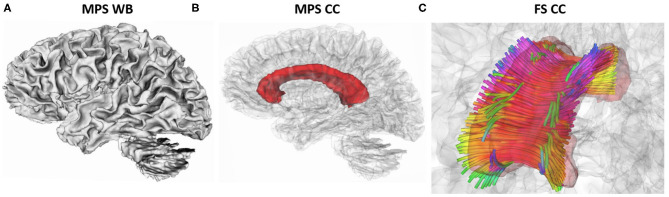
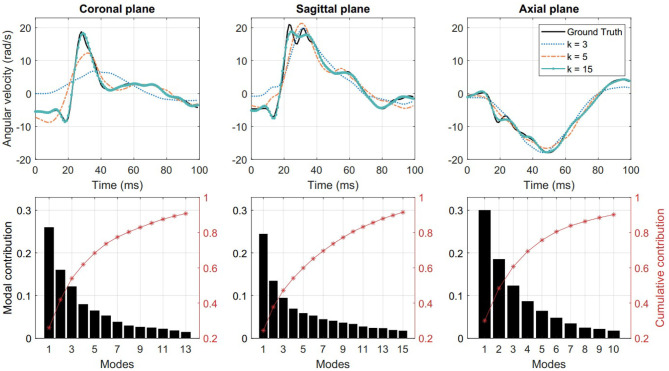
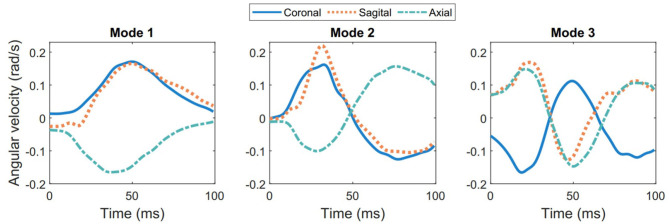
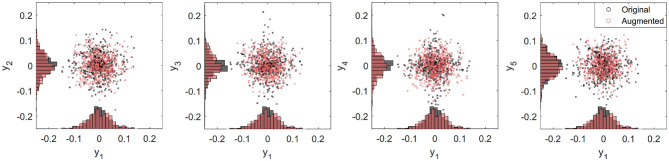
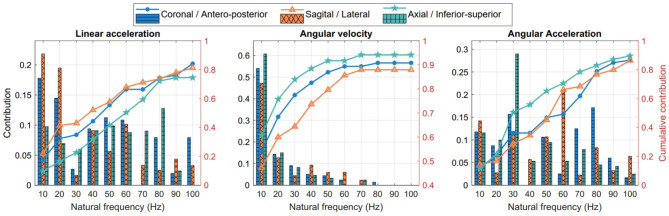
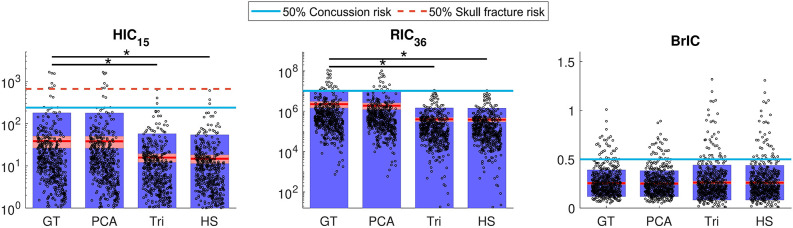
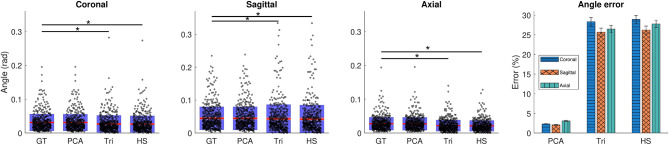
Head motion induced by impacts has been deemed as one of the most important measures in brain injury prediction, given that the vast majority of brain injury metrics use head kinematics as input. Recently, researchers have focused on using fast approaches, such as machine learning, to approximate brain deformation in real time for early brain injury diagnosis. However, training such models requires large number of kinematic measurements, and therefore data augmentation is required given the limited on-field measured data available. In this study we present a principal component analysis-based method that emulates an empirical low-rank substitution for head impact kinematics, while requiring low computational cost. In characterizing our existing data set of 537 head impacts, each consisting of 6 degrees of freedom measurements, we found that only a few modes, e.g., 15 in the case of angular velocity, is sufficient for accurate reconstruction of the entire data set. Furthermore, these modes are predominantly low frequency since over 70% of the angular velocity response can be captured by modes that have frequencies under 40 Hz. We compared our proposed method against existing impact parametrization methods and showed significantly better performance in injury prediction using a range of kinematic-based metrics-such as head injury criterion (HIC), rotational injury criterion (RIC), and brain injury metric (BrIC)-and brain tissue deformation-based metrics-such as brain angle metric (BAM), maximum principal strain (MPS), and axonal fiber strains (FS). In all cases, our approach reproduced injury metrics similar to the ground truth measurements with no significant difference, whereas the existing methods obtained significantly different ( < 0.01) values as well as substantial differences in injury classification sensitivity and specificity. This emulator will enable us to provide the necessary data augmentation to build a head impact kinematic data set of any size. The emulator and corresponding examples are available on our website.
鉴于绝大多数脑损伤指标都将头部运动学作为输入,撞击引起的头部运动被视为脑损伤预测中最重要的指标之一。最近,研究人员专注于使用机器学习等快速方法来实时近似脑变形,以进行早期脑损伤诊断。然而,训练此类模型需要大量的运动学测量数据,因此鉴于现场可用的测量数据有限,需要进行数据增强。在本研究中,我们提出了一种基于主成分分析的方法,该方法可模拟头部撞击运动学的经验低秩替代,同时计算成本较低。在对我们现有的537次头部撞击数据集进行特征描述时,每个数据集都包含6个自由度的测量值,我们发现只有少数模式,例如角速度情况下的15个模式,就足以准确重建整个数据集。此外,这些模式主要是低频的,因为超过70%的角速度响应可以由频率低于40Hz的模式捕获。我们将我们提出的方法与现有的撞击参数化方法进行了比较,并使用一系列基于运动学的指标(如头部损伤标准(HIC)、旋转损伤标准(RIC)和脑损伤指标(BrIC))以及基于脑组织变形的指标(如脑角指标(BAM)、最大主应变(MPS)和轴突纤维应变(FS))在损伤预测方面表现出明显更好的性能。在所有情况下,我们的方法再现的损伤指标与地面真实测量值相似,没有显著差异,而现有方法获得的数值显著不同(<0.01),并且在损伤分类敏感性和特异性方面也存在实质性差异。这个模拟器将使我们能够提供必要的数据增强,以构建任何规模的头部撞击运动学数据集。该模拟器及相应示例可在我们的网站上获取。