Department of Pathology, Division of Medical Microbiology, Johns Hopkins University School of Medicine, Baltimore, Maryland, USA.
National Institutes of Allergy and Infectious Disease, Bethesda, Maryland, USA.
Clin Infect Dis. 2021 Aug 16;73(4):e860-e869. doi: 10.1093/cid/ciaa1616.
Repeated coronavirus disease 2019 (COVID-19) molecular testing can lead to positive test results after negative results and to multiple positive results over time. The association between positive test results and infectious virus is important to quantify.
A 2-month cohort of retrospective data and consecutively collected specimens from patients with COVID-19 or patients under investigation were used to understand the correlation between prolonged viral RNA positive test results, cycle threshold (Ct) values and growth of severe acute respiratory syndrome coronavirus 2 (SARS-CoV-2) in cell culture. Whole-genome sequencing was used to confirm virus genotype in patients with prolonged viral RNA detection. Droplet digital polymerase chain reaction was used to assess the rate of false-negative COVID-19 diagnostic test results.
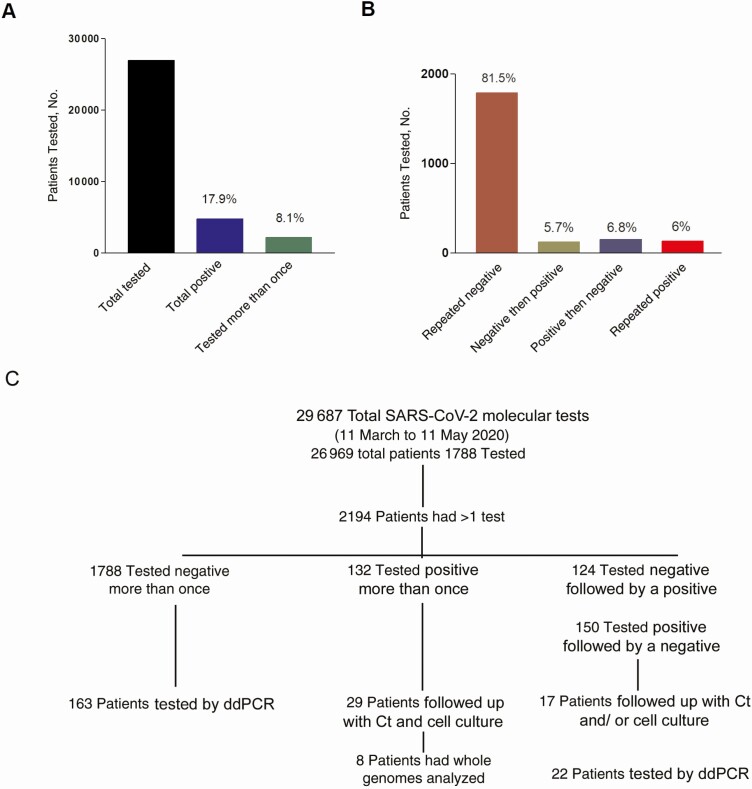
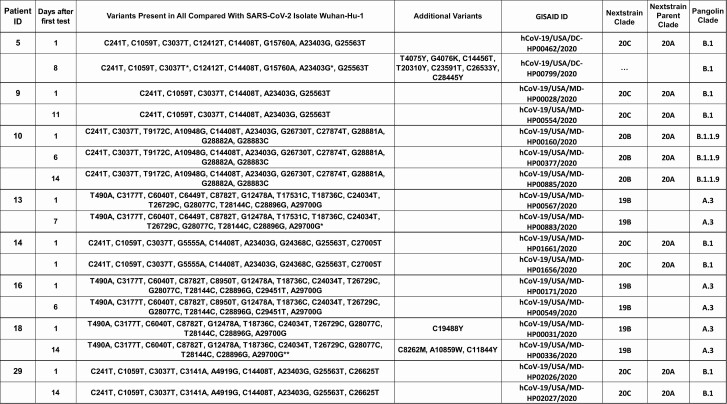
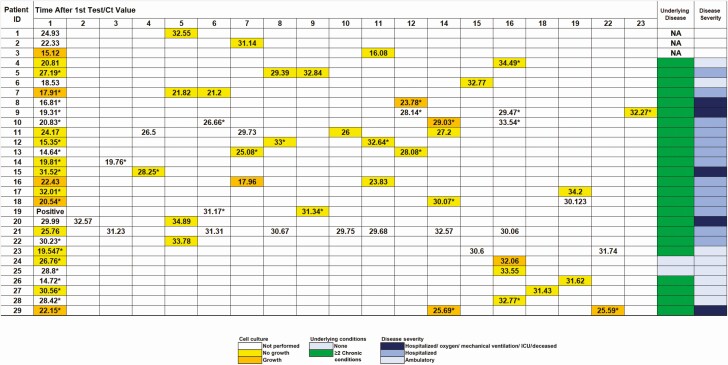
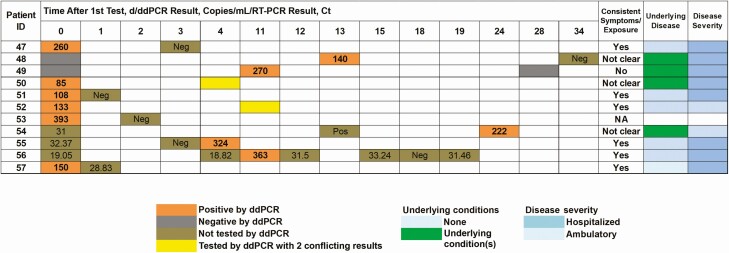
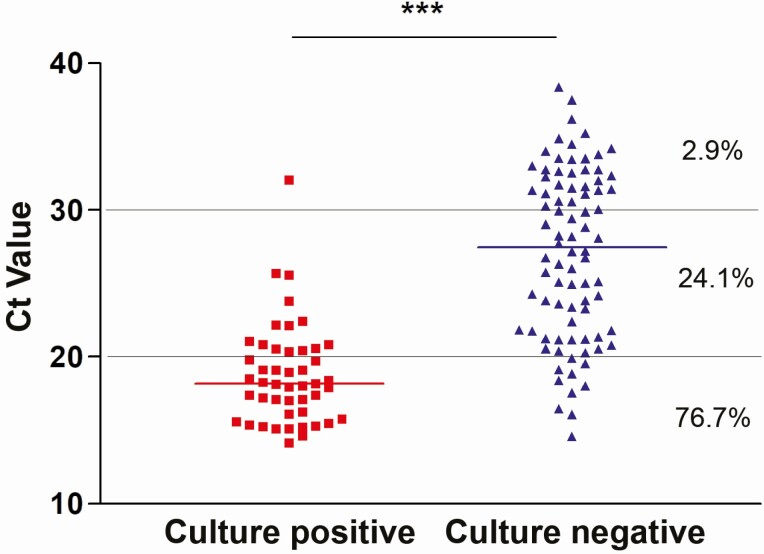
In 2 months, 29 686 specimens were tested and 2194 patients underwent repeated testing. Virus recovery in cell culture was noted in specimens with a mean Ct value of 18.8 (3.4) for SARS-CoV-2 target genes. Prolonged viral RNA shedding was associated with positive virus growth in culture in specimens collected up to 21 days after the first positive result but mostly in individuals symptomatic at the time of sample collection. Whole-genome sequencing provided evidence the same virus was carried over time. Positive test results following negative results had Ct values >29.5 and were not associated with virus culture. Droplet digital polymerase chain reaction results were positive in 5.6% of negative specimens collected from patients with confirmed or clinically suspected COVID-19.
Low Ct values in SARS-CoV-2 diagnostic tests were associated with virus growth in cell culture. Symptomatic patients with prolonged viral RNA shedding can also be infectious.
反复进行 2019 年冠状病毒病(COVID-19)分子检测可能会导致阴性结果后出现阳性检测结果,并随着时间的推移出现多次阳性结果。阳性检测结果与传染性病毒之间的关联对于定量很重要。
使用为期 2 个月的回顾性队列数据和连续收集的 COVID-19 患者或疑似患者的标本,了解延长的病毒 RNA 阳性检测结果、循环阈值(Ct)值与 SARS-CoV-2 在细胞培养中生长之间的相关性。对延长病毒 RNA 检测的患者进行全基因组测序以确认病毒基因型。使用液滴数字聚合酶链反应评估 COVID-19 诊断检测结果假阴性的发生率。
在 2 个月内,共检测了 29686 份标本,有 2194 名患者进行了重复检测。在平均 Ct 值为 18.8(3.4)的 SARS-CoV-2 靶基因标本中观察到病毒在细胞培养中的恢复。在首次阳性结果后长达 21 天采集的标本中,延长的病毒 RNA 脱落与培养中阳性病毒生长相关,但主要发生在标本采集时出现症状的个体中。全基因组测序提供了证据表明同一病毒随时间推移而传播。在首次阴性结果后出现的阳性检测结果 Ct 值>29.5,与病毒培养无关。从确诊或临床疑似 COVID-19 患者采集的 5.6%的阴性标本中,液滴数字聚合酶链反应结果为阳性。
SARS-CoV-2 诊断检测中的低 Ct 值与细胞培养中的病毒生长相关。延长的病毒 RNA 脱落的有症状患者也可能具有传染性。