Orthopedics and Traumatology Clinic, IRCCS Policlinico San Matteo Foundation, 27100, Pavia, Italy.
Department of Clinical Surgical, Diagnostic and Pediatric Sciences, University of Pavia, 27100, Pavia, Italy.
Sci Rep. 2020 Oct 26;10(1):18284. doi: 10.1038/s41598-020-75385-y.
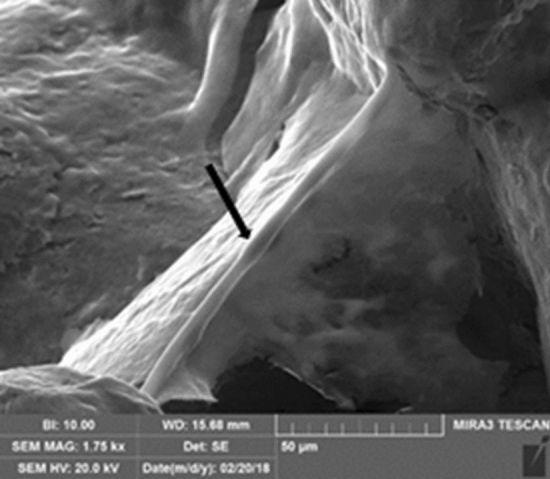
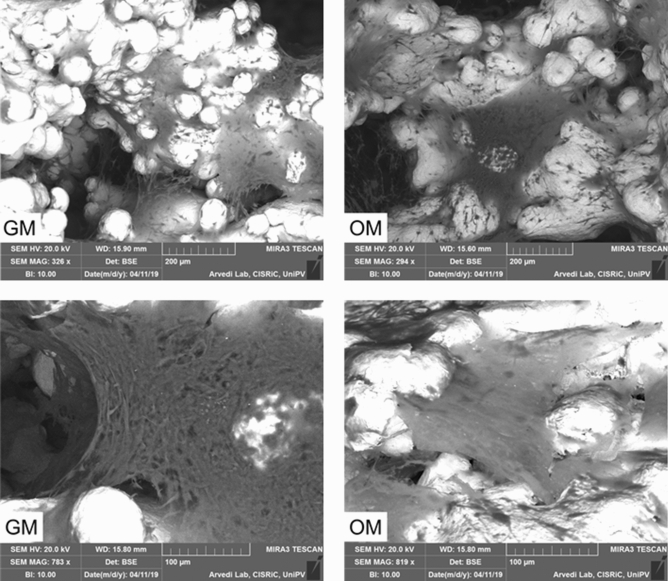
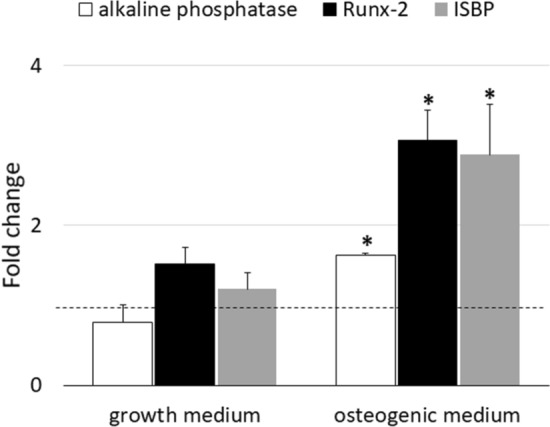
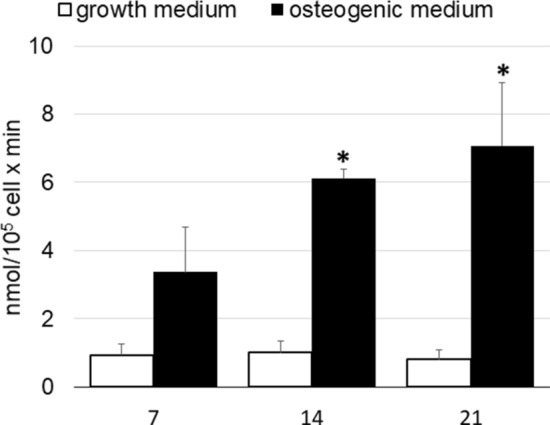
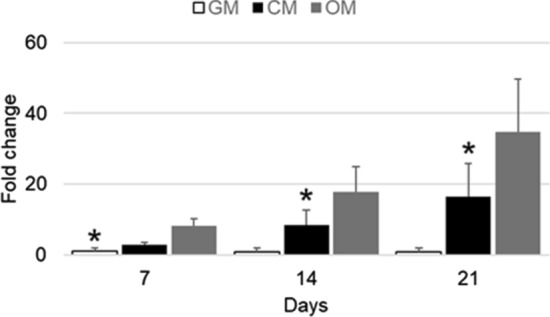
Spine degenerative conditions are becoming increasingly prevalent, affecting about 5.7% of the population in Europe, resulting in a significant reduction of life's quality. Up to now, many materials have been used in manufacturing cage implants, used as graft substitutes, to achieve immediate and long-term spinal fixation. Particularly, titanium and its alloys are emerging as valuable candidates to develop new types of cages. The aim of this in vitro study was to evaluate the adhesion, proliferation and osteogenic differentiation of adipose derived mesenchymal stem cells (ASCs) seeded on trabecular titanium cages. ASCs adhered, proliferated and produced an abundant extracellular matrix during the 3 weeks of culture. In the presence of osteogenic medium, ASCs differentiated into osteoblast-like cells: the expression of typical bone genes, as well as the alkaline phosphatase activity, was statistically higher than in controls. Furthermore, the dispersive spectrometry microanalysis showed a marked increase of calcium level in cells grown in osteogenic medium. Plus, our preliminary data about osteoinduction suggest that this titanium implant has the potential to induce the ASCs to produce a secretome able to trigger a shift in the ASCs phenotype, possibly towards the osteogenic differentiation, as illustrated by the qRT-PCR and ALP biochemical assay results. The trabecular porous organization of these cages is rather similar to the cancellous bone structure, thus allowing the bone matrix to colonize it efficiently; for these reasons we can conclude that the architecture of this cage may play a role in modulating the osteoinductive capabilities of the implant, thus encouraging its engagement in in vivo studies for the treatment of spinal deformities and diseases.
脊柱退行性疾病的发病率越来越高,在欧洲大约影响 5.7%的人群,导致生活质量显著下降。到目前为止,已经有许多材料被用于制造 cage 植入物,作为移植物替代品,以实现即时和长期的脊柱固定。特别是钛及其合金作为开发新型 cage 的有价值的候选材料正在出现。本体外研究的目的是评估在小梁钛 cage 上接种脂肪间充质干细胞(ASCs)的黏附、增殖和成骨分化。ASCs 在培养的 3 周内黏附、增殖并产生丰富的细胞外基质。在成骨培养基存在的情况下,ASCs 分化为成骨细胞样细胞:典型骨基因的表达以及碱性磷酸酶活性明显高于对照组。此外,弥散光谱微分析显示,在成骨培养基中生长的细胞中钙水平显著增加。此外,我们关于成骨诱导的初步数据表明,这种钛植入物具有诱导 ASCs 产生能够引发 ASCs 表型转变的 secretome 的潜力,可能朝着成骨分化的方向发展,这正如 qRT-PCR 和 ALP 生化分析结果所示。这些 cage 的小梁多孔组织与松质骨结构非常相似,从而允许骨基质有效地定植;基于这些原因,我们可以得出结论,这种 cage 的结构可能在调节植入物的成骨诱导能力方面发挥作用,从而鼓励其在治疗脊柱畸形和疾病的体内研究中应用。