Stecker Richard A, Moon Jessica M, Russo Travis J, Ratliff Kayla M, Mumford Petey W, Jäger Ralf, Purpura Martin, Kerksick Chad M
Exercise and Performance Nutrition Laboratory, School of Health Sciences, Lindenwood University, St. Charles, MO 63301 USA.
Increnovo, LLC, Milwaukee, WI USA.
Nutr Metab (Lond). 2020 Oct 23;17:93. doi: 10.1186/s12986-020-00515-2. eCollection 2020.
Probiotic GBI-30, 6086 (BC30) has been shown to increase protein digestion in an in vitro model of the stomach and small intestine. Once active in the small intestine after germination, BC30 aids the digestion of carbohydrates and proteins. The extent to which BC30 administration may impact protein digestion and amino acid appearance in humans after protein ingestion is currently unknown. This study examined the impact of adding BC30 to a 25-g dose of milk protein concentrate on post-prandial changes in blood amino acids concentrations.
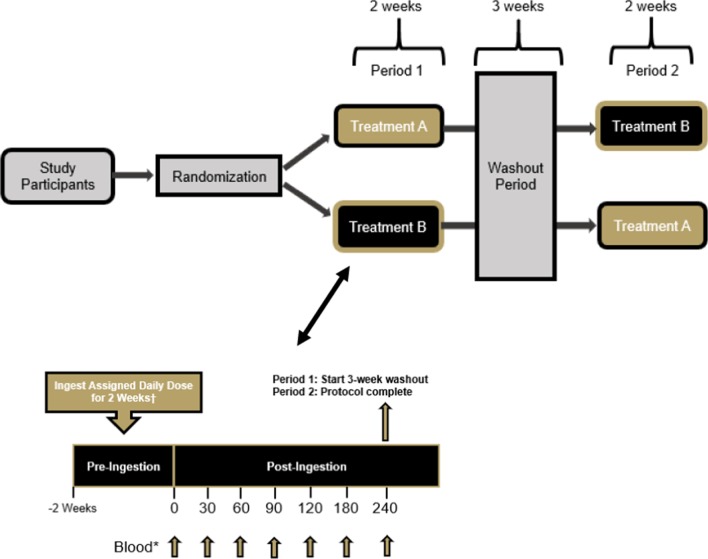
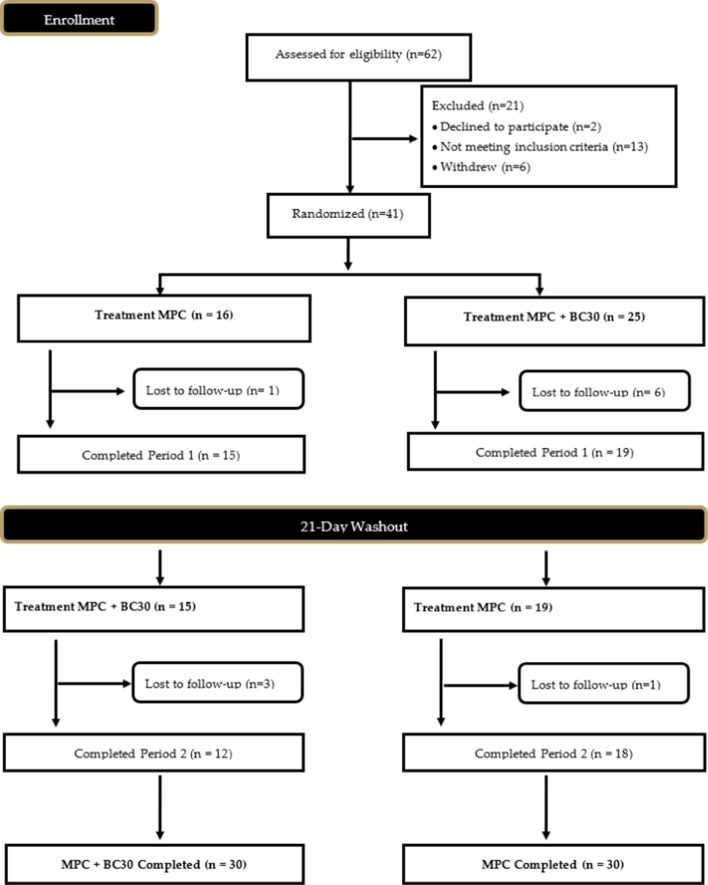
14 males and 16 females (n = 30, 26.4 ± 6.5 years; 172.3 ± 10.8 cm; 78.2 ± 14.8 kg; 22.6 ± 7.2% fat) completed two supplementation protocols that each spanned two weeks separated by a washout period that lasted three weeks. Participants were instructed to track their dietary intake and ingest a daily 25-g dose of milk protein concentrate with (MPCBC30) or without (MPC) the addition of BC30. Body composition and demographics were assessed upon arrival to the laboratory. Upon ingestion of their final assigned supplemental dose, blood samples were taken at 0 (baseline), 30, 60, 90, 120, 180, and 240 min post-consumption and analyzed for amino acid concentrations.
Arginine ( = 0.03) and Isoleucine ( = 0.05) revealed greater area-under-the curve (AUC) in MPCBC30 group compared to MPC. In addition, Arginine ( = 0.02), Serine ( = 0.01), Ornithine ( = 0.02), Methionine ( = 0.04), Glutamic Acid ( = 0.01), Phenylalanine ( = 0.05), Isoleucine ( = 0.04), Tyrosine ( = 0.02), Essential Amino Acids ( = 0.02), and Total Amino Acids ( < 0.01) all revealed significantly greater concentration maximum (C) in MPCBC30 compared to MPC. Finally, time to reach C (T) was significantly faster for Glutamine ( < 0.01), Citrulline ( < 0.01), Threonine ( = 0.04), Alanine ( = 0.02) in MPCBC30 when compared to MPC. Greater mean differences between groups for AUC and C in women when compared to the mean differences in men were found for several amino acids.
In concert with previous in vitro evidence of improved protein digestion and amino acid appearance, these results reveal that adding BC30 to protein sources such as milk protein concentrate can improve AUC, C, and faster T. Follow-up research should examine differences between gender and explore how aging can impact these outcomes. Retrospectively registered on June 11, 2020 at ClinicalTrials.gov as NCT04427020.
益生菌GBI-30,6086(BC30)已被证明在胃和小肠的体外模型中可增加蛋白质消化。在小肠中萌发后,BC30一旦在小肠中激活,就有助于碳水化合物和蛋白质的消化。目前尚不清楚摄入BC30对人体摄入蛋白质后蛋白质消化和氨基酸出现情况的影响程度。本研究考察了在25克乳清蛋白浓缩物中添加BC30对餐后血液氨基酸浓度变化的影响。
14名男性和16名女性(n = 30,年龄26.4±6.5岁;身高172.3±10.8厘米;体重78.2±14.8千克;体脂率22.6±7.2%)完成了两个补充方案,每个方案持续两周,中间有一个为期三周的洗脱期。参与者被要求记录饮食摄入量,并每天摄入25克添加(MPCBC30)或不添加(MPC)BC30的乳清蛋白浓缩物。到达实验室时评估身体成分和人口统计学特征。在摄入最后分配的补充剂剂量后,在摄入后0(基线)、30、60、90、120、180和240分钟采集血样,并分析氨基酸浓度。
与MPC组相比,MPCBC30组的精氨酸(P = 0.03)和异亮氨酸(P = 0.05)曲线下面积(AUC)更大。此外,与MPC组相比,MPCBC30组的精氨酸(P = 0.02)、丝氨酸(P = 0.01)、鸟氨酸(P = 0.02)、蛋氨酸(P = 0.04)、谷氨酸(P = 0.01)、苯丙氨酸(P = 0.05)、异亮氨酸(P = 0.04)、酪氨酸(P = 0.02)、必需氨基酸(P = 0.02)和总氨基酸(P < 0.01)的浓度最大值(C)均显著更高。最后,与MPC组相比,MPCBC30组的谷氨酰胺(P < 0.01)、瓜氨酸(P < 0.01)、苏氨酸(P = 0.04)、丙氨酸(P = 0.02)达到C的时间显著更快。在几种氨基酸方面,女性组间AUC和C的平均差异比男性组间的平均差异更大。
与之前关于改善蛋白质消化和氨基酸出现情况的体外证据一致,这些结果表明,在乳清蛋白浓缩物等蛋白质来源中添加BC30可以改善AUC、C,并加快达到C的时间(T)。后续研究应考察性别差异,并探索衰老如何影响这些结果。于2020年6月11日在ClinicalTrials.gov上进行回顾性注册,注册号为NCT04427020。