Ulukaya Durakbasa Cigdem, Kiyan Gursu, Aydoner Sinem, Pirim Ahmet, Seneldir Hatice, Ozkok Sercin, Caymaz Ismail
Istanbul Medeniyet University Faculty of Medicine, Goztepe Training and Research Hospital, Department of Pediatric Surgery, Istanbul, Turkey.
Marmara University Faculty of Medicine, Pendik Training and Research Hospital, Department of Pediatric Surgery, Istanbul, Turkey.
Medeni Med J. 2020;35(3):261-265. doi: 10.5222/MMJ.2020.22220. Epub 2020 Sep 30.
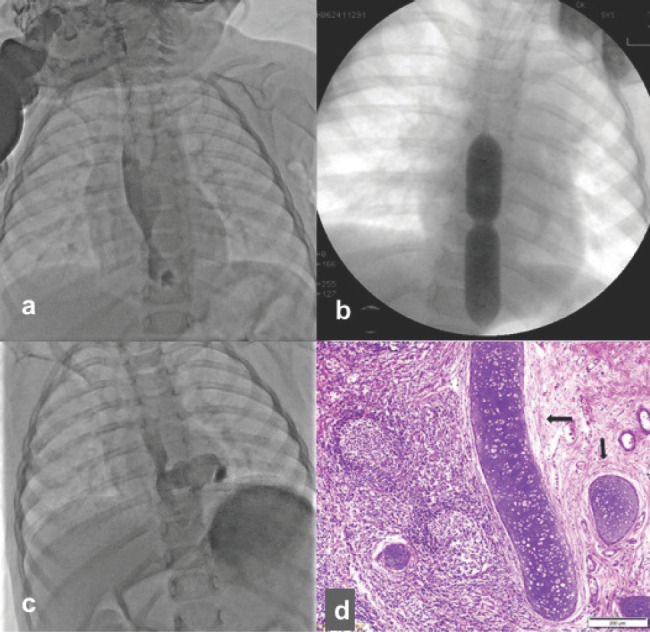
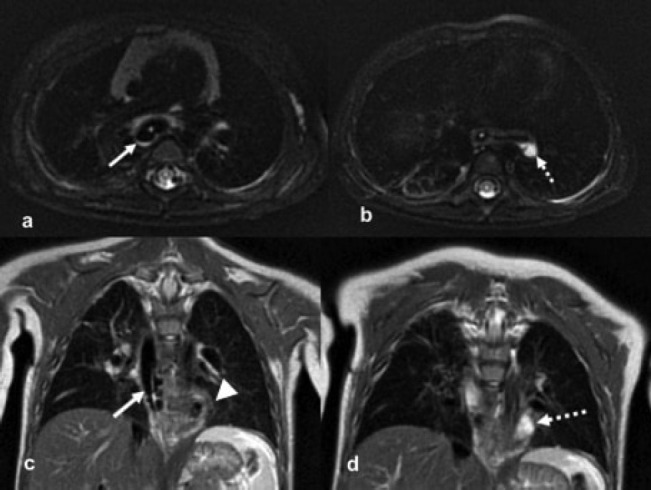
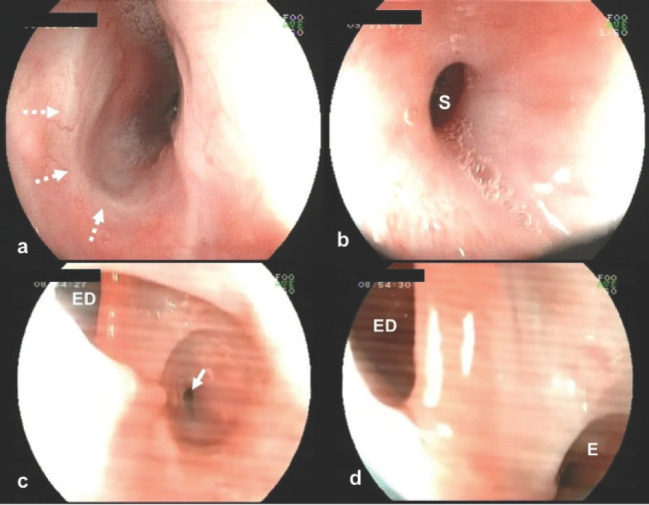
Congenital esophageal stenosis (CES) is a rare congenital disorder which may be isolated or associated with esophageal atresia (EA). It courses with esophageal outflow tract obstruction. Esophageal epiphrenic diverticulae are esophageal outpouchings above diaphragm which develop because of an underlying esophageal motor disorder. We present an infant who had CES associated with EA detected during the course of routine follow-up. She underwent several sessions of esophageal balloon dilatations for CES with some symptomatic improvement. However, an epiphrenic diverticulum (ED) developed during the course of treatment which was detected by further investigations. A surgical excision was performed with a successful outcome. An ED developed secondary to CES has not been previously reported. We have highlighted the diagnostic modalities employed, treatment options, and clinical follow-up for these two rare conditions in children.
先天性食管狭窄(CES)是一种罕见的先天性疾病,可单独出现或与食管闭锁(EA)相关。它伴有食管流出道梗阻。食管膈上憩室是膈肌上方的食管膨出,由潜在的食管运动障碍引起。我们报告一名婴儿,在常规随访过程中发现患有与EA相关的CES。她因CES接受了多次食管球囊扩张术,症状有所改善。然而,在治疗过程中出现了一个膈上憩室(ED),经进一步检查发现。进行了手术切除,结果成功。此前尚未报道CES继发ED的情况。我们重点介绍了针对儿童这两种罕见疾病所采用的诊断方法、治疗选择和临床随访情况。