Department of Bioengineering, Stanford University, Stanford, CA 94305, USA.
Allen Discovery Center for Systems Modeling of Infection, Stanford University, Stanford, CA 94305, USA.
STAR Protoc. 2020 Aug 7;1(2):100084. doi: 10.1016/j.xpro.2020.100084. eCollection 2020 Sep 18.
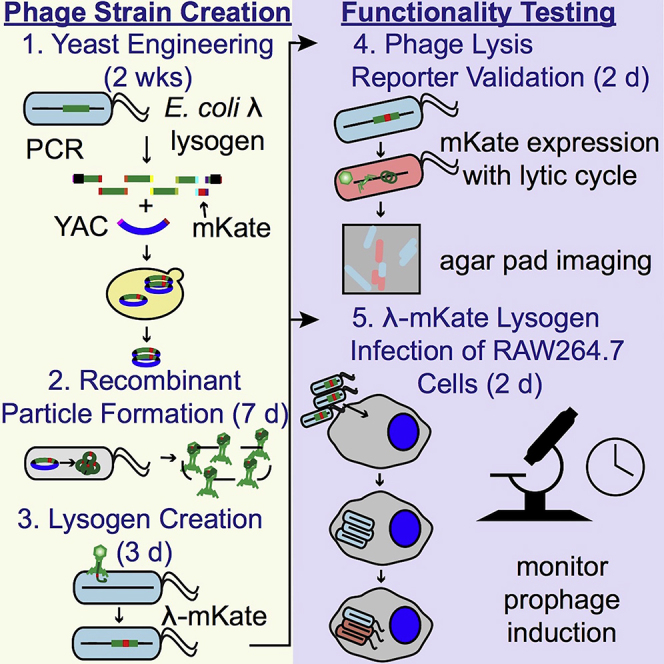
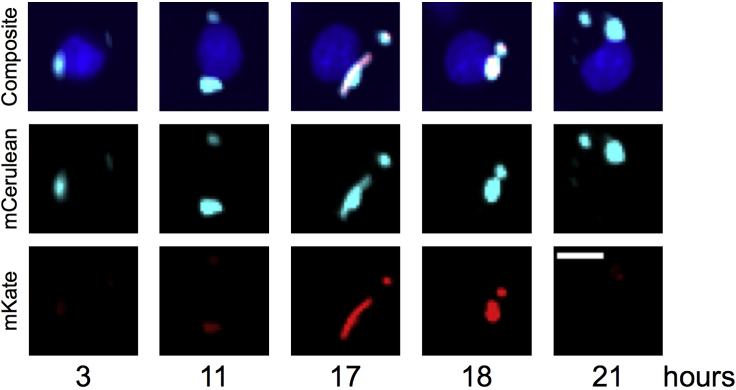
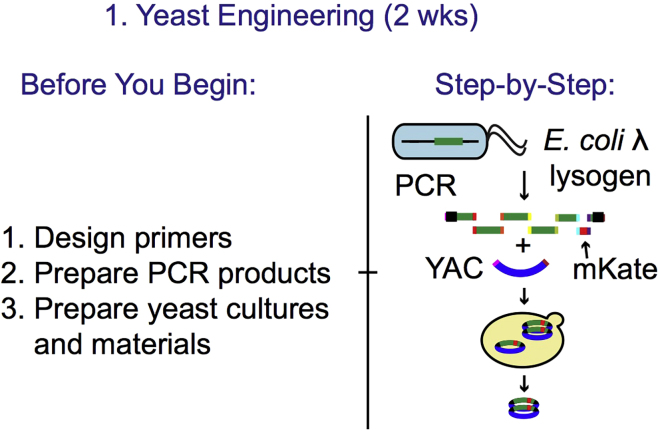
The gut microbiome is dominated by lysogens, bacteria that carry bacterial viruses (phages). Uncovering the function of phages in the microbiome and observing interactions between phages, bacteria, and mammalian cells in real time in specific cell types are limited by the difficulty of engineering fluorescent markers into large, lysogenic phage genomes. Here, we present a method to multiplex the engineering of life-cycle reporters into lysogenic phages and how to infect macrophages with engineered lysogens to study these interactions at the single-cell level. For complete details on the use and execution of this protocol, please refer to Bodner et al. (2020).
肠道微生物群主要由溶原菌组成,溶原菌携带细菌病毒(噬菌体)。由于难以将荧光标记物工程化到大型溶原噬菌体基因组中,因此,揭示微生物群中噬菌体的功能以及实时观察噬菌体、细菌和哺乳动物细胞之间的相互作用受到限制。在这里,我们介绍了一种将生命周期报告基因工程化到溶原噬菌体中的方法,以及如何感染巨噬细胞以在单细胞水平上研究这些相互作用。有关此方案使用和执行的完整详细信息,请参见 Bodner 等人。(2020 年)。