Momper Rebecca, Landeta Antonio Ibanez, Yang Long, Halim Henry, Therien-Aubin Heloise, Bodenschatz Eberhard, Landfester Katharina, Riedinger Andreas
Max Planck Institute for Polymer Research, Ackermannweg 10, 55128 Mainz, Germany.
Max Planck Institute for Dynamics and Self-Organization, Am Faßberg 17, 37077 Göttingen, Germany.
ACS Appl Mater Interfaces. 2020 Nov 11;12(45):50834-50843. doi: 10.1021/acsami.0c14546. Epub 2020 Oct 28.
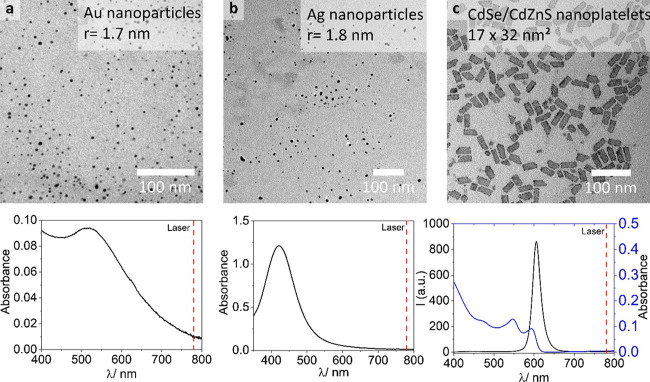
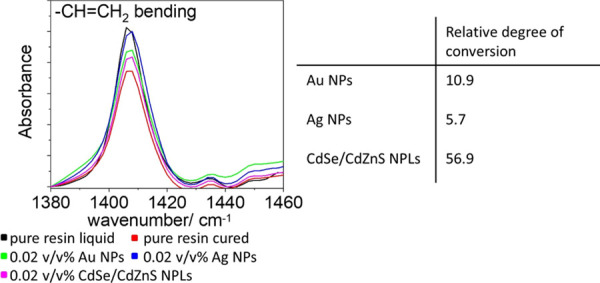
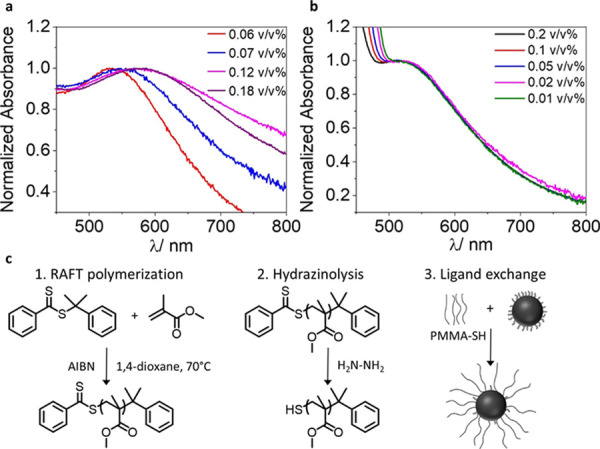
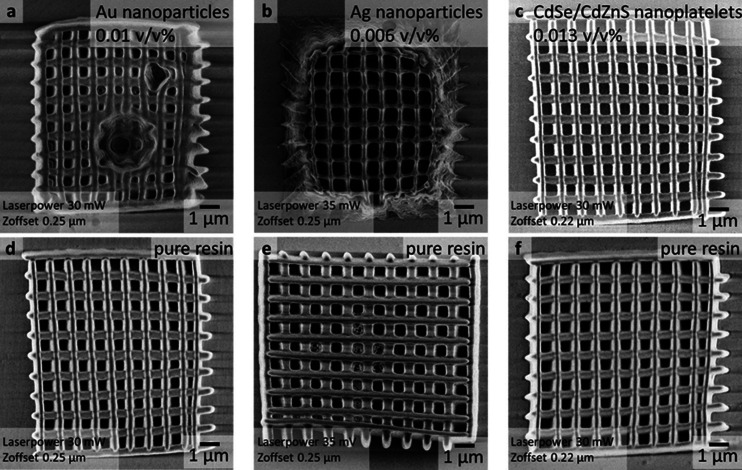
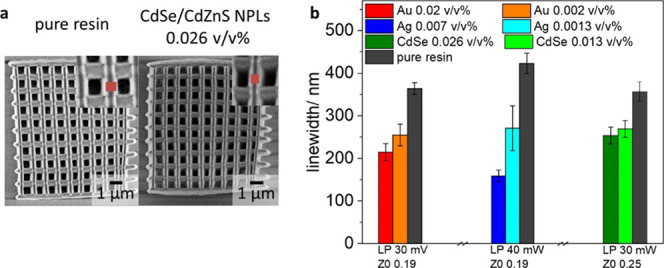
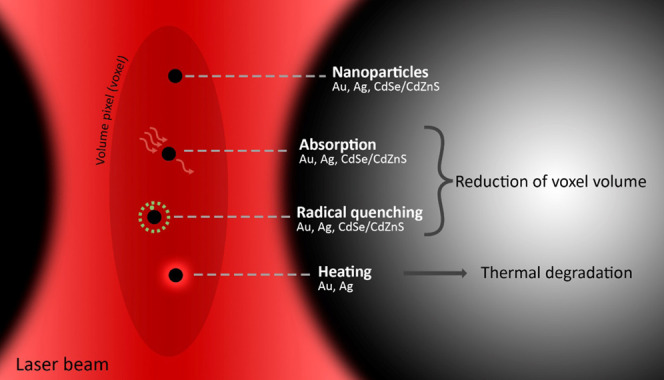
Two-photon polymerization stereolithographic three-dimensional (3D) printing is used for manufacturing a variety of structures ranging from microdevices to refractive optics. Incorporation of nanoparticles in 3D printing offers huge potential to create even more functional nanocomposite structures. However, this is difficult to achieve since the agglomeration of the nanoparticles can occur. Agglomeration not only leads to an uneven distribution of nanoparticles in the photoresin but also induces scattering of the excitation beam and altered absorption profiles due to interparticle coupling. Thus, it is crucial to ensure that the nanoparticles do not agglomerate during any stage of the process. To achieve noninteracting and well-dispersed nanoparticles on the 3D printing process, first, the stabilization of nanoparticles in the 3D printing resin is indispensable. We achieve this by functionalizing the nanoparticles with surface-bound ligands that are chemically similar to the photoresin that allows increased nanoparticle loadings without inducing agglomeration. By systematically studying the effect of different nanomaterials (Au nanoparticles, Ag nanoparticles, and CdSe/CdZnS nanoplatelets) in the resin on the 3D printing process, we observe that both, material-specific (absorption profiles) and unspecific (radical quenching at nanoparticle surfaces) pathways co-exist by which the photopolymerization procedure is altered. This can be exploited to increase the printing resolution leading to a reduction of the minimum feature size.
双光子聚合立体光刻三维(3D)打印用于制造从微器件到折射光学器件等各种结构。在3D打印中加入纳米颗粒为创造更多功能化的纳米复合结构提供了巨大潜力。然而,由于纳米颗粒可能会发生团聚,这一点很难实现。团聚不仅会导致纳米颗粒在光致抗蚀剂中分布不均匀,还会由于颗粒间耦合引起激发光束的散射和吸收曲线的改变。因此,确保纳米颗粒在该过程的任何阶段都不发生团聚至关重要。为了在3D打印过程中实现非相互作用且分散良好的纳米颗粒,首先,纳米颗粒在3D打印树脂中的稳定化是必不可少的。我们通过用与光致抗蚀剂化学性质相似的表面结合配体对纳米颗粒进行功能化来实现这一点,这使得在不引起团聚的情况下能够增加纳米颗粒的负载量。通过系统研究树脂中不同纳米材料(金纳米颗粒、银纳米颗粒和CdSe/CdZnS纳米片)对3D打印过程的影响,我们观察到材料特异性(吸收曲线)和非特异性(纳米颗粒表面的自由基猝灭)途径共存,光聚合过程通过这些途径发生改变。这可以用来提高打印分辨率,从而减小最小特征尺寸。