Department of Neurology, Klinikum rechts der Isar, Technical University of Munich, Munich, Germany.
Department of Neurology, University Hospital Erlangen, Friedrich-Alexander University Erlangen-Nürnberg, Erlangen, Germany.
Front Immunol. 2020 Sep 30;11:573256. doi: 10.3389/fimmu.2020.573256. eCollection 2020.
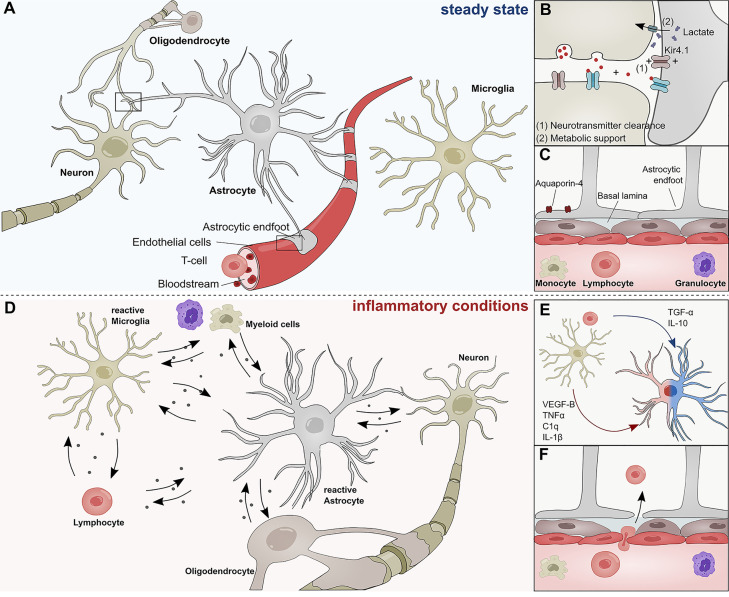
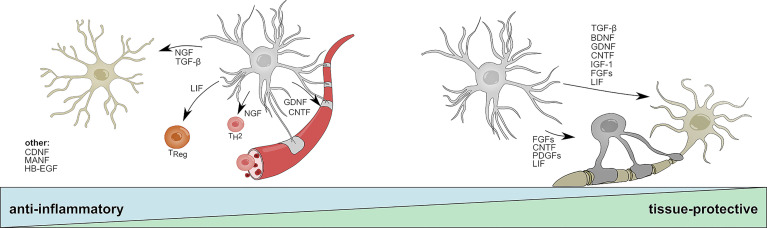
Astrocytes play important roles in numerous central nervous system disorders including autoimmune inflammatory, hypoxic, and degenerative diseases such as Multiple Sclerosis, ischemic stroke, and Alzheimer's disease. Depending on the spatial and temporal context, activated astrocytes may contribute to the pathogenesis, progression, and recovery of disease. Recent progress in the dissection of transcriptional responses to varying forms of central nervous system insult has shed light on the mechanisms that govern the complexity of reactive astrocyte functions. While a large body of research focuses on the pathogenic effects of reactive astrocytes, little is known about how they limit inflammation and contribute to tissue regeneration. However, these protective astrocyte pathways might be of relevance for the understanding of the underlying pathology in disease and may lead to novel targeted approaches to treat autoimmune inflammatory and degenerative disorders of the central nervous system. In this review article, we have revisited the emerging concept of protective astrocyte functions and discuss their role in the recovery from inflammatory and ischemic disease as well as their role in degenerative disorders. Focusing on soluble astrocyte derived mediators, we aggregate the existing knowledge on astrocyte functions in the maintenance of homeostasis as well as their reparative and tissue-protective function after acute lesions and in neurodegenerative disorders. Finally, we give an outlook of how these mediators may guide future therapeutic strategies to tackle yet untreatable disorders of the central nervous system.
星形胶质细胞在许多中枢神经系统疾病中发挥着重要作用,包括自身免疫性炎症、缺氧和退行性疾病,如多发性硬化症、缺血性中风和阿尔茨海默病。根据空间和时间的背景,激活的星形胶质细胞可能有助于疾病的发病机制、进展和恢复。最近在解析中枢神经系统不同形式损伤的转录反应方面取得的进展,揭示了控制反应性星形胶质细胞功能复杂性的机制。虽然大量研究集中在反应性星形胶质细胞的致病作用上,但对于它们如何限制炎症和促进组织再生知之甚少。然而,这些具有保护作用的星形胶质细胞途径可能与理解疾病的潜在病理学有关,并可能导致针对中枢神经系统自身免疫性炎症和退行性疾病的新的靶向治疗方法。在这篇综述文章中,我们重新审视了保护性星形胶质细胞功能的新兴概念,并讨论了它们在炎症和缺血性疾病恢复中的作用,以及在退行性疾病中的作用。我们关注星形胶质细胞衍生的可溶性介质,总结了目前关于星形胶质细胞在维持内稳态以及在急性损伤后和神经退行性疾病中的修复和组织保护功能方面的知识。最后,我们展望了这些介质如何指导未来的治疗策略,以应对中枢神经系统中尚未得到治疗的疾病。