Department of Protein Science, KTH Royal Institute of Technology, Science for Life Laboratory, Solna, Sweden.
Department of Chemical Engineering, KTH Royal Institute of Technology, SE-100 44, Sweden.
Sci Total Environ. 2021 Feb 10;755(Pt 1):142939. doi: 10.1016/j.scitotenv.2020.142939. Epub 2020 Oct 14.
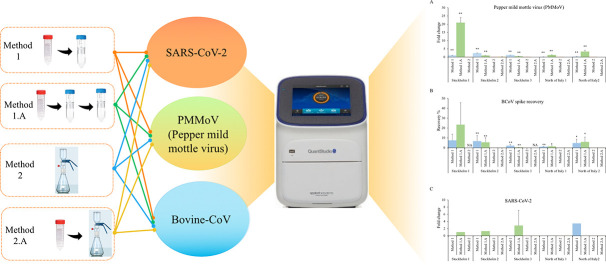
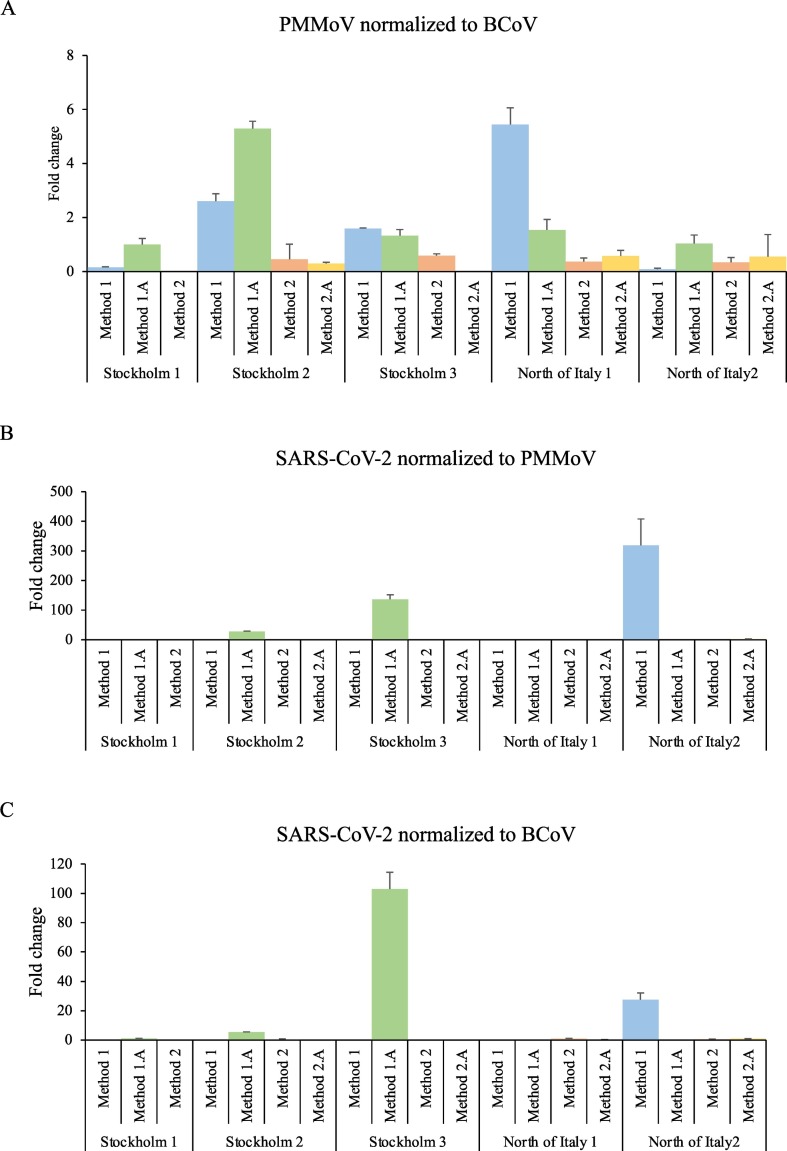
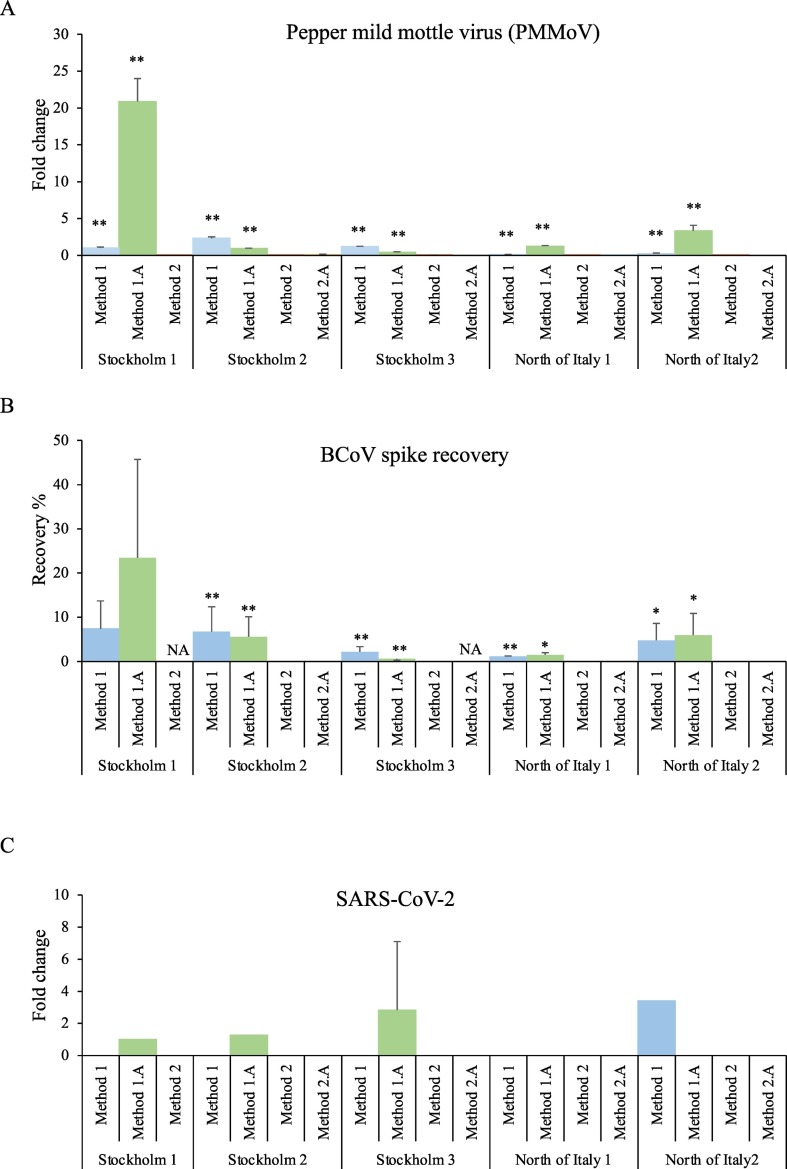
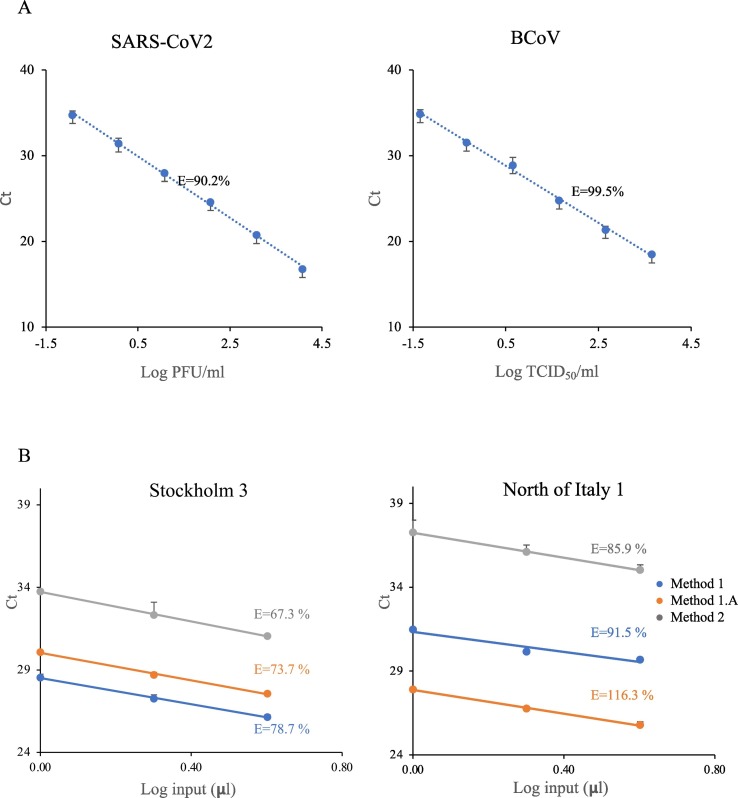
Wastewater-based epidemiology offers a cost-effective alternative to testing large populations for SARS-CoV-2 virus, and may potentially be used as an early warning system for SARS-CoV-2 pandemic spread. However, viruses are highly diluted in wastewater, and a validated method for their concentration and further processing, and suitable reference viruses, are the main needs to be established for reliable SARS-CoV-2 municipal wastewater detection. For this purpose, we collected wastewater from two European cities during the Covid-19 pandemic and evaluated the sensitivity of RT-qPCR detection of viral RNA after four concentration methods (two variants of ultrafiltration-based method and two adsorption and extraction-based methods). Further, we evaluated one external (bovine corona virus) and one internal (pepper mild mottle virus) reference virus. We found a consistently higher recovery of spiked virus using the modified ultrafiltration-based method. This method also had a significantly higher efficiency (p-value <0.01) for wastewater SARS-CoV-2 detection. The ultracentrifugation method was the only method that detected SARS-CoV-2 in the wastewater of both cities. The pepper mild mottle virus was found to function as a potentially suitable internal reference standard.
基于污水的流行病学为检测 SARS-CoV-2 病毒提供了一种具有成本效益的替代方法,并且可能可用作 SARS-CoV-2 大流行传播的早期预警系统。然而,病毒在废水中高度稀释,需要建立经过验证的浓缩方法和进一步处理方法,以及合适的参考病毒,以实现可靠的 SARS-CoV-2 市政污水检测。为此,我们在新冠疫情期间收集了来自两个欧洲城市的污水,并评估了四种浓缩方法(两种基于超滤的方法变体和两种基于吸附和提取的方法)后 RT-qPCR 检测病毒 RNA 的灵敏度。此外,我们评估了一种外部(牛冠状病毒)和一种内部(辣椒轻斑驳病毒)参考病毒。我们发现,使用改良的基于超滤的方法,可一致地提高病毒的回收率。该方法还显著提高了(p 值 <0.01)对污水中 SARS-CoV-2 的检测效率。只有超离心方法能够检测到两个城市污水中的 SARS-CoV-2。发现辣椒轻斑驳病毒可以作为一种潜在合适的内部参考标准。