Laboratory for Transcriptome Technology, RIKEN Center for Integrative Medical Sciences, Yokohama, Kanagawa 230-0045 Japan.
Functional Genomics Laboratory, Graduate School of Medical Life Science, Yokohama City University, Yokohama, Japan.
Nucleic Acids Res. 2020 Nov 18;48(20):11626-11644. doi: 10.1093/nar/gkaa814.
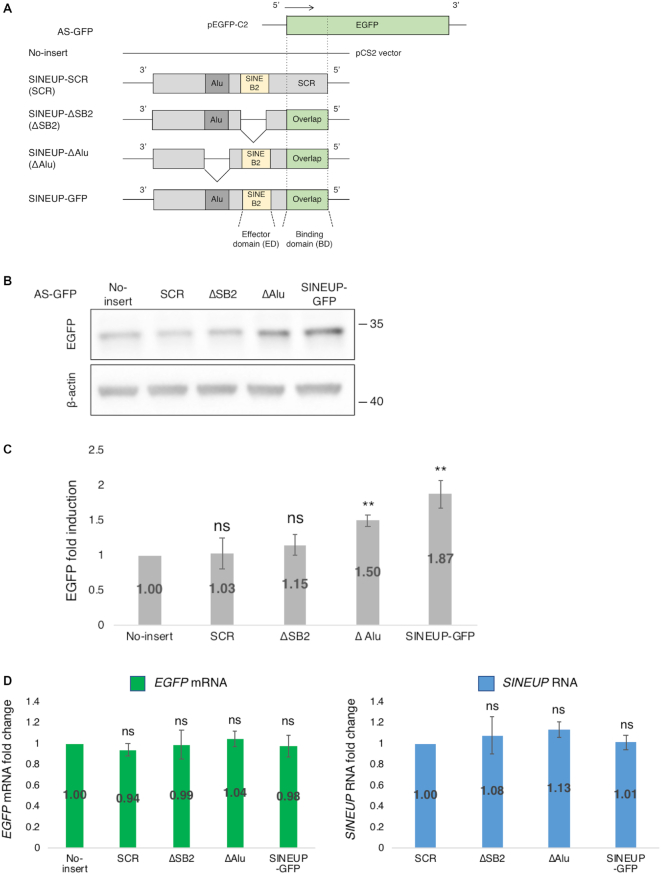
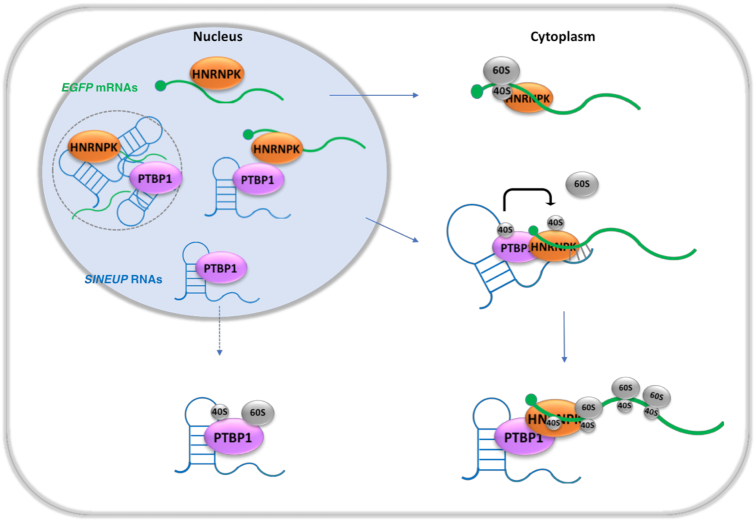
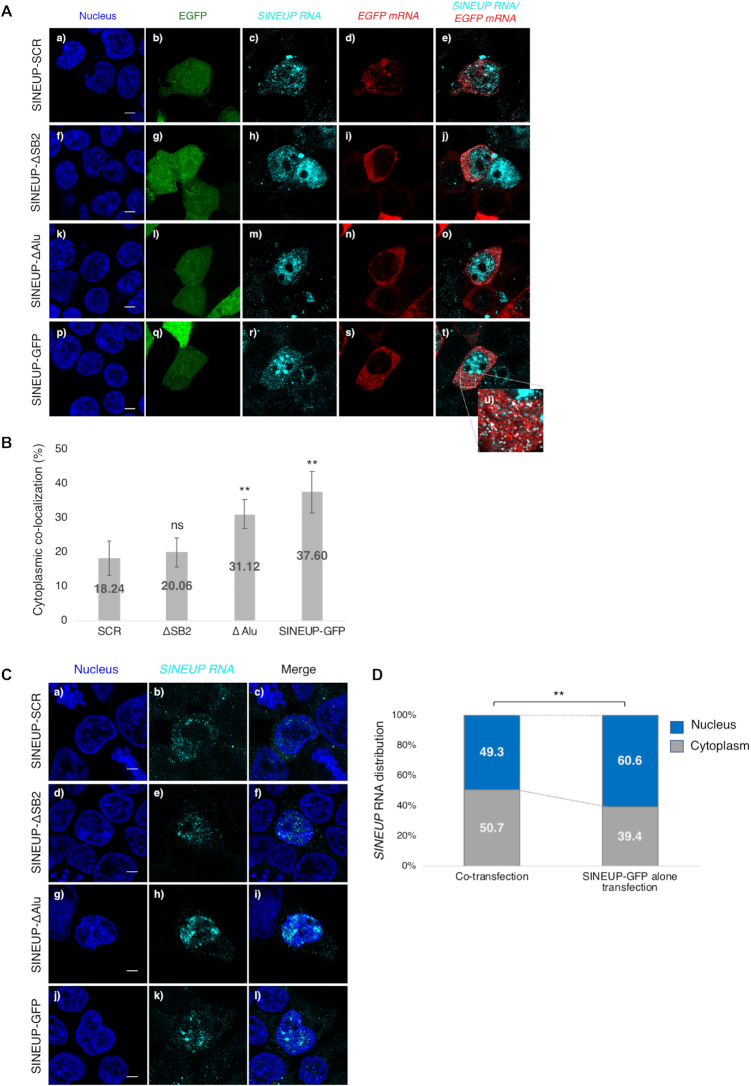
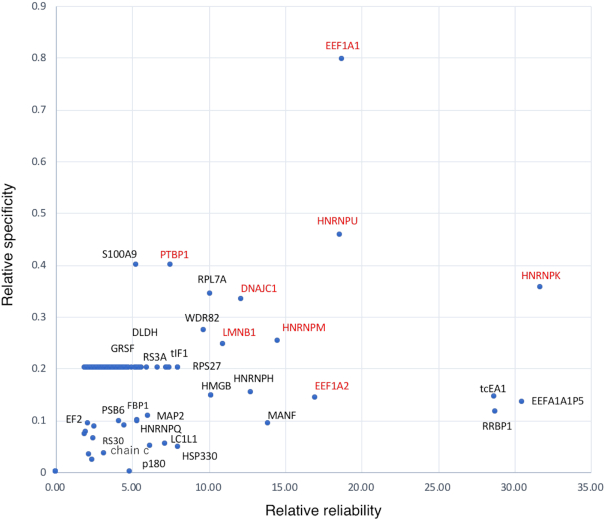
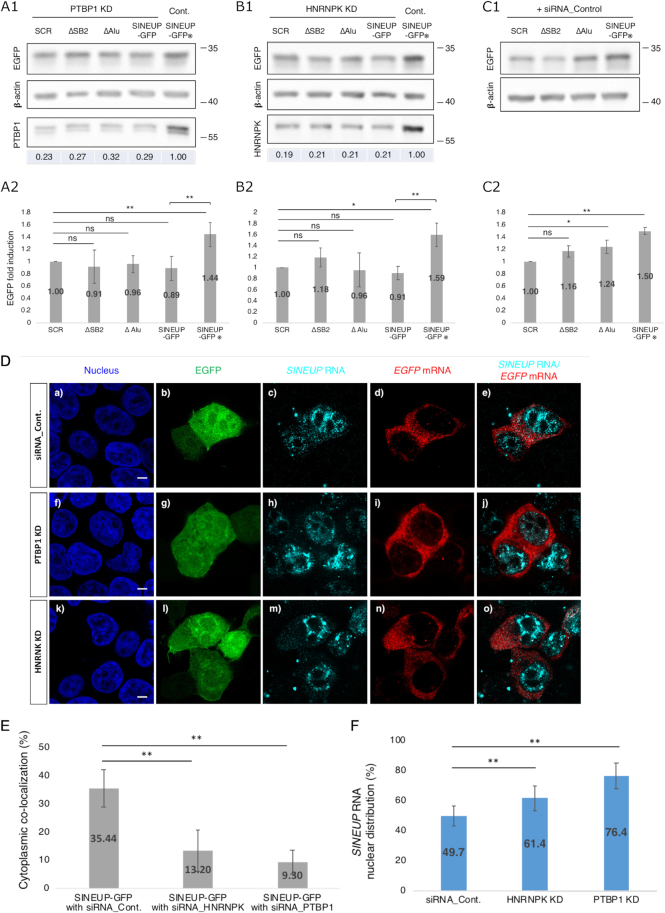
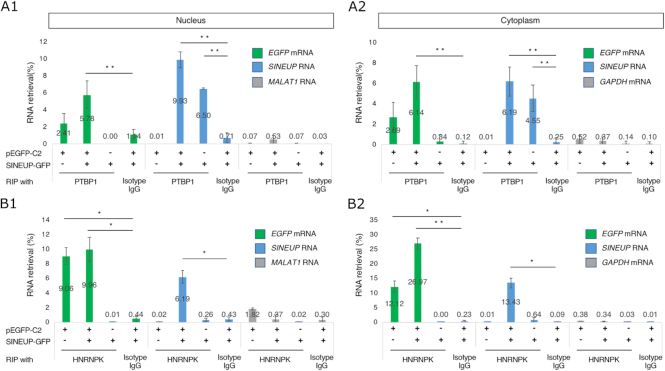
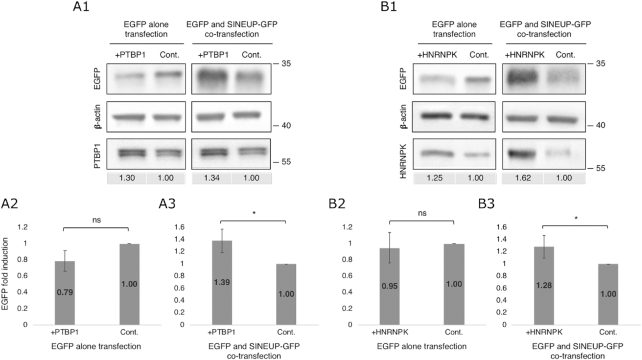
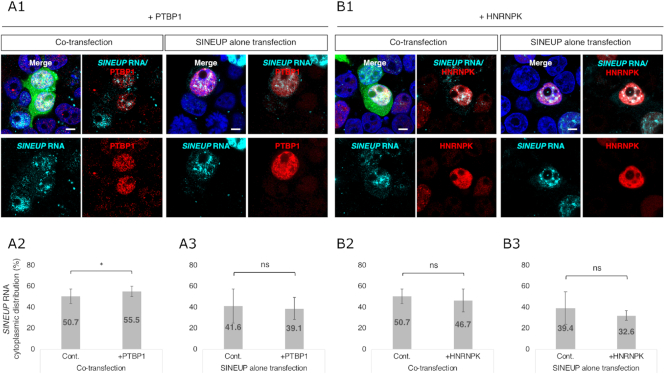
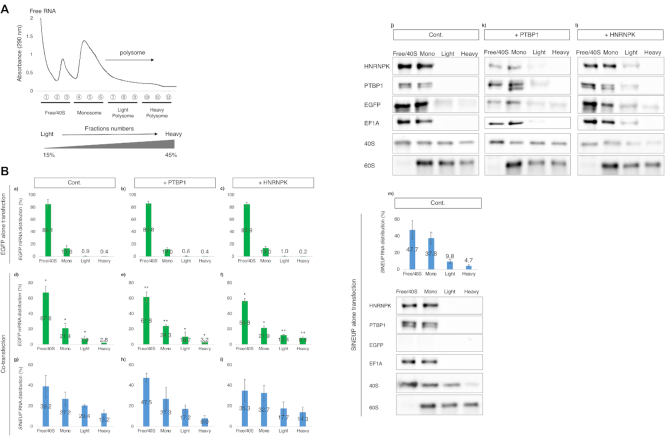
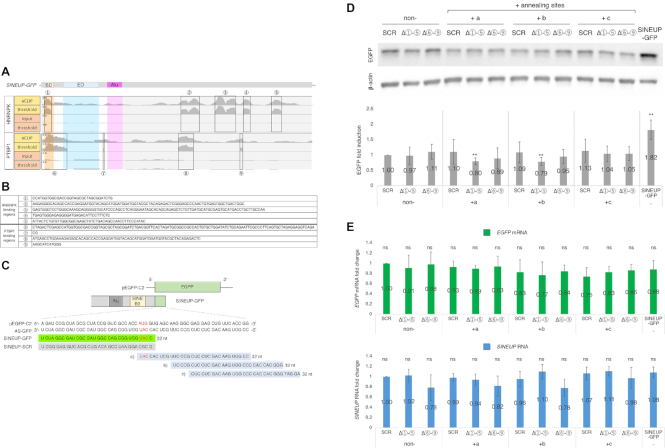
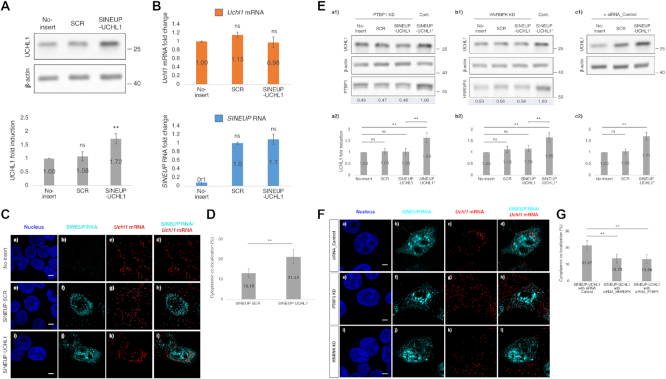
SINEUPs are long non-coding RNAs (lncRNAs) that contain a SINE element, and which up-regulate the translation of target mRNA. They have been studied in a wide range of applications, as both biological and therapeutic tools, although the underpinning molecular mechanism is unclear. Here, we focused on the sub-cellular distribution of target mRNAs and SINEUP RNAs, performing co-transfection of expression vectors for these transcripts into human embryonic kidney cells (HEK293T/17), to investigate the network of translational regulation. The results showed that co-localization of target mRNAs and SINEUP RNAs in the cytoplasm was a key phenomenon. We identified PTBP1 and HNRNPK as essential RNA binding proteins. These proteins contributed to SINEUP RNA sub-cellular distribution and to assembly of translational initiation complexes, leading to enhanced target mRNA translation. These findings will promote a better understanding of the mechanisms employed by regulatory RNAs implicated in efficient protein translation.
SINEUPs 是含有 SINE 元件的长链非编码 RNA(lncRNA),可上调靶 mRNA 的翻译。尽管其潜在的分子机制尚不清楚,但它们已在广泛的应用中被研究为生物和治疗工具。在这里,我们专注于靶 mRNA 和 SINEUP RNA 的亚细胞分布,将这些转录本的表达载体共转染到人胚肾细胞(HEK293T/17)中,以研究翻译调控网络。结果表明,靶 mRNA 和 SINEUP RNA 在细胞质中的共定位是一个关键现象。我们鉴定了 PTBP1 和 HNRNPK 作为必需的 RNA 结合蛋白。这些蛋白有助于 SINEUP RNA 的亚细胞分布和翻译起始复合物的组装,从而增强靶 mRNA 的翻译。这些发现将促进对涉及有效蛋白质翻译的调节 RNA 所采用的机制的更好理解。