RG Model Systems for Infection and Immunity, Helmholtz Centre for Infection Research, Braunschweig 38124, Germany.
Department of Vaccinology and Applied Microbiology, Braunschweig 38124, Germany.
Nucleic Acids Res. 2020 Nov 18;48(20):11799-11811. doi: 10.1093/nar/gkaa961.
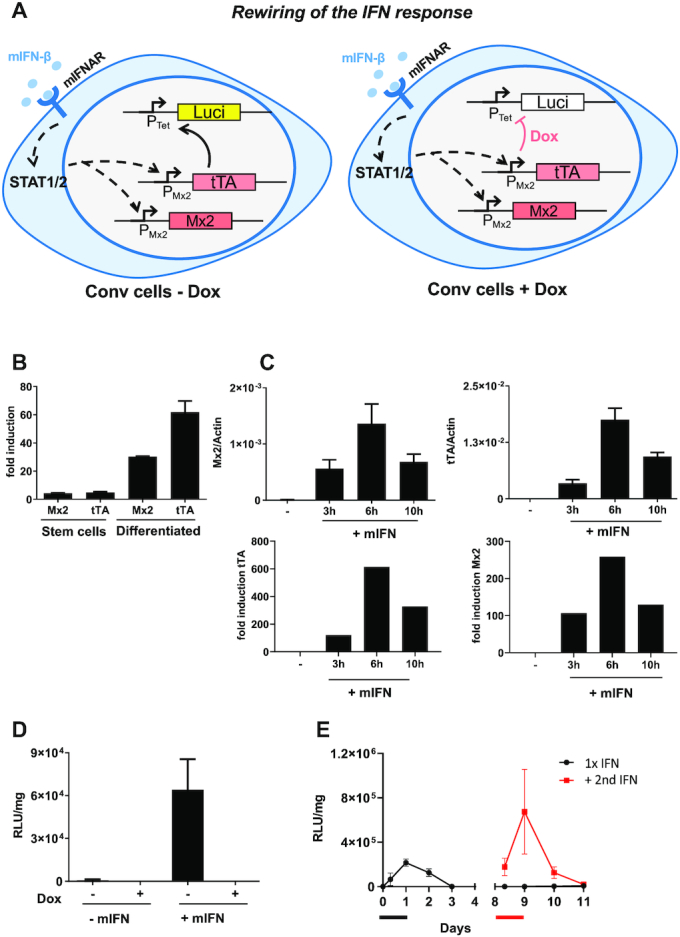
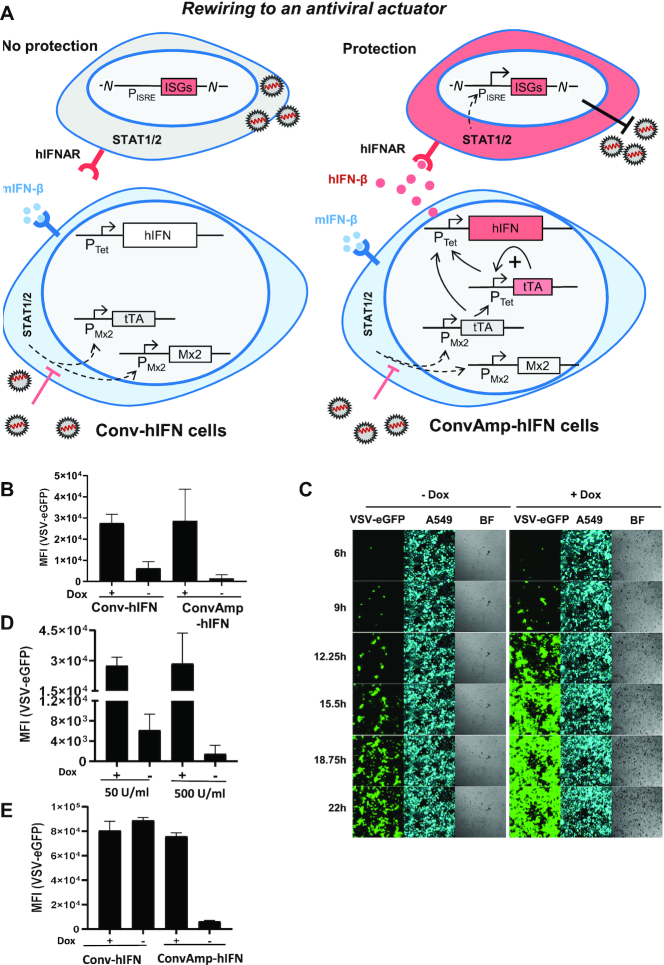
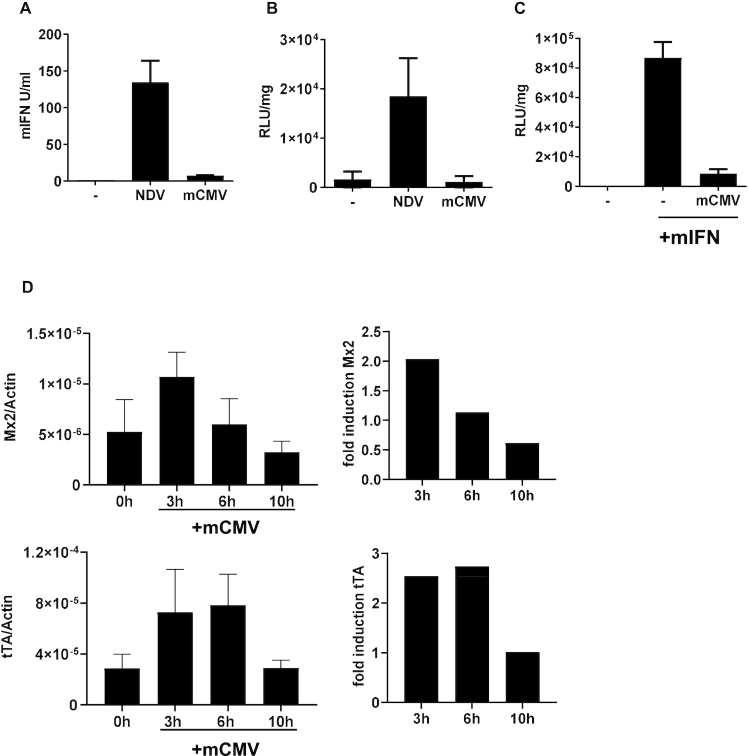
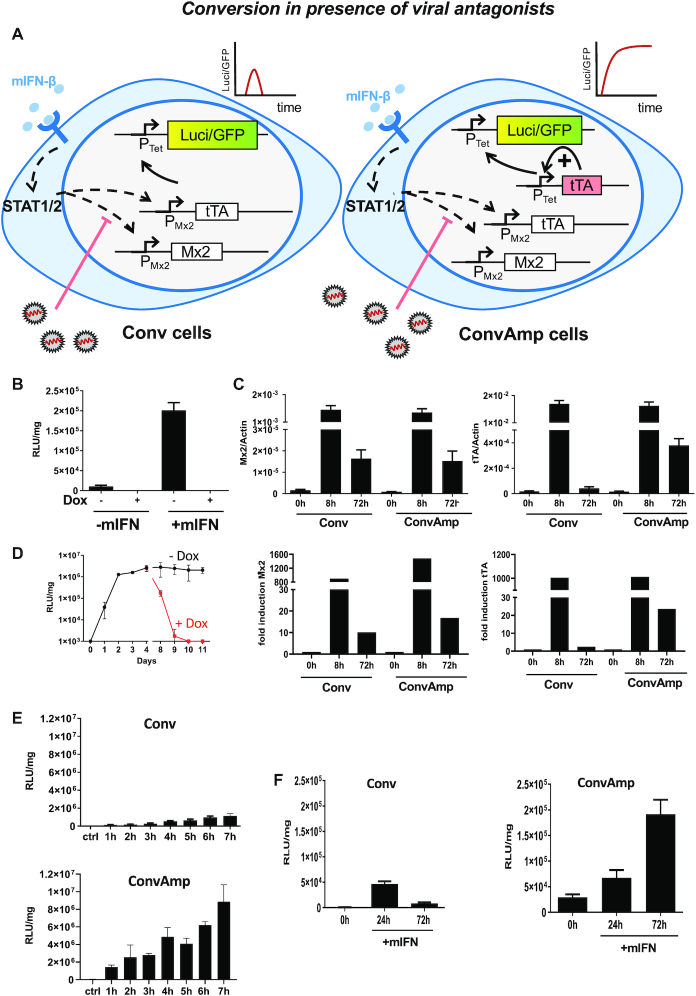
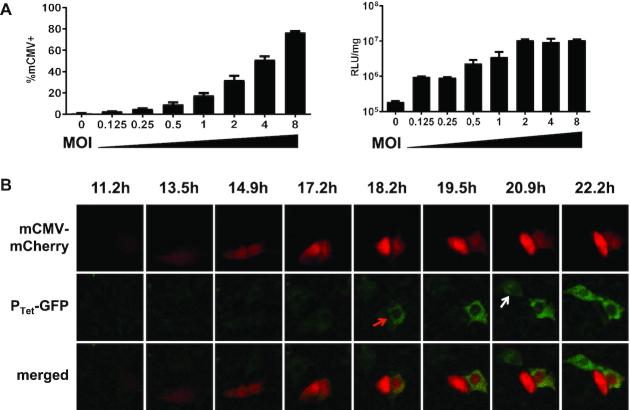
Mammalian first line of defense against viruses is accomplished by the interferon (IFN) system. Viruses have evolved numerous mechanisms to reduce the IFN action allowing them to invade the host and/or to establish latency. We generated an IFN responsive intracellular hub by integrating the synthetic transactivator tTA into the chromosomal Mx2 locus for IFN-based activation of tTA dependent expression modules. The additional implementation of a synthetic amplifier module with positive feedback even allowed for monitoring and reacting to infections of viruses that can antagonize the IFN system. Low and transient IFN amounts are sufficient to trigger these amplifier cells. This gives rise to higher and sustained-but optionally de-activatable-expression even when the initial stimulus has faded out. Amplification of the IFN response induced by IFN suppressing viruses is sufficient to protect cells from infection. Together, this interfaced sensor/actuator system provides a toolbox for robust sensing and counteracting viral infections.
哺乳动物抵御病毒的第一道防线是由干扰素 (IFN) 系统完成的。病毒已经进化出许多机制来降低 IFN 的作用,从而允许它们入侵宿主和/或建立潜伏。我们通过将合成转录激活子 tTA 整合到染色体 Mx2 基因座中,生成了一个 IFN 反应性细胞内中枢,用于基于 IFN 的 tTA 依赖性表达模块的激活。通过添加具有正反馈的合成放大器模块,甚至可以监测和应对能够拮抗 IFN 系统的病毒感染。少量且短暂的 IFN 就足以触发这些放大器细胞。即使初始刺激已经消失,这也会导致更高、更持续但可选的失活表达。由 IFN 抑制病毒诱导的 IFN 反应的放大足以保护细胞免受感染。总的来说,这个接口传感器/执行器系统为稳健的病毒感染检测和对抗提供了一个工具包。