U.S. Department of Agriculture, Agricultural Research Service, Southern Plains Agricultural Research Service, 2881 F and B Road, College Station, TX, 77845, USA.
Meat Science & Animal Biologics Discovery Program, Department of Animal and Dairy Sciences, University of Wisconsin, Madison, WI, USA.
BMC Microbiol. 2020 Nov 2;20(1):332. doi: 10.1186/s12866-020-02001-4.
Microencapsulated organic acids and botanicals have the potential to develop into important tools for the poultry industry. A blend of organic acids and botanicals (AviPlus®P) has previously shown to reduce Salmonella and Campylobacter in chickens; however, changes to the microbiota of the jejunum and ileum have not been evaluated. Microbiota diversity is linked to, but not correlated with, the efficacy of natural products; therefore, understanding the effects on the microbiota is necessary for evaluating their potential as an antibiotic alternative.
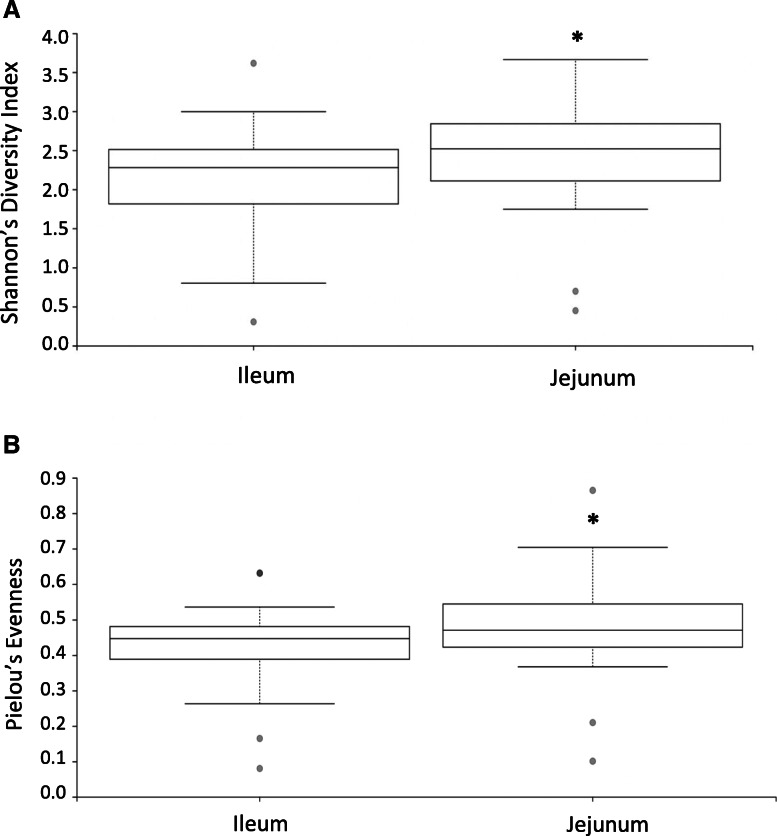
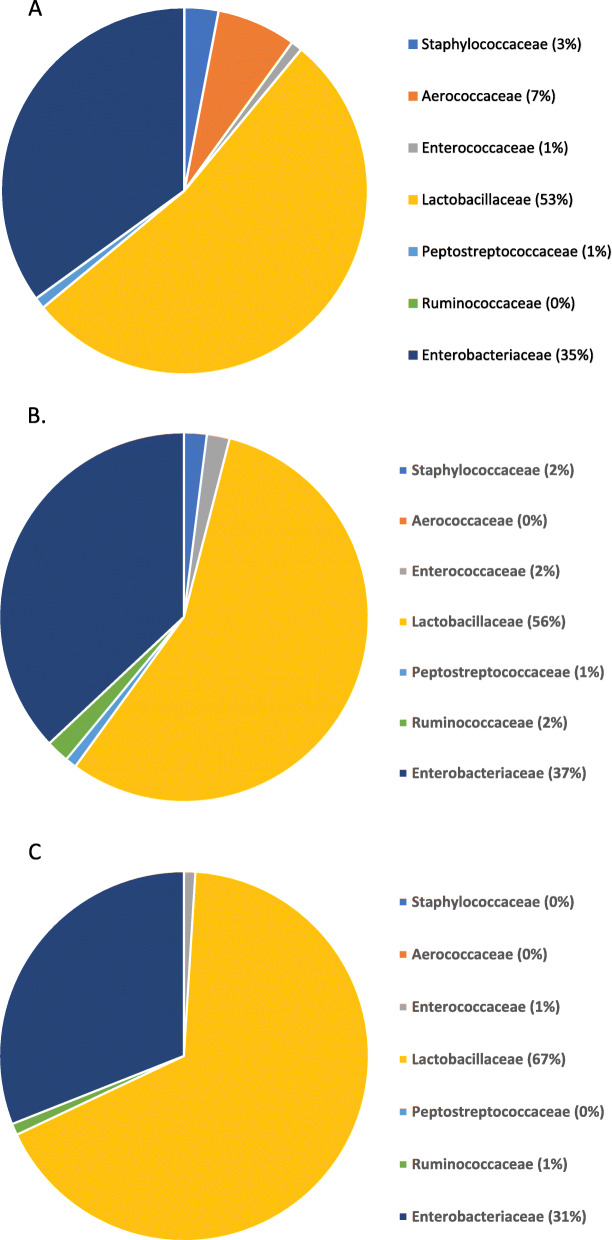
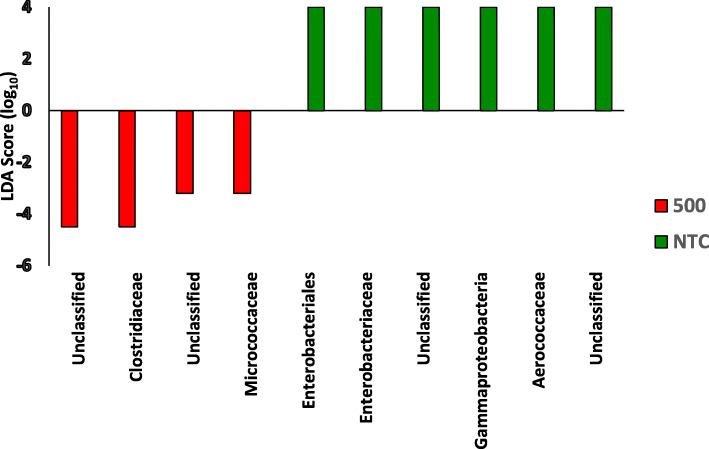
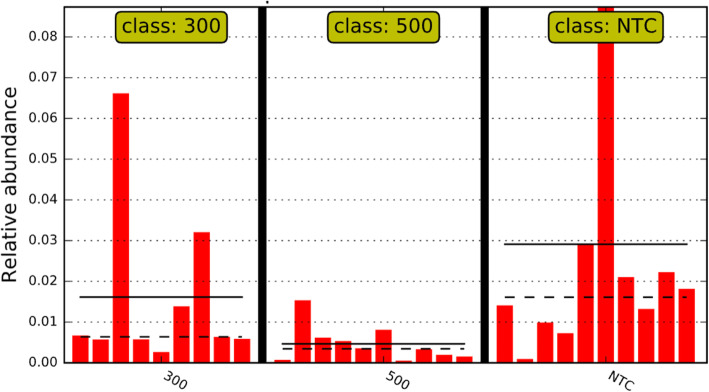
Ileal and jejunal segments from control and supplement-fed chickens (300 and 500 g/metric ton [MT]) were subjected to alpha diversity analysis including Shannon's diversity and Pielou's Evenness. In both analytics, the diversity in the ileum was significantly decreased compared to the jejunum irrespective of treatment. Similarly, beta diversity metrics including Bray-Curtis dissimilarity index and Weighted Unifrac Distance Matrix, were significant (Q < 0.05) for both tissue and treatments comparisons. Alpha and beta diversity analytics indicated compartmentalization effects between the ileum and jejunum. Additionally, analysis of communities in the microbiota (ANCOM) analysis showed Lactobacilliaceae predominated the total operational taxonomic units (OTU), with a stepwise increase from 53% in the no treatment control (NTC) to 56% in the 300 g/MT and 67% in the 500 g/MT group. Staphylococcaceae were 2% in NTC and 2 and 0% in 300 and 500 g/MT groups. Enterobacteriaceae decreased in the 500 g/MT (31%) and increased in the 300 g/MT (37%) compared to the NTC (35%). Aerococcaceae was 0% for both doses and 7% in NTC. Ruminococcaceae were 0% in NTC and 2 and 1% in the 300 and 500 g/MT. These changes in the microbial consortia were statistically (Q < 0.05) associated with treatment groups in the jejunum that were not observed in the ileum. Least discriminant analysis effect size (LEfSE) indicated different changes directly corresponding to treatment. Enterobacteriaceae demonstrated a stepwise decrease (from NTC onward) while Clostridiaceae, were significantly increased in the 500 g/MT compared to NTC and 300 g/MT (P < 0.05).
The bioactive site for the microencapsulated blend of organic acids and botanicals was the jejunum, and dietary inclusion enhanced the GIT microbiota and may be a viable antibiotic alternative for the poultry industry.
微囊化有机酸和植物提取物有可能成为家禽业的重要工具。先前的研究表明,有机酸和植物提取物(AviPlus®P)的混合物可减少鸡中的沙门氏菌和弯曲杆菌;然而,尚未评估对空肠和回肠微生物群的影响。微生物群的多样性与天然产物的功效有关,但没有相关性;因此,了解其对微生物群的影响对于评估它们作为抗生素替代品的潜力是必要的。
对照组和补充组(300 和 500 克/吨[MT])的空肠和回肠段进行了 alpha 多样性分析,包括香农多样性和皮尔逊均匀度。在这两种分析中,无论治疗与否,空肠的多样性都明显低于回肠。同样,贝叶斯克里蒂斯差异指数和加权无差异矩阵等β多样性指标,对于组织和处理比较均具有统计学意义(Q < 0.05)。alpha 和 beta 多样性分析表明空肠和回肠之间存在分区效应。此外,对微生物群落的分析(ANCOM 分析)表明,乳杆菌科占总操作分类单位(OTU)的主导地位,从无处理对照组(NTC)的 53%逐渐增加到 300 MT 的 56%和 500 MT 的 67%。NTC 组的葡萄球菌科为 2%,300 和 500 MT 组为 2%和 0%。与 NTC(35%)相比,肠杆菌科在 500 MT 中减少(31%),在 300 MT 中增加(37%)。Aerococcaceae 在两个剂量和 NTC 中为 7%。NTC 中的 Ruminococcaceae 为 0%,300 和 500 MT 中的 2%和 1%。这些微生物群落的变化与回肠中的治疗组具有统计学意义(Q < 0.05),但在空肠中没有观察到。最小判别分析效应大小(LEfSE)表明,与处理组直接对应的是不同的变化。肠杆菌科呈逐步下降趋势(从 NTC 开始),而梭菌科在 500 MT 中与 NTC 和 300 MT 相比显著增加(P < 0.05)。
微囊化有机酸盐和植物提取物混合物的生物活性部位是空肠,日粮添加可增强胃肠道微生物群,可能成为家禽业可行的抗生素替代品。