Hernández-Flores Maria de la Luz, Escobar-Sánchez Jair, Paredes-Zarco Jesús Eduardo, Franyuti Kelly Giorgio Alberto, Carranza-Ramírez Lamán
Consejo Ejecutivo del Complejo Científico y Tecnológico Sincrotrón, Boulevard Ciudad del Conocimiento y la Cultura, Manzana 10 Lote 1, Col. Santa Catarina, San Miguel Tornacuxtla, San Agustín Tlaxiaca 42163, Mexico.
INABISA, Investigación Aplicada para el Bienestar Social y Ambiental, Rio Papagayo #10, Ampliación el Palmar, Pachuca 42088, Mexico.
Healthcare (Basel). 2020 Nov 2;8(4):453. doi: 10.3390/healthcare8040453.
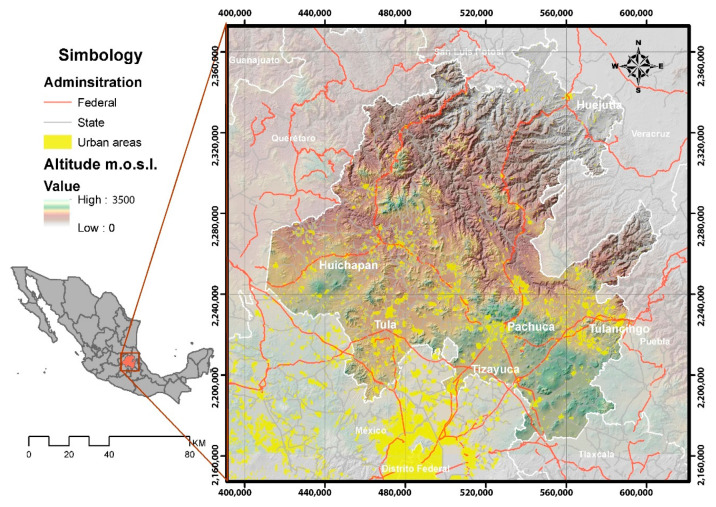
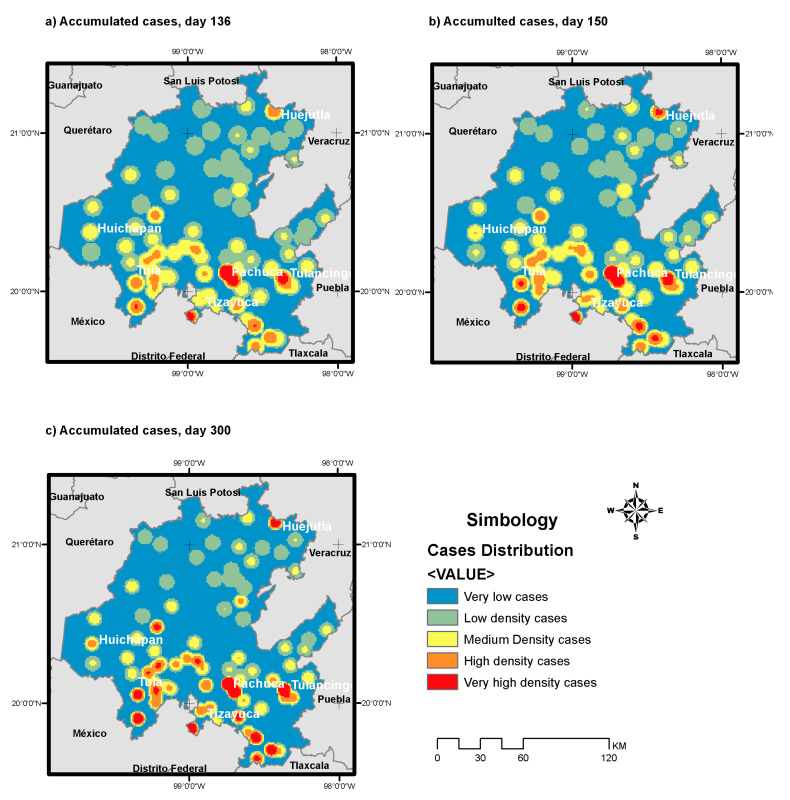
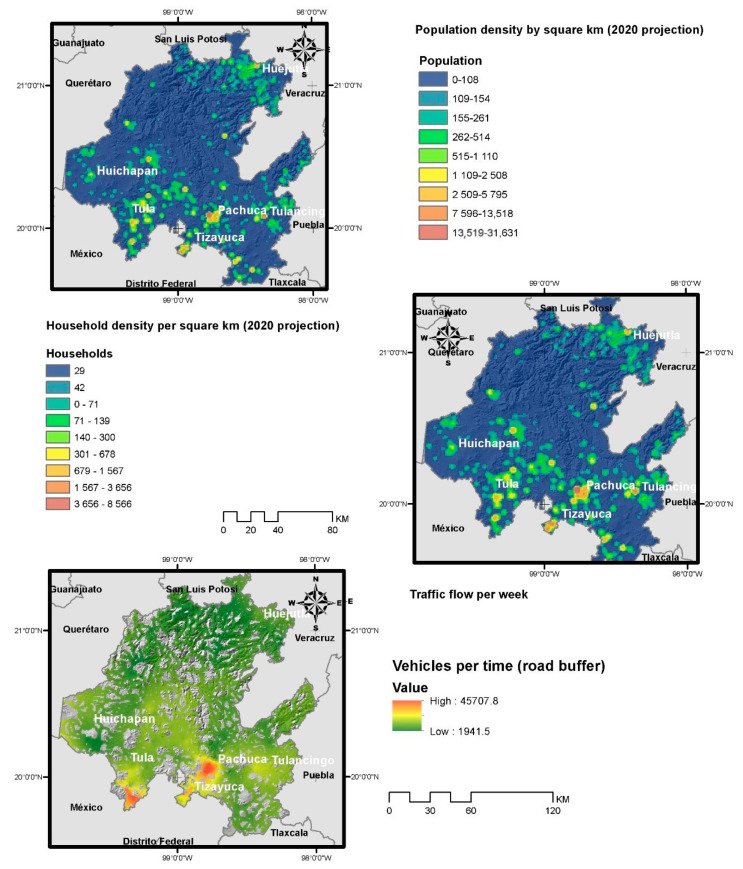
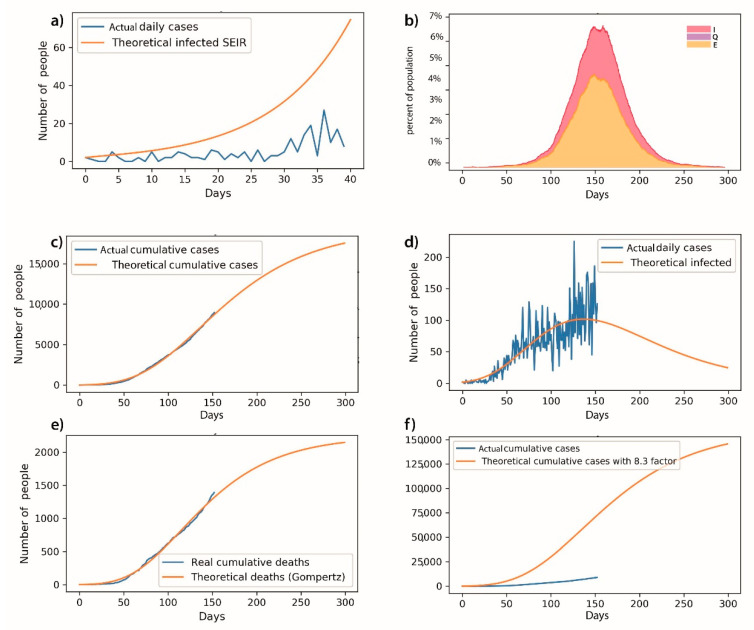
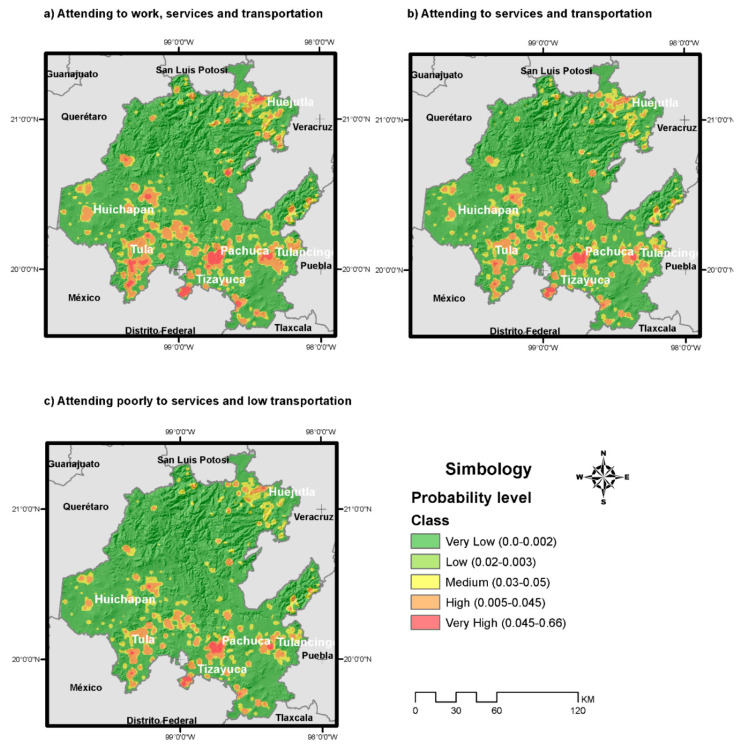
The novel COVID-19, detected in Wuhan, China, has reached almost every city across the globe, and researchers from many countries have used several epidemiologic models to describe the epidemic trends. In this context, it is also important to know the geographic extent of the infected population. Following this approach, a Gumpertz model was adapted with official data from the state of Hidalgo, Mexico, in order to estimate the people infected during this COVID-19 pandemic. We found, based on the adjusted data, the highest value in infected people according to official and theoretical data. Furthermore, using a geographical analysis based on geostatistical measures related to density of demographic and economic data, traffic level and geolocation, raster files were generated to estimate probability of coronavirus cases occurrence using the areas where the contagion may occur. We also distributed the maximum contagion obtained by the epidemic model, using these raster files, and a regression model to weight factors according their importance. Based on this estimated distribution, we found that most of the infected people were located in the southern border, a trend related to the economic strip in the southern part of Hidalgo State, associated with its vicinity to the Megacity of Mexico.
在中国武汉发现的新型冠状病毒肺炎已蔓延至全球几乎每一个城市,许多国家的研究人员运用多种流行病学模型来描述疫情趋势。在此背景下,了解感染人群的地理范围也很重要。按照这种方法,我们采用墨西哥伊达尔戈州的官方数据对冈珀茨模型进行了调整,以估算在此次新冠疫情期间的感染人数。基于调整后的数据,我们发现根据官方数据和理论数据得出的感染人数最高值。此外,利用基于与人口和经济数据密度、交通水平及地理位置相关的地统计量的地理分析,生成了栅格文件,以利用可能发生传染的区域估算新冠病例出现的概率。我们还利用这些栅格文件以及回归模型,根据各因素的重要性对其进行加权,来分布疫情模型得出的最大传染范围。基于这一估算分布,我们发现大多数感染者位于南部边境,这一趋势与伊达尔戈州南部的经济带有关,该经济带与其靠近墨西哥大城市有关。