Zhu Ning, Yan Xue, Li Hongli, Wang Huiqin
Department 1 of Cardiology, Baoding First Center Hospital, Baoding 071002, Hebei, People's Republic of China.
Diabetes Metab Syndr Obes. 2020 Oct 28;13:4041-4049. doi: 10.2147/DMSO.S276163. eCollection 2020.
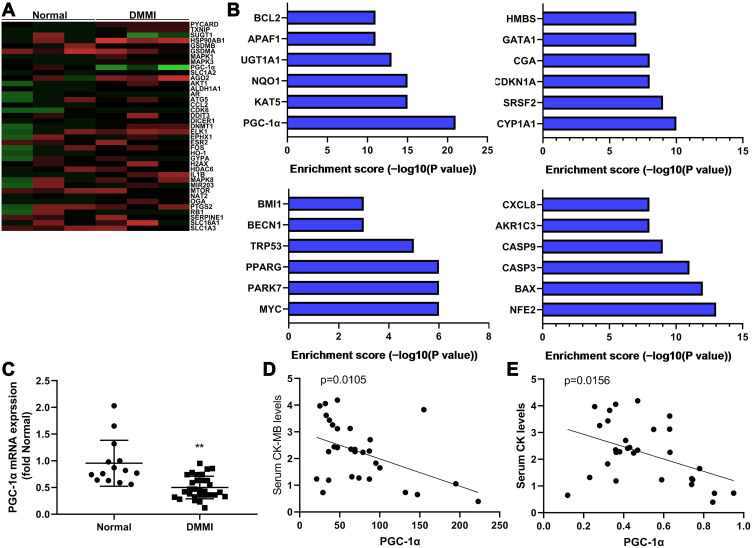
In this study, we explored the clinical significance of serum peroxisome proliferator-activated receptor gamma co-activator 1 (PGC-1) alpha levels in diabetes mellitus with myocardial infarction (DMMI) patients and investigated the possible mechanism.
Serum samples were obtained from patients with DMMI or normal volunteer in Baoding First Center Hospital. C57BL/6 mice were induced by a single intraperitoneal (i.p.) injection of 100 mg/kg STZ (streptozocin) for in vivo model. Human myocardial cell lines H9C2 cells were induced with high glucose medium (33 mmol/L glucose) for in vitro model. Western blot was used to analyze the protein expressions in this study.
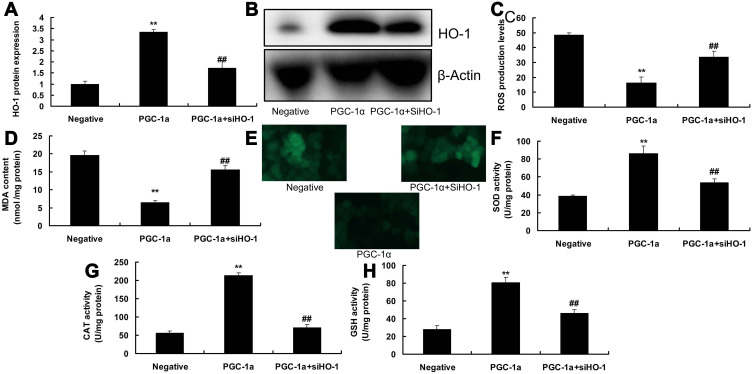
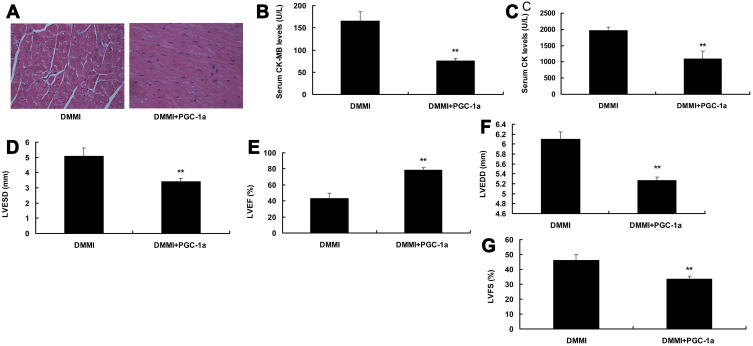
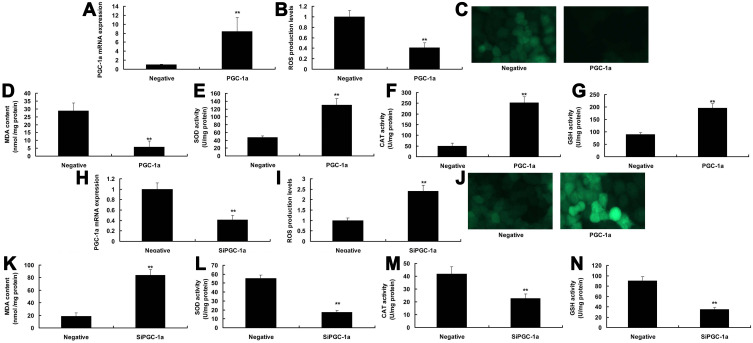
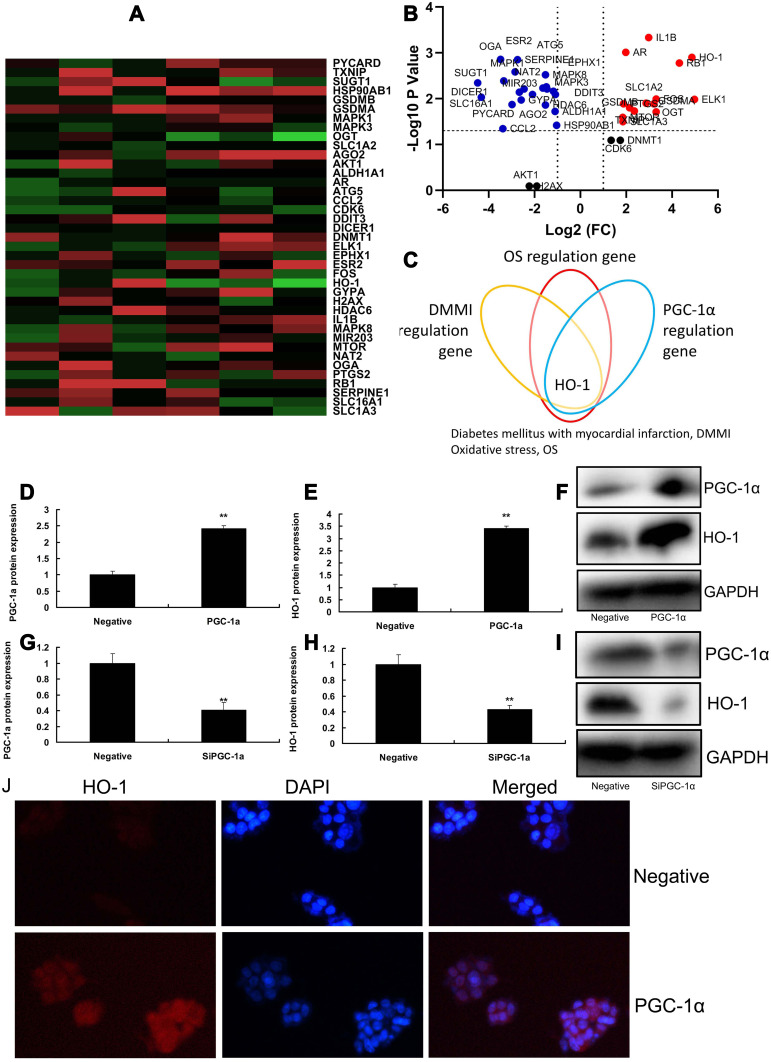
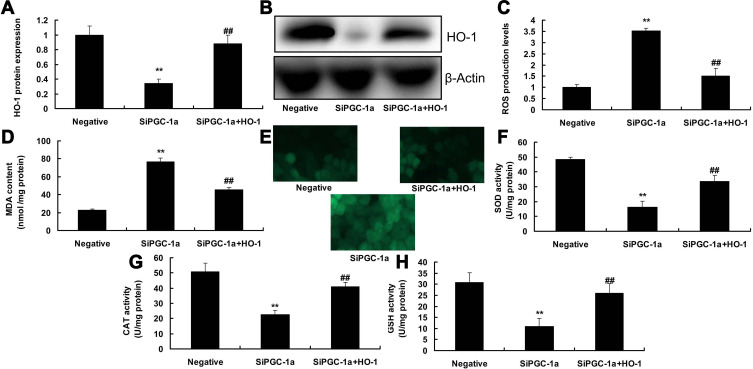
Serum PGC-1 alpha levels were down-regulated in patients with DMMI. There was negative correlation between serum PGC-1 alpha levels and glycated hemoglobin, blood glucose or glucagon in DMMI patients. Recombination of PGC-1 alpha protein decreased the levels of glycated hemoglobin, blood glucose and glucagon, and inhibited oxidative stress and myocardial damage in mice of DMMI. Over-expression of PGC-1 alpha reduced reactive oxygen species (ROS)-oxidative stress, while down-regulation of PGC-1 alpha promoted ROS-oxidative stress via regulation of hemeoxygenase-1 (HO-1) expression in in vitro model of DMMI. The inhibition of HO-1 expression attenuated the anti-oxidation effects of PGC-1 alpha in vitro.
PGC-1 alpha attenuated ROS-oxidative stress in diabetic cardiomyopathy model, and PGC-1 alpha served as a potential intervention to alleviate DMMI in clinical applications.
在本研究中,我们探讨了血清过氧化物酶体增殖物激活受体γ共激活因子1(PGC-1)α水平在糖尿病合并心肌梗死(DMMI)患者中的临床意义,并研究了其可能的机制。
从保定市第一中心医院的DMMI患者或正常志愿者中采集血清样本。通过腹腔注射100mg/kg链脲佐菌素(STZ)诱导C57BL/6小鼠建立体内模型。用高糖培养基(33mmol/L葡萄糖)诱导人心肌细胞系H9C2细胞建立体外模型。本研究采用蛋白质印迹法分析蛋白质表达。
DMMI患者血清PGC-1α水平下调。DMMI患者血清PGC-1α水平与糖化血红蛋白、血糖或胰高血糖素之间呈负相关。PGC-1α蛋白重组降低了DMMI小鼠的糖化血红蛋白、血糖和胰高血糖素水平,并抑制了氧化应激和心肌损伤。在DMMI体外模型中,PGC-1α的过表达降低了活性氧(ROS)-氧化应激,而PGC-1α的下调通过调节血红素加氧酶-1(HO-1)的表达促进了ROS-氧化应激。HO-1表达的抑制减弱了PGC-1α在体外的抗氧化作用。
PGC-1α减轻了糖尿病心肌病模型中的ROS-氧化应激,在临床应用中PGC-1α可作为缓解DMMI的潜在干预措施。