Postgraduate School, Department of Chemistry, Faculty of Mathematics and Natural Sciences, Universitas Sumatera Utara, Jl. Bioteknologi No.1, Medan 20155, Indonesia.
Department of Chemistry, Faculty of Mathematics and Natural Sciences, Universitas Sumatera Utara, Jl. Bioteknologi No. 1, Medan 20155, Indonesia.
Biomolecules. 2020 Nov 3;10(11):1511. doi: 10.3390/biom10111511.
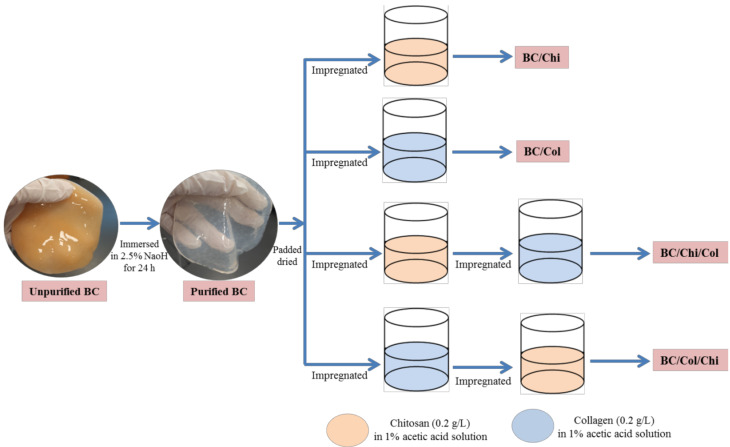
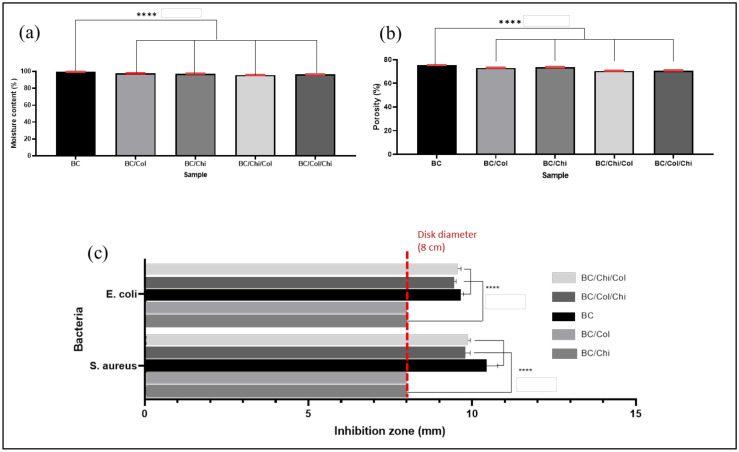
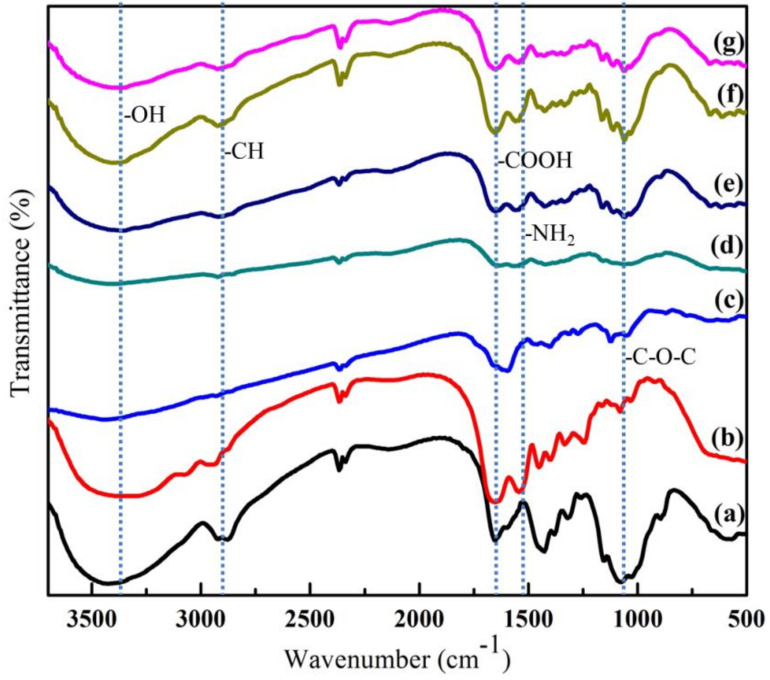
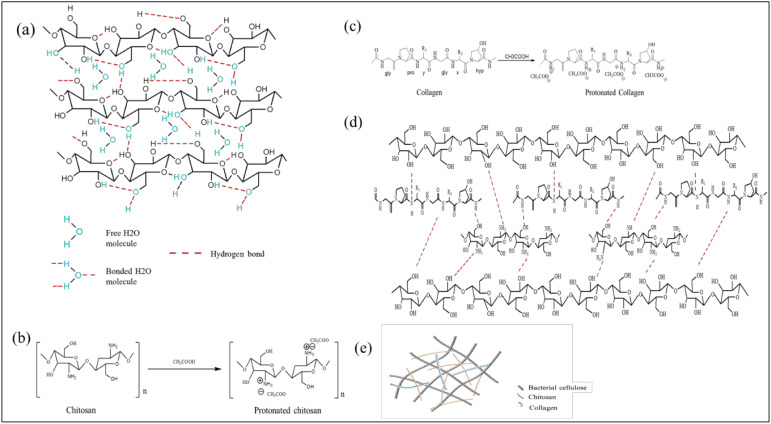
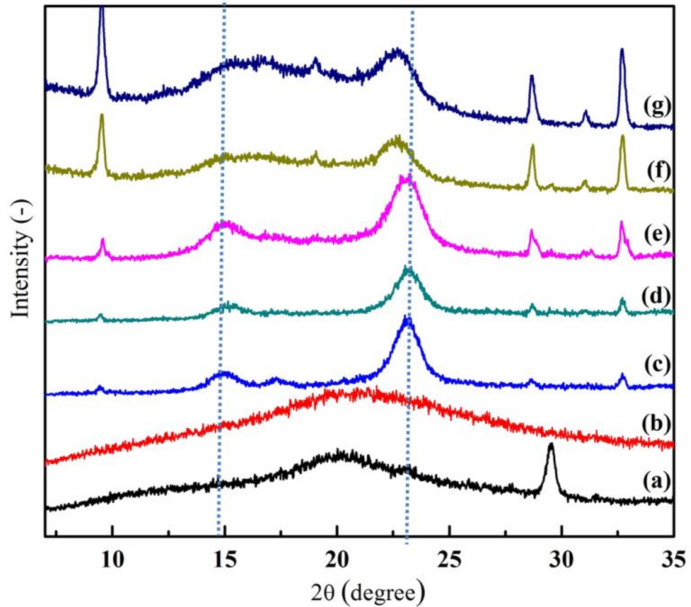
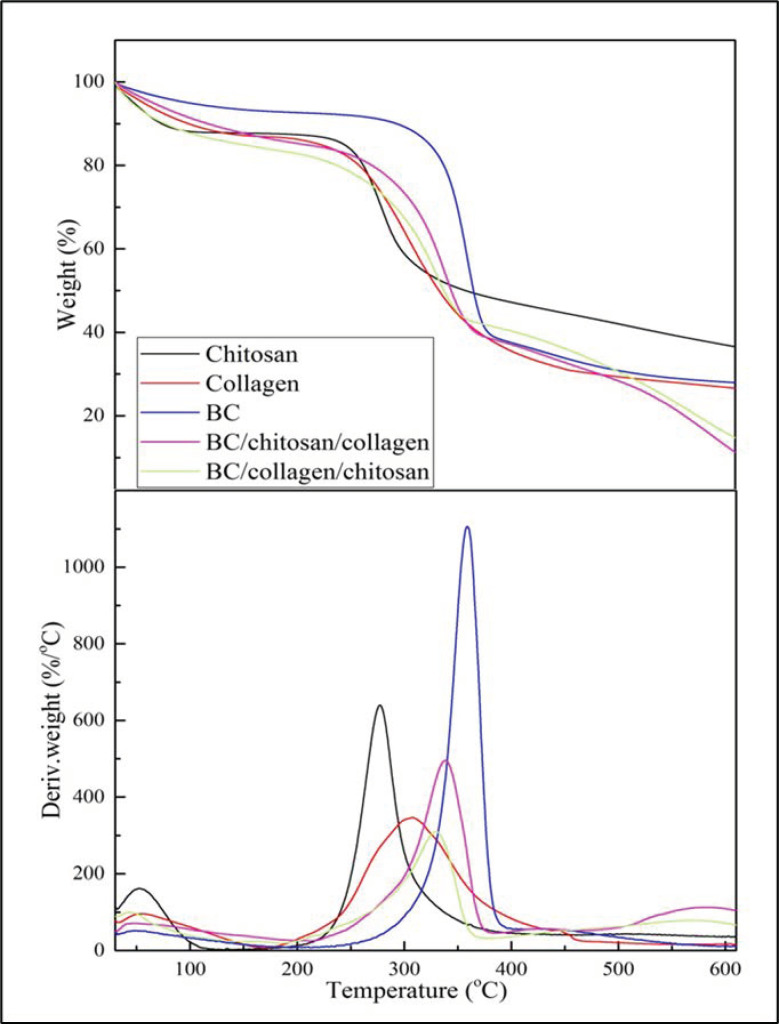
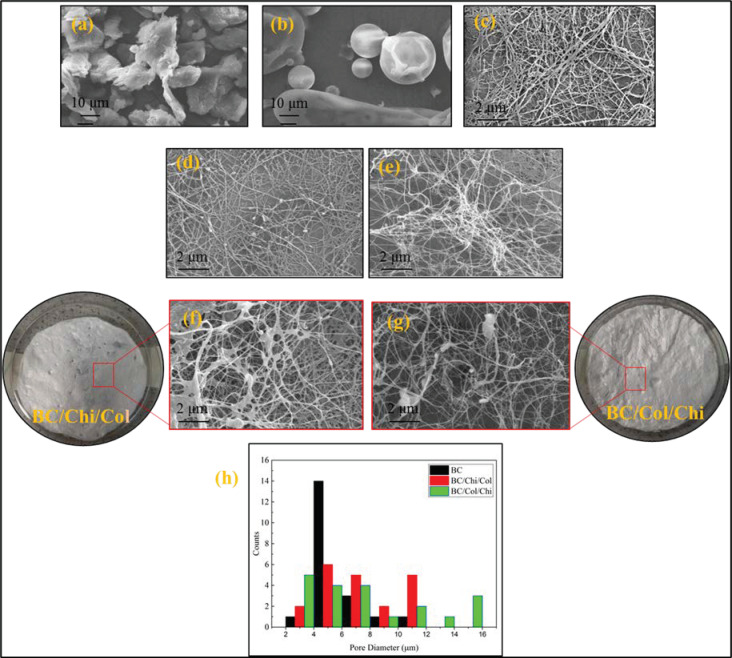
Bacterial cellulose (BC), chitosan (Chi), and collagen (Col) are known as biopolymers which have met some properties that are required as wound dressing. This study focused on investigating the fabrication of BC-based wound dressing with chitosan and collagen, since chitosan has red blood cells binding and anti-bacterial properties, while collagen can support cell and tissue growth for skin wounds. The BC-based wound dressing was prepared by impregnating BC fibers in the chitosan and/or collagen solution for 24 h. FTIR was used to confirm the intermolecular interaction of amine and hydroxyl group of chitosan and/or collagen in BC-based wound dressing. Furthermore, the XRD diffractogram of the wound dressing show broader peaks at 14.2°, 16.6°, and 22.4° due to the presence of chitosan and collagen molecules in BC fibers. These results were then supported by SEM images which confirmed that chitosan and collagen were well penetrated into BC fibers. TGA curves revealed that BC/Chi/Col has better thermal properties based on the T compare to BC/Col/Chi. Feasibility of the mats to be applied as wound dressing was also supported by other tests, i.e., water content, porosity, and hemocompatibility, which indicates that the wound dressing is classified as nonhemolytic materials. However, BC/Col/Chi was considered a more potential wound dressing to be applied compared to BC/Chi/Col since it has larger pores and showed better antibacterial properties (larger zones of inhibition) against and via disk diffusion tests.
细菌纤维素 (BC)、壳聚糖 (Chi) 和胶原蛋白 (Col) 被称为生物聚合物,它们具有一些作为伤口敷料所需的特性。本研究专注于研究制备具有壳聚糖和胶原蛋白的 BC 基伤口敷料,因为壳聚糖具有结合红细胞和抗菌的特性,而胶原蛋白可以支持皮肤伤口的细胞和组织生长。BC 基伤口敷料是通过将 BC 纤维浸渍在壳聚糖和/或胶原蛋白溶液中 24 小时来制备的。FTIR 用于确认壳聚糖和/或胶原蛋白在 BC 基伤口敷料中的胺和羟基之间的分子间相互作用。此外,伤口敷料的 XRD 衍射图在 14.2°、16.6°和 22.4°处显示出较宽的峰,这是由于壳聚糖和胶原蛋白分子存在于 BC 纤维中。这些结果得到 SEM 图像的支持,该图像证实壳聚糖和胶原蛋白很好地渗透到 BC 纤维中。TGA 曲线表明,BC/Chi/Col 比 BC/Col/Chi 具有更好的热性能,T 值更高。这些垫子作为伤口敷料的可行性还得到了其他测试的支持,即含水量、孔隙率和血液相容性,这表明伤口敷料被归类为非溶血材料。然而,与 BC/Chi/Col 相比,BC/Col/Chi 被认为是一种更有潜力的伤口敷料,因为它具有更大的孔和更好的抗菌性能(更大的抑菌圈),通过圆盘扩散试验对 和 进行了测试。