Alanezi Fahad, Aljahdali Anan, Alyousef Seham M, Alrashed Hebah, Mushcab Hayat, AlThani Bashair, Alghamedy Fatemah, Alotaibi Hessa, Saadah Amjad, Alanzi Turki
Community College, Imam Abdulrahman Bin Faisal University, Dammam, Saudi Arabia.
Biological Science Department, Faculty of Science, University of Jeddah, Jeddah, Saudi Arabia.
J Healthc Leadersh. 2020 Oct 30;12:117-131. doi: 10.2147/JHL.S266491. eCollection 2020.
The objective of this study was to compare the strategies adopted by the United Kingdom, Italy, China, India, and Saudi Arabia to contain the spread of the COVID-19 pandemic.
A review of the literature was carried out to collect data on the strategies used by China, Italy, India, the United Kingdom, and Saudi Arabia to contain the spread of the COVID-19 virus. The global analysis of 65 published literature references allowed observing the effectiveness and efficiency of the strategies used by these countries to control the spread of the COVID-19 virus.
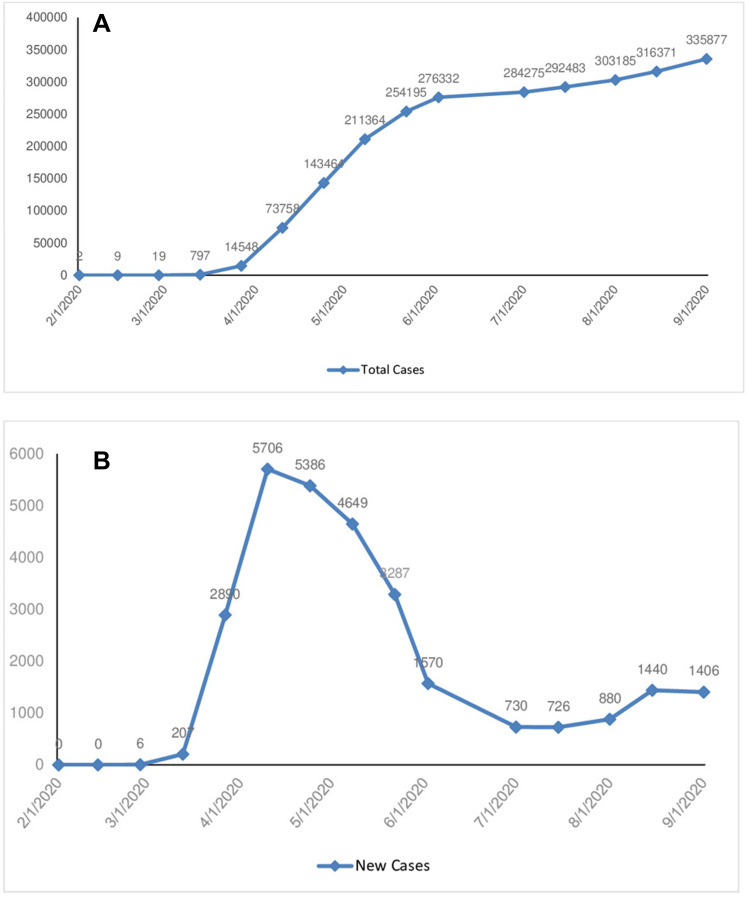
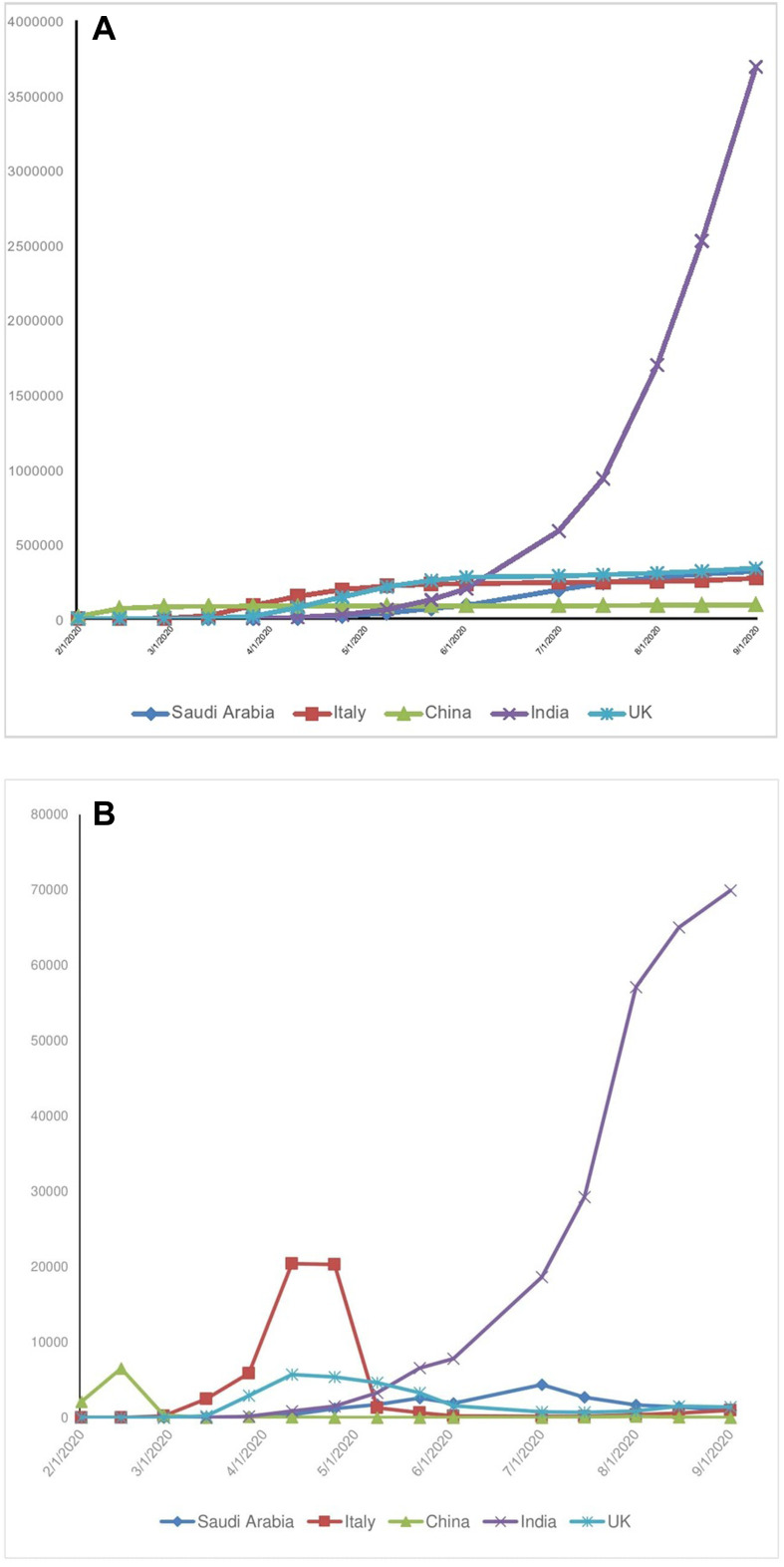
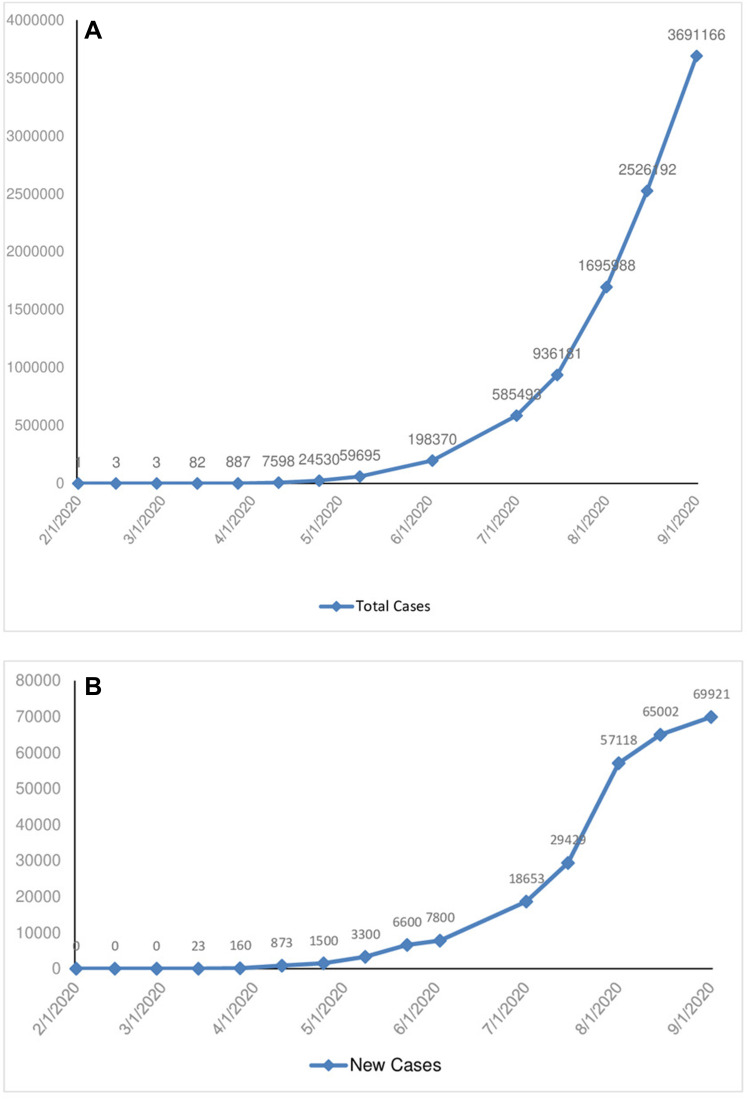
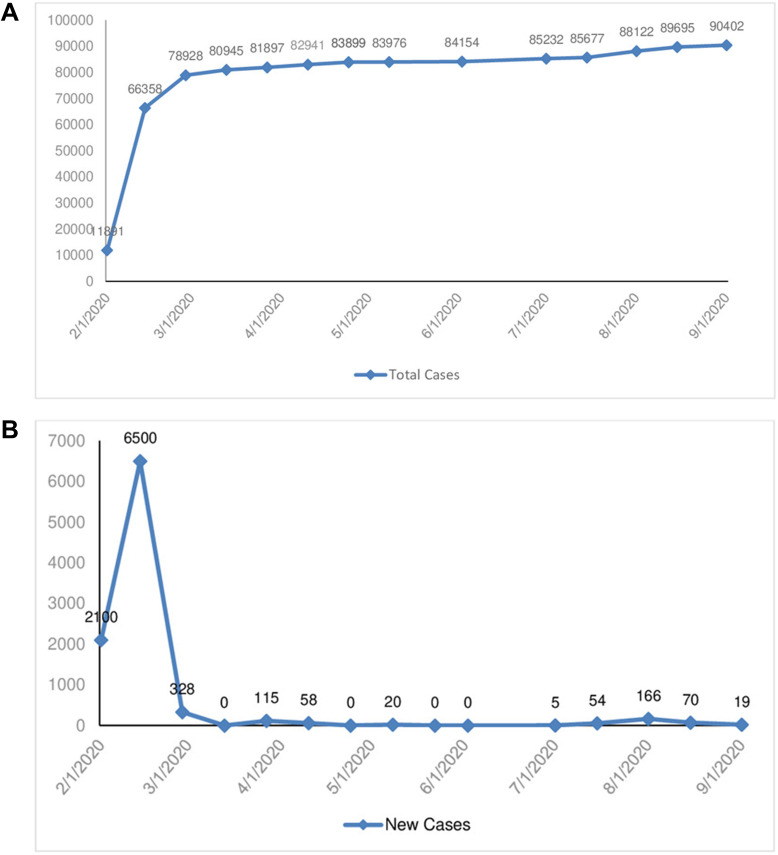
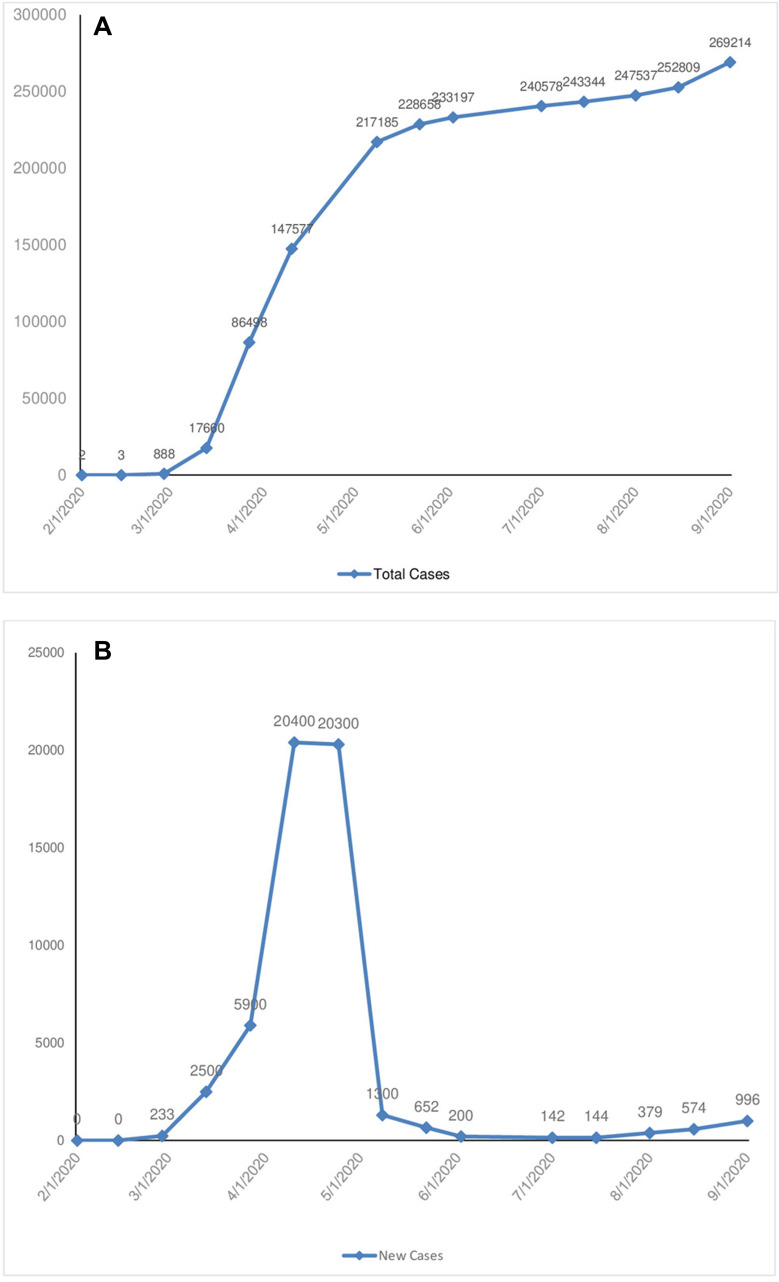
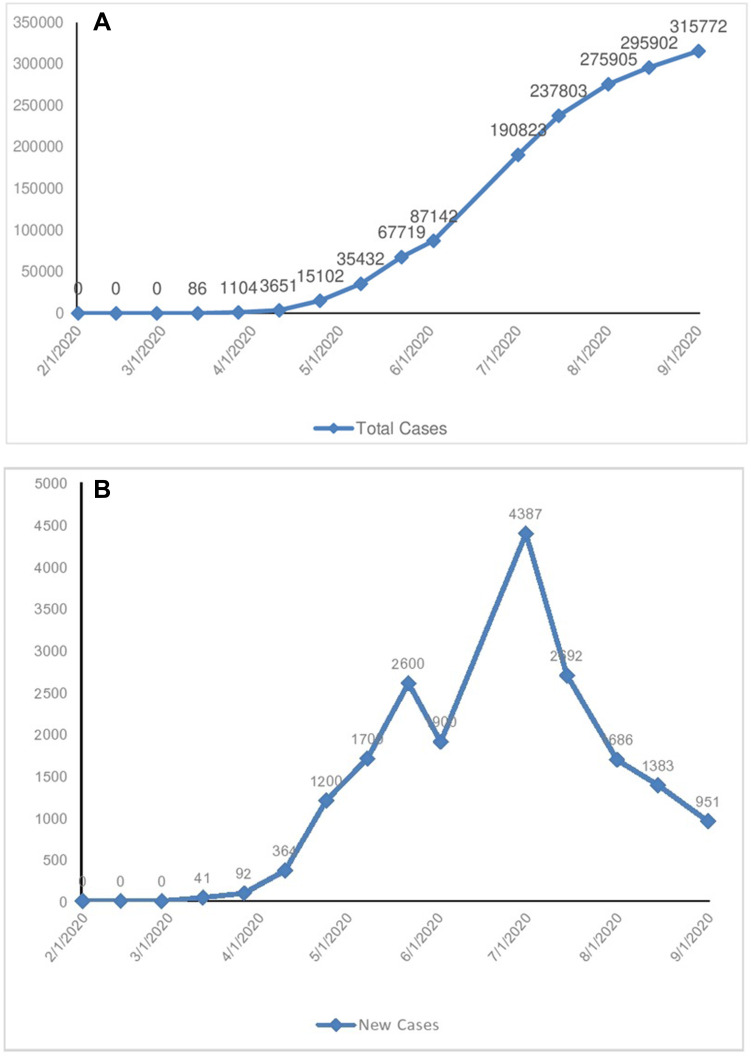
Both mitigation and suppression strategies were adopted by the United Kingdom, India, Italy, China, and Saudi Arabia to control the spread of the COVID-19 pandemic. It was observed that China has achieved a greater success in flattening the curve compared to the other countries. In China, few new daily cases have occurred since March, and it has been the only country that has managed to keep the COVID-19 pandemic under control. On the other hand, reductions in the number of daily cases (since May 2020) were detected in the United Kingdom, Italy, and Saudi Arabia (since July 2020). Also, during the last 3 months (June, July and August) India has shown the highest growth in the total number of confirmed cases and in the number of new daily cases, compared to the mentioned countries.
The review of the strategies adopted by China, India, the United Kingdom, Italy and Saudi Arabia to combat the COVID-19 pandemic can guide countries in the design and development of mitigation and suppression approaches to control the spread of the COVID-19 virus. Containment strategies such as lockdowns cannot continue in the long term. Therefore, countries must adopt mitigation and prevention strategies to protect people from infection and learn to live with the virus.
本研究的目的是比较英国、意大利、中国、印度和沙特阿拉伯为遏制新冠疫情传播所采取的策略。
进行文献综述,以收集中国、意大利、印度、英国和沙特阿拉伯用于遏制新冠病毒传播的策略数据。对65篇已发表的文献参考进行全球分析,以观察这些国家用于控制新冠病毒传播的策略的有效性和效率。
英国、印度、意大利、中国和沙特阿拉伯均采用了缓解和抑制策略来控制新冠疫情的传播。据观察,与其他国家相比,中国在 flattening the curve(此处可能是“拉平曲线”之类的意思,表述不太准确)方面取得了更大的成功。自3月以来,中国每日新增病例很少,并且是唯一成功将新冠疫情控制住的国家。另一方面,在英国、意大利(自2020年5月起)和沙特阿拉伯(自2020年7月起)检测到每日病例数有所减少。此外,在过去3个月(6月、7月和8月),与上述国家相比,印度确诊病例总数和每日新增病例数增长幅度最大。
对中国、印度、英国、意大利和沙特阿拉伯为抗击新冠疫情所采取的策略进行综述,可为各国设计和制定缓解及抑制措施以控制新冠病毒传播提供指导。诸如封锁等遏制策略无法长期持续。因此,各国必须采取缓解和预防策略以保护人们免受感染,并学会与病毒共存。