Department of Ophthalmology, School of Medicine, University of California, San Francisco, CA, USA.
Department of Ophthalmology, School of Medicine, University of California, San Francisco, CA, USA; Pharmaceutical Sciences and Pharmacogenomics Graduate Program, University of California, San Francisco, CA, USA.
Redox Biol. 2020 Oct;37:101781. doi: 10.1016/j.redox.2020.101781. Epub 2020 Nov 2.
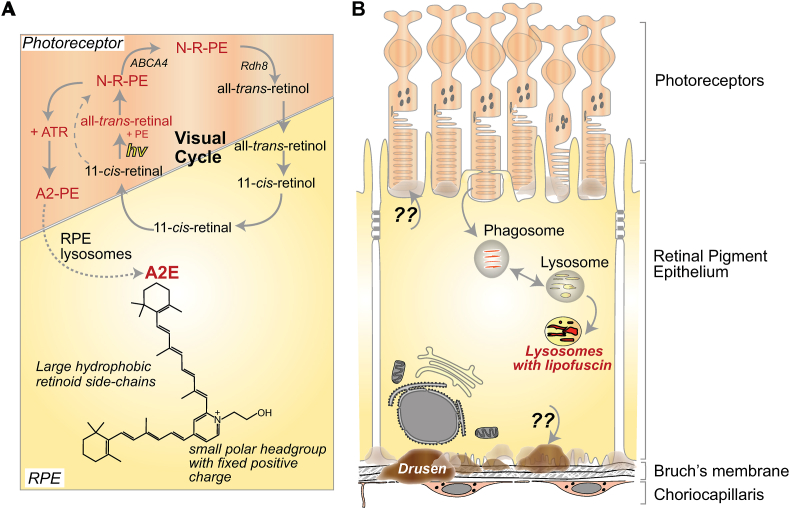
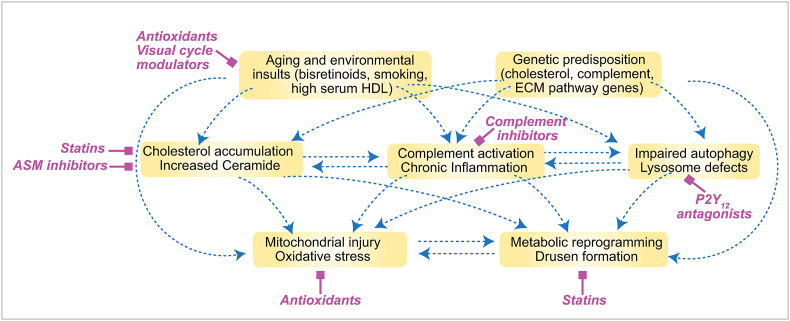
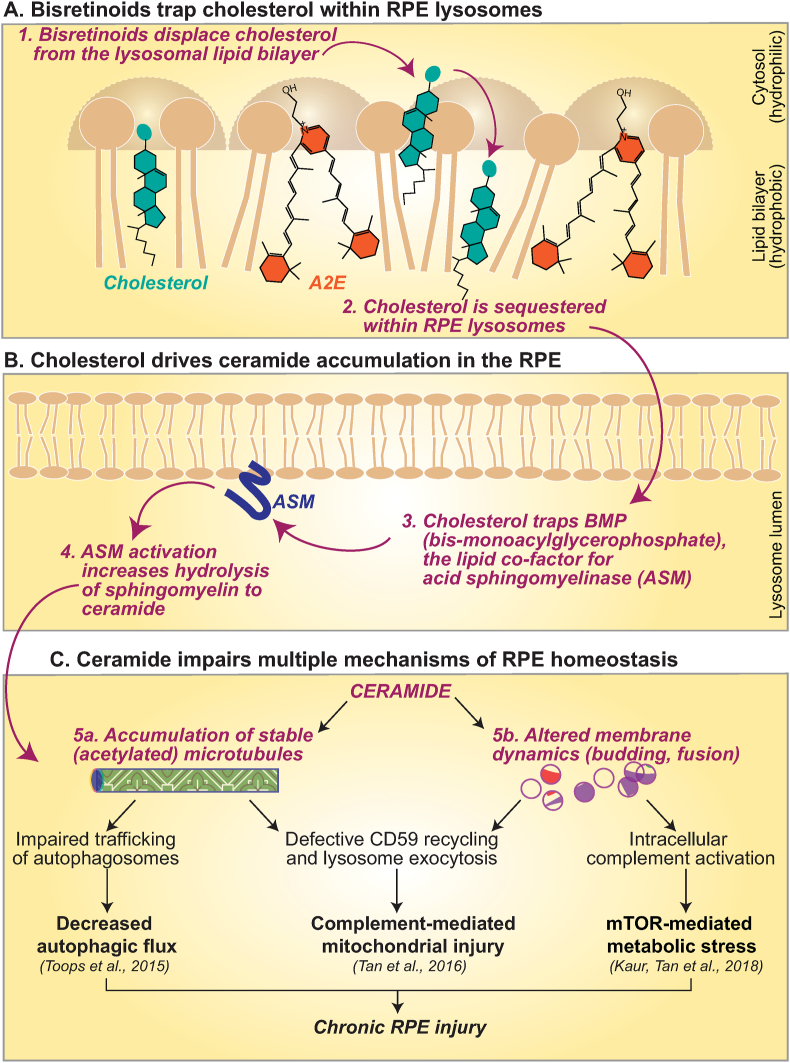
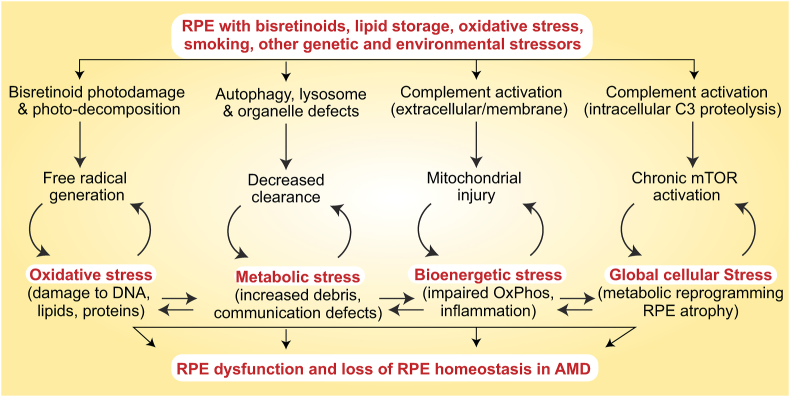
The retinal pigment epithelium (RPE) is the primary site of injury in non-neovascular age-related macular degeneration or dry AMD. Polymorphisms in genes that regulate complement activation and cholesterol metabolism are strongly associated with AMD, but the biology underlying disease-associated variants is not well understood. Here, we highlight recent studies that have used molecular, biochemical, and live-cell imaging methods to elucidate mechanisms by which aging-associated insults conspire with AMD genetic risk variants to tip the balance towards disease. We discuss how critical functions including lipid metabolism, autophagy, complement regulation, and mitochondrial dynamics are compromised in the RPE, and how a deeper understanding of these mechanisms has helped identify promising therapeutic targets to preserve RPE homeostasis in AMD.
视网膜色素上皮(RPE)是与年龄相关的非新生血管性黄斑变性或干性 AMD 的主要损伤部位。调节补体激活和胆固醇代谢的基因中的多态性与 AMD 密切相关,但与疾病相关的变异体相关的生物学机制尚不清楚。在这里,我们重点介绍了最近使用分子、生化和活细胞成像方法的研究,这些研究阐明了与年龄相关的损伤与 AMD 遗传风险变异体协同作用,使疾病倾向发生的机制。我们讨论了包括脂质代谢、自噬、补体调节和线粒体动力学在内的关键功能在 RPE 中是如何受到损害的,以及对这些机制的更深入了解如何有助于确定有希望的治疗靶点,以维持 AMD 中 RPE 的内稳态。