Carrazzone Ryan J, Foster Jeffrey C, Li Zhao, Matson John B
Department of Chemistry, Center for Drug Discovery, and Macromolecules Innovation Institute, Virginia Tech, Blacksburg, VA, 24061, United States.
Eur Polym J. 2020 Dec 5;141. doi: 10.1016/j.eurpolymj.2020.110077. Epub 2020 Oct 6.
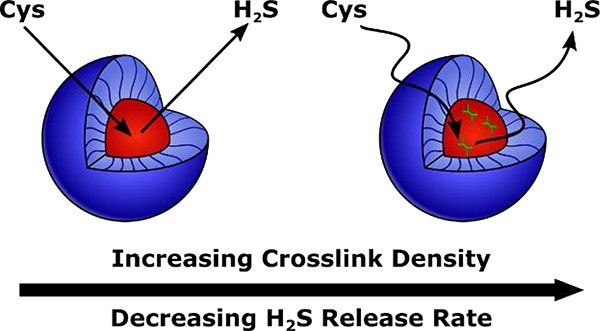
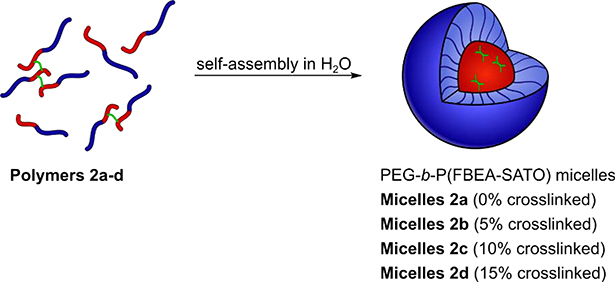
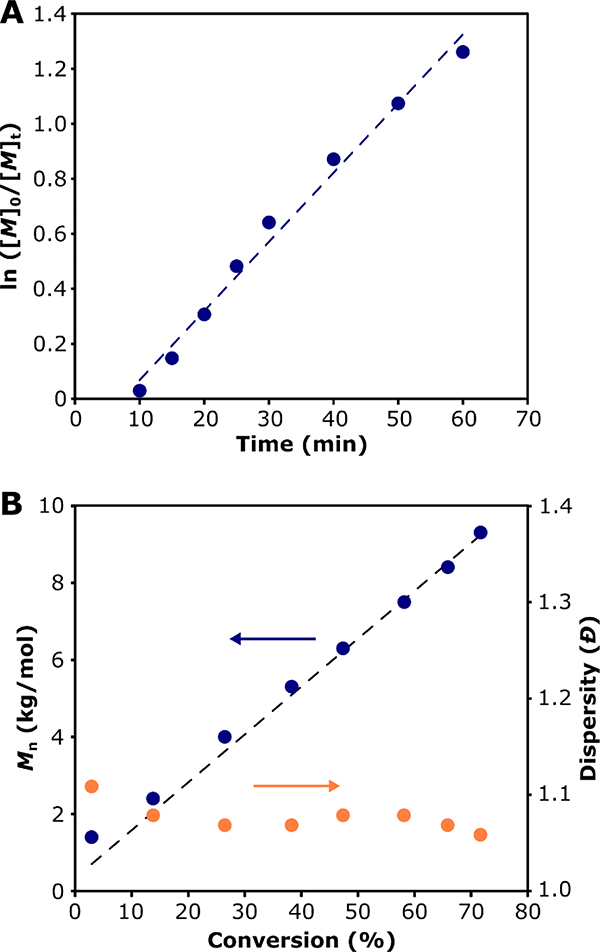
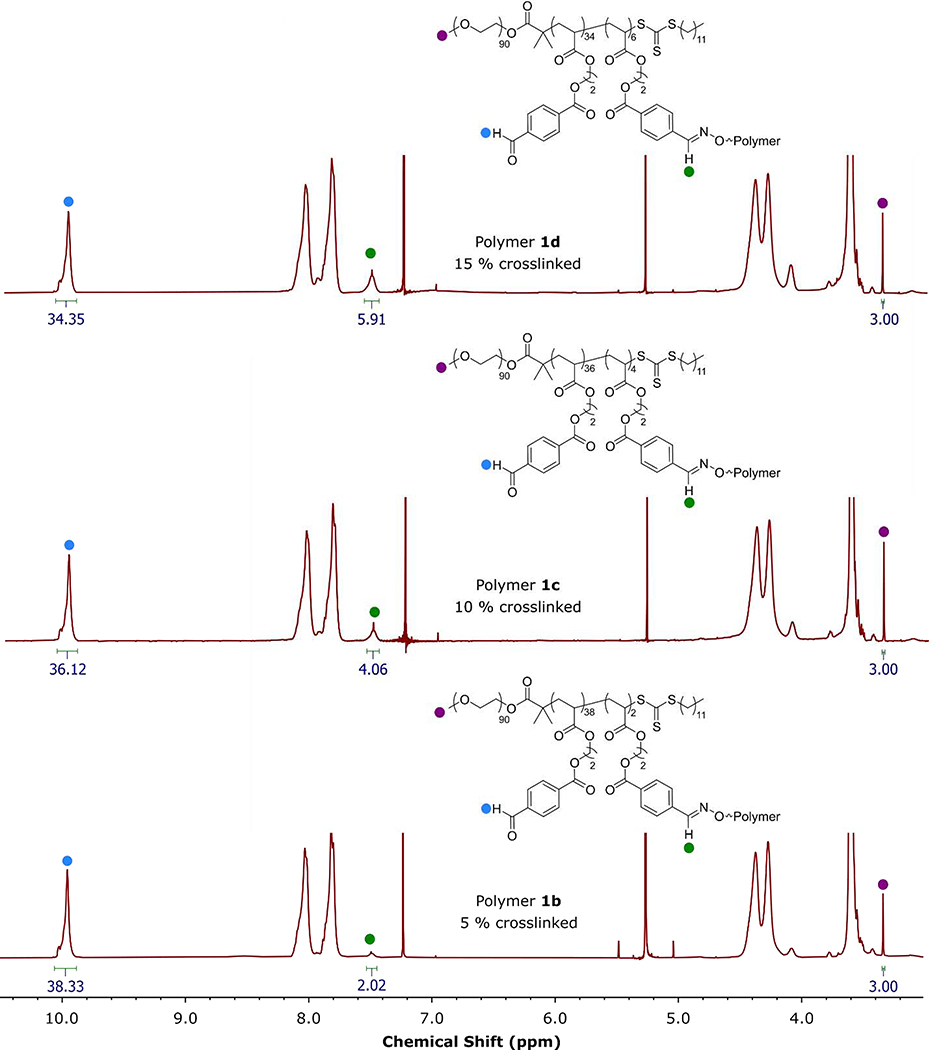
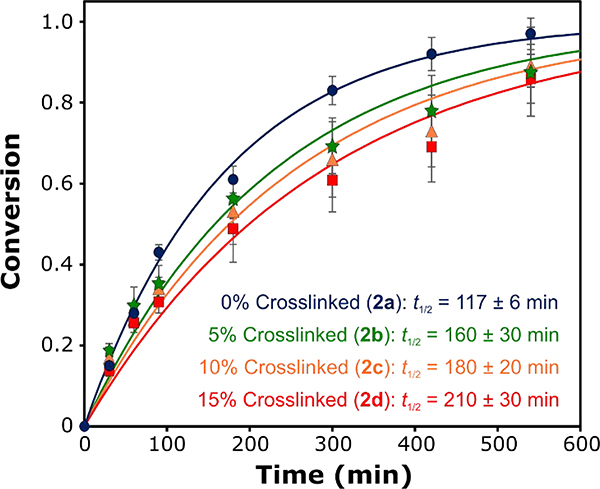
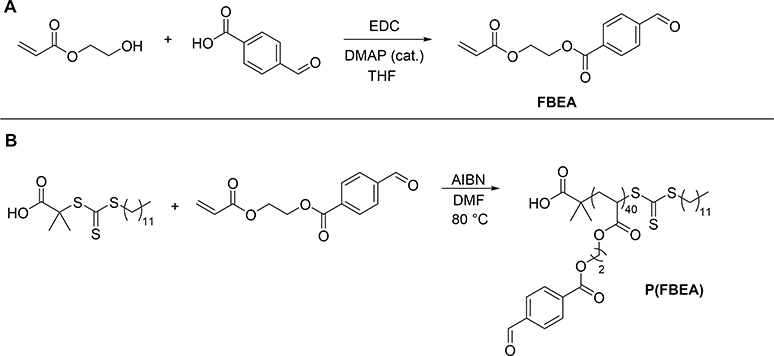
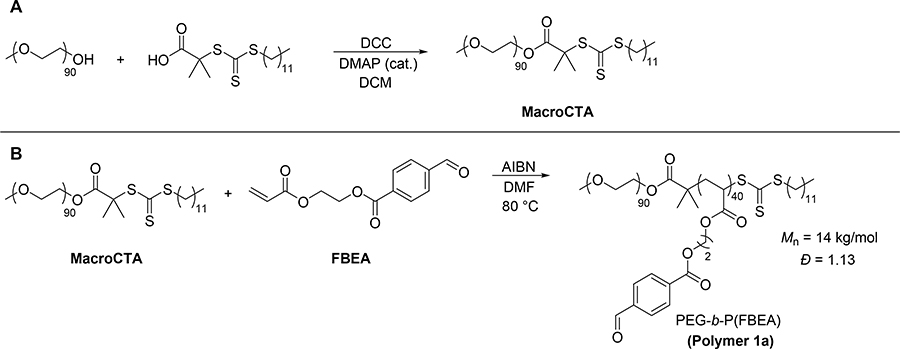
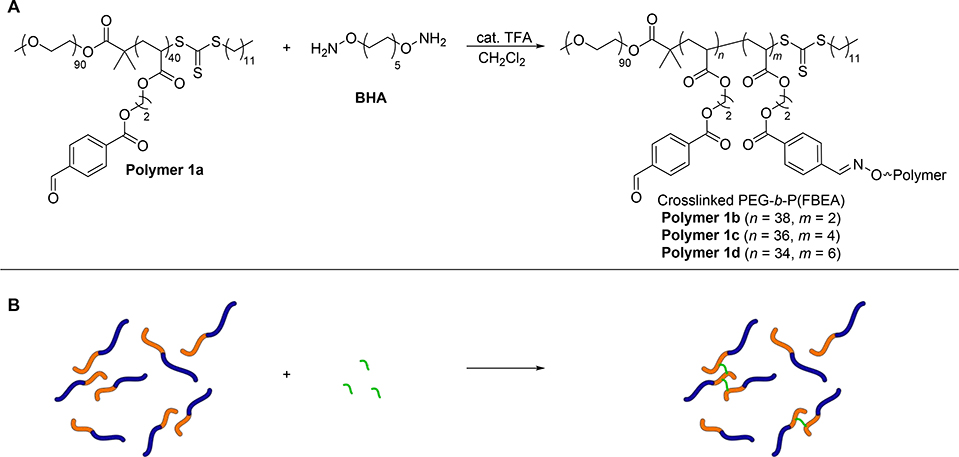
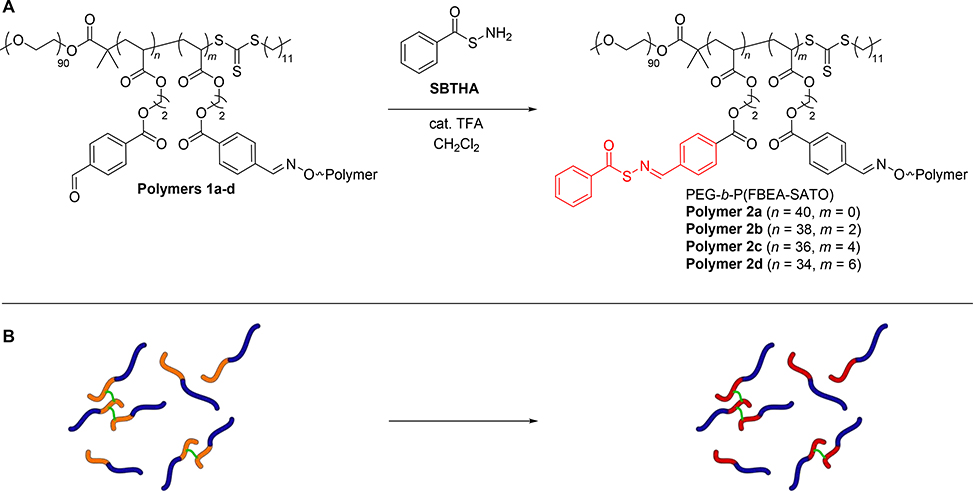
Polymer micelles, used extensively as vehicles in the delivery of active pharmaceutical ingredients, represent a versatile polymer architecture in drug delivery systems. We hypothesized that degree of crosslinking in the hydrophobic core of amphiphilic block copolymer micelles could be used to tune the rate of release of the biological signaling gas (gasotransmitter) hydrogen sulfide (HS), a potential therapeutic. To test this hypothesis, we first synthesized amphiphilic block copolymers of the structure PEG--P(FBEA) (PEG = poly(ethylene glycol), FBEA = 2-(4-formylbenzoyloxy)ethyl acrylate). Using a modified arm-first approach, we then varied the crosslinking percentage in the core-forming block addition of a alkanediyl bis(hydroxylamine) crosslinking agent. We followed incorporation of the crosslinker by H NMR spectroscopy, monitoring the appearance of the oxime signal resulting from reaction of pendant aryl aldehydes on the block copolymer with hydroxylamines on the crosslinker, which revealed crosslinking percentages of 5, 10, and 15%. We then installed HS-releasing -aroylthiooxime (SATO) groups on the crosslinked polymers, yielding micelles with SATO units in their hydrophobic cores after self-assembly in water. HS release studies in water, using cysteine (Cys) as a trigger to induce HS release from the SATO groups in the micelle core, revealed increasing half-lives of HS release, from 117 ± 6 min to 210 ± 30 min, with increasing crosslinking density in the micelle core. This result was consistent with our hypothesis, and we speculate that core crosslinking limits the rate of Cys diffusion into the micelle core, decreasing the release rate. This method for tuning the release of covalently linked small molecules through modulation of micelle core crosslinking density may extend beyond HS to other drug delivery systems where precise control of release rate is needed.
聚合物胶束作为活性药物成分递送的载体被广泛应用,是药物递送系统中一种通用的聚合物结构。我们推测两亲性嵌段共聚物胶束疏水核心的交联程度可用于调节生物信号气体(气体递质)硫化氢(HS)的释放速率,硫化氢是一种潜在的治疗剂。为了验证这一假设,我们首先合成了结构为PEG-P(FBEA)的两亲性嵌段共聚物(PEG = 聚乙二醇,FBEA = 2-(4-甲酰基苯甲酰氧基)乙基丙烯酸酯)。然后采用改进的先臂法,通过添加链烷二基双(羟胺)交联剂来改变形成核心的嵌段中的交联百分比。我们通过1H NMR光谱跟踪交联剂的掺入情况,监测嵌段共聚物上的侧链芳基醛与交联剂上的羟胺反应产生的肟信号的出现,结果显示交联百分比为5%、10%和15%。然后我们在交联聚合物上引入了释放HS的芳酰基硫代肟(SATO)基团,在水中自组装后得到疏水核心中含有SATO单元的胶束。在水中进行的HS释放研究中,使用半胱氨酸(Cys)作为触发剂诱导胶束核心中的SATO基团释放HS,结果显示随着胶束核心交联密度的增加,HS释放的半衰期从117±6分钟增加到210±30分钟。这一结果与我们的假设一致,我们推测核心交联限制了Cys扩散到胶束核心中的速率,从而降低了释放速率。这种通过调节胶束核心交联密度来调节共价连接的小分子释放的方法可能不仅适用于HS,还可扩展到其他需要精确控制释放速率的药物递送系统。