Department of Traditional Pharmacy, School of Pharmacy, Mashhad University of Medical Sciences, Mashhad, Iran.
NICM Heath Research Institute, Western Sydney University, Westmead, NSW, 2145, Australia.
BMC Complement Med Ther. 2020 Nov 9;20(1):333. doi: 10.1186/s12906-020-03102-3.
Saffron (stigma of Crocus sativus L.) from Iridaceae family is a well-known traditional herbal medicine that has been used for hundreds of years to treat several diseases such as depressive mood, cancer and cardiovascular disorders. Recently, anti-dementia property of saffron has been indicated. However, the effects of saffron for the management of dementia remain controversial. The aim of the present study is to explore the effectiveness and safety of saffron in treating mild cognitive impairment and dementia.
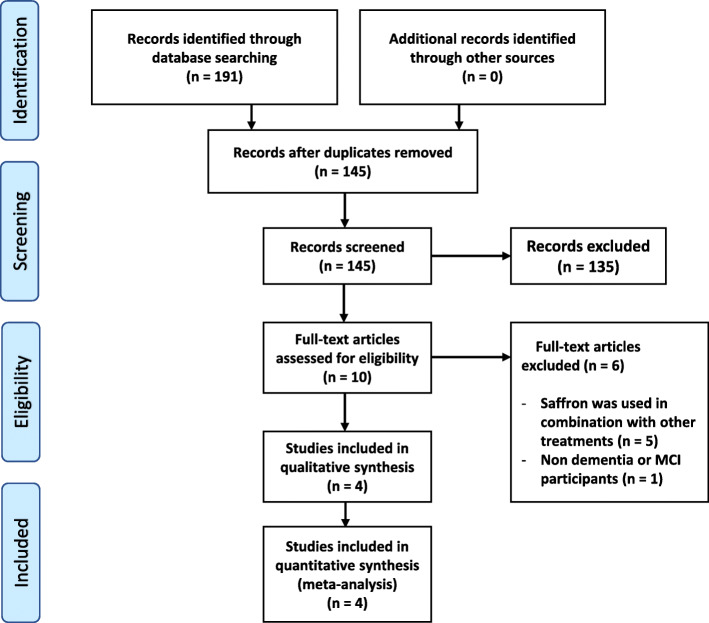
An electronic database search of some major English and Chinese databases was conducted until 31st May 2019 to identify relevant randomised clinical trials (RCT). The primary outcome was cognitive function and the secondary outcomes included daily living function, global clinical assessment, quality of life (QoL), psychiatric assessment and safety. Rev-Man 5.3 software was applied to perform the meta-analyses.
A total of four RCTs were included in this review. The analysis revealed that saffron significantly improves cognitive function measured by the Alzheimer's Disease Assessment Scale-cognitive subscale (ADAS-cog) and Clinical Dementia Rating Scale-Sums of Boxes (CDR-SB), compared to placebo groups. In addition, there was no significant difference between saffron and conventional medicine, as measured by cognitive scales such as ADAS-cog and CDR-SB. Saffron improved daily living function, but the changes were not statistically significant. No serious adverse events were reported in the included studies.
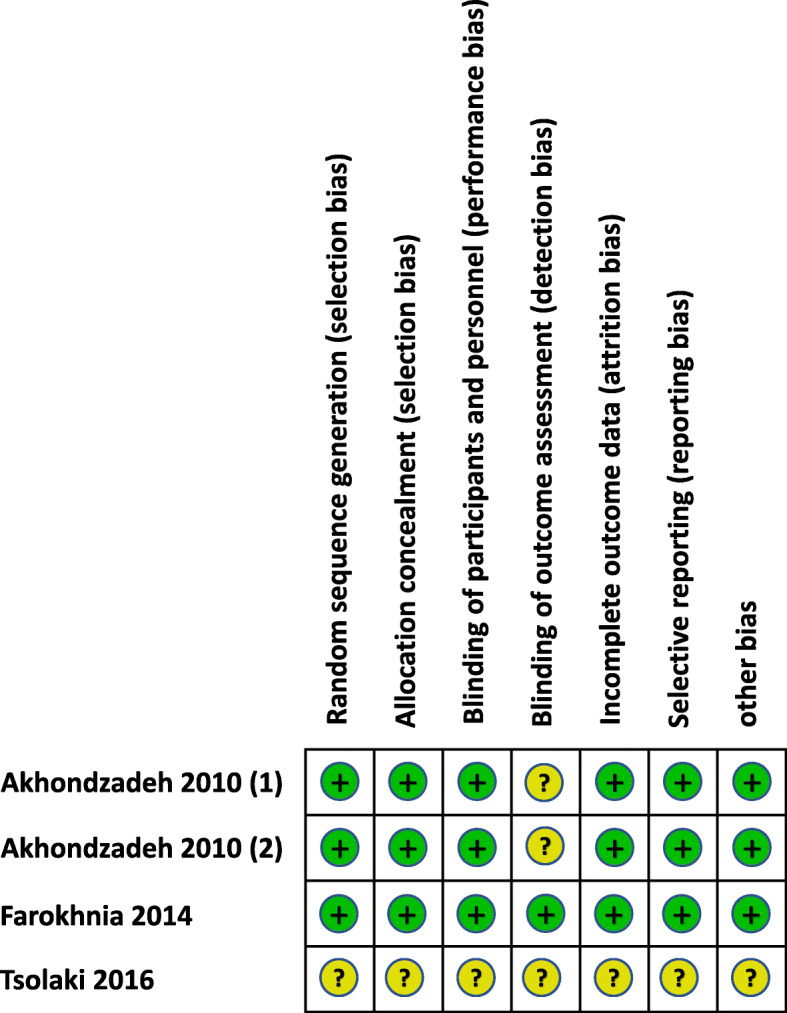
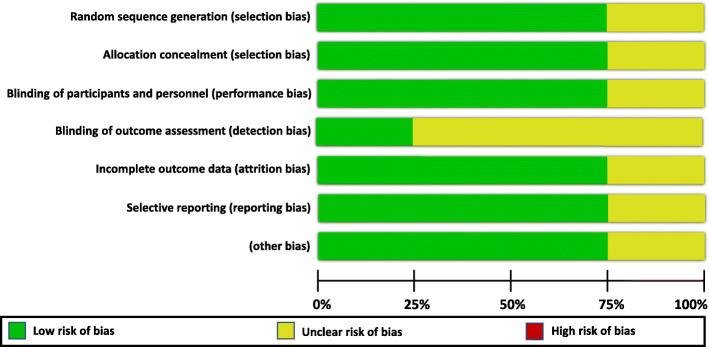
Saffron may have the potential to improve cognitive function and activities of daily living in patients with Alzheimer's disease and mild cognitive impairment (MCI). However, due to limited high-quality studies there is insufficient evidence to make any recommendations for clinical use. Further clinical trials on larger sample sizes are warranted to shed more light on its efficacy and safety.
藏红花(鸢尾科藏红花属)是一种众所周知的传统草药,已经使用了数百年,用于治疗抑郁症、癌症和心血管疾病等多种疾病。最近,藏红花具有抗痴呆作用已得到证实。然而,藏红花治疗痴呆的效果仍存在争议。本研究旨在探讨藏红花治疗轻度认知障碍和痴呆的疗效和安全性。
对一些主要的英文和中文数据库进行电子数据库检索,以确定相关的随机对照试验(RCT)。主要结局是认知功能,次要结局包括日常生活功能、总体临床评估、生活质量(QoL)、精神科评估和安全性。使用 RevMan 5.3 软件进行荟萃分析。
本综述共纳入 4 项 RCT。分析表明,与安慰剂组相比,藏红花显著改善了阿尔茨海默病评估量表认知分量表(ADAS-cog)和临床痴呆评定量表总评分(CDR-SB)测量的认知功能。此外,藏红花与常规药物在 ADAS-cog 和 CDR-SB 等认知量表上的差异无统计学意义。藏红花改善了日常生活功能,但变化无统计学意义。纳入的研究均未报告严重不良事件。
藏红花可能有潜力改善阿尔茨海默病和轻度认知障碍(MCI)患者的认知功能和日常生活活动能力。然而,由于高质量研究有限,目前尚无足够的证据推荐其临床应用。需要进一步开展更大样本量的临床试验,以更深入地了解其疗效和安全性。