Department of Medicine, Division of Allergy and Immunology, Division of Genetics, Brigham and Women's Hospital, Harvard Medical School, Boston, MA 02115, USA.
Ragon Institute of MGH, MIT, and Harvard, Cambridge, MA 02139, USA.
Cell. 2020 Dec 10;183(6):1496-1507.e16. doi: 10.1016/j.cell.2020.10.051. Epub 2020 Nov 3.
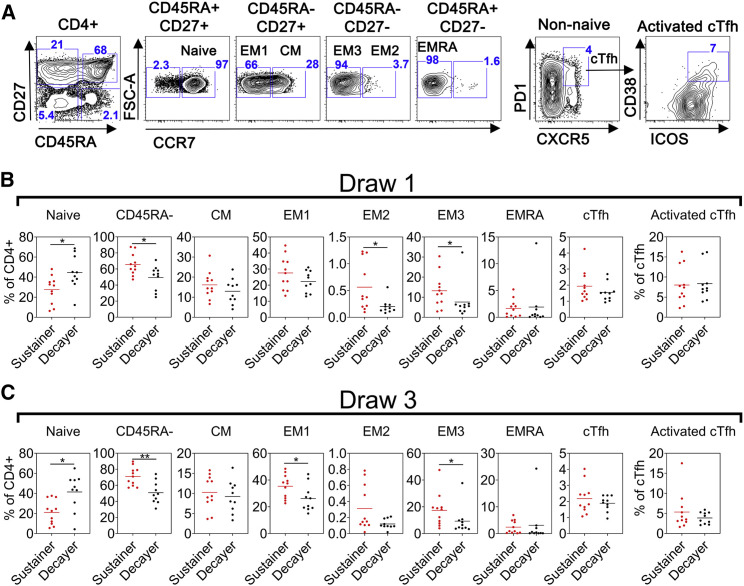
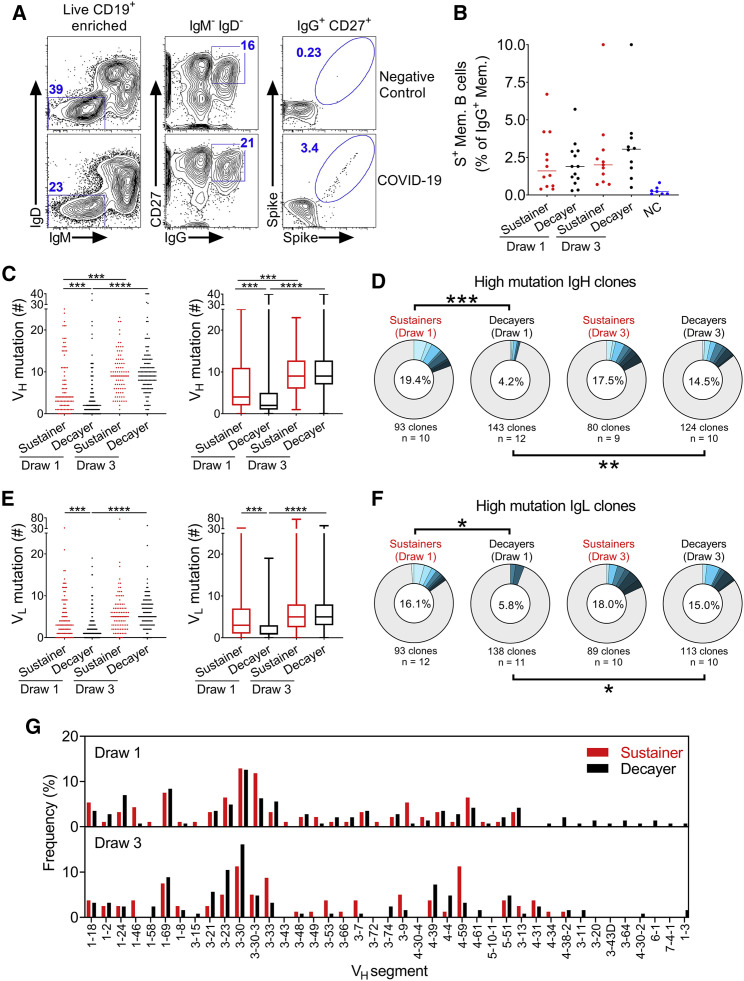
Antibodies are key immune effectors that confer protection against pathogenic threats. The nature and longevity of the antibody response to SARS-CoV-2 infection are not well defined. We charted longitudinal antibody responses to SARS-CoV-2 in 92 subjects after symptomatic COVID-19. Antibody responses to SARS-CoV-2 are unimodally distributed over a broad range, with symptom severity correlating directly with virus-specific antibody magnitude. Seventy-six subjects followed longitudinally to ∼100 days demonstrated marked heterogeneity in antibody duration dynamics. Virus-specific IgG decayed substantially in most individuals, whereas a distinct subset had stable or increasing antibody levels in the same time frame despite similar initial antibody magnitudes. These individuals with increasing responses recovered rapidly from symptomatic COVID-19 disease, harbored increased somatic mutations in virus-specific memory B cell antibody genes, and had persistent higher frequencies of previously activated CD4 T cells. These findings illuminate an efficient immune phenotype that connects symptom clearance speed to differential antibody durability dynamics.
抗体是对抗病原威胁的关键免疫效应因子。人们对 SARS-CoV-2 感染后抗体反应的性质和持久性还没有很好的定义。我们对 92 名有症状的 COVID-19 患者进行了 SARS-CoV-2 抗体的纵向研究。SARS-CoV-2 抗体的反应呈单峰分布,范围很广,症状的严重程度与病毒特异性抗体的幅度直接相关。76 名进行了长达约 100 天的纵向研究的患者,抗体持续时间的动态具有明显的异质性。大多数个体的病毒特异性 IgG 明显下降,而在相同的时间范围内,尽管初始抗体幅度相似,但有一部分患者的抗体水平稳定或增加。这些抗体反应增加的患者从有症状的 COVID-19 疾病中迅速恢复,病毒特异性记忆 B 细胞抗体基因中存在更多的体细胞突变,并且先前激活的 CD4 T 细胞的频率持续升高。这些发现阐明了一种有效的免疫表型,它将症状清除速度与不同的抗体持续时间动态联系起来。