Vector-borne Virus Research Center, Fujian Province Key Laboratory of Plant Virology, Fujian Agriculture and Forestry University, Fuzhou, Fujian, China.
State Key Laboratory for Ecological Pest Control of Fujian and Taiwan Crops, Fujian Agriculture and Forestry University, Fuzhou, China.
mBio. 2020 Nov 10;11(6):e01142-20. doi: 10.1128/mBio.01142-20.
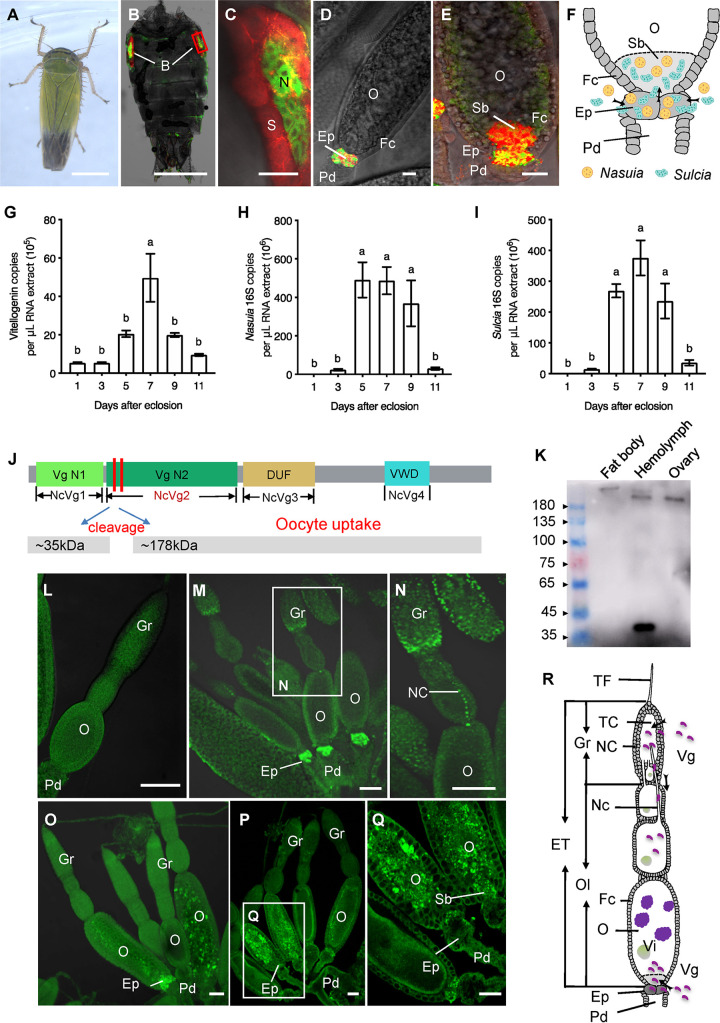
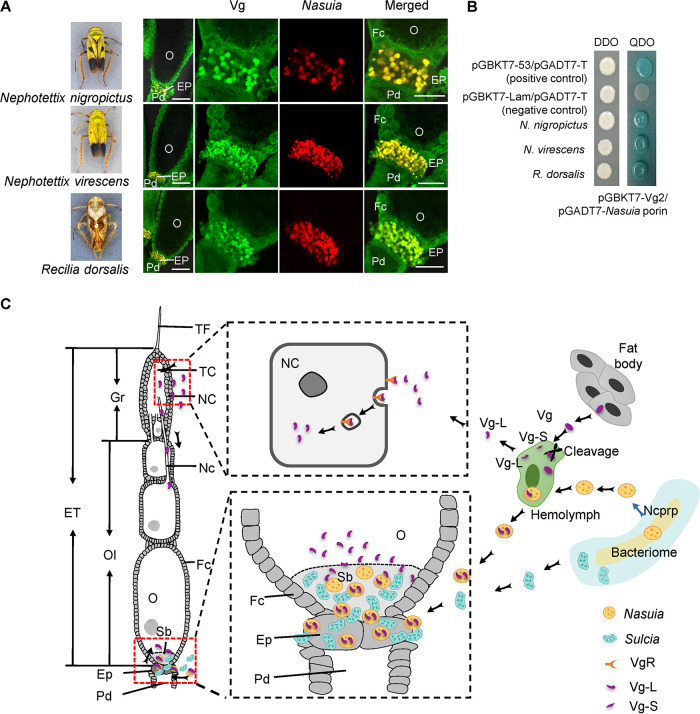
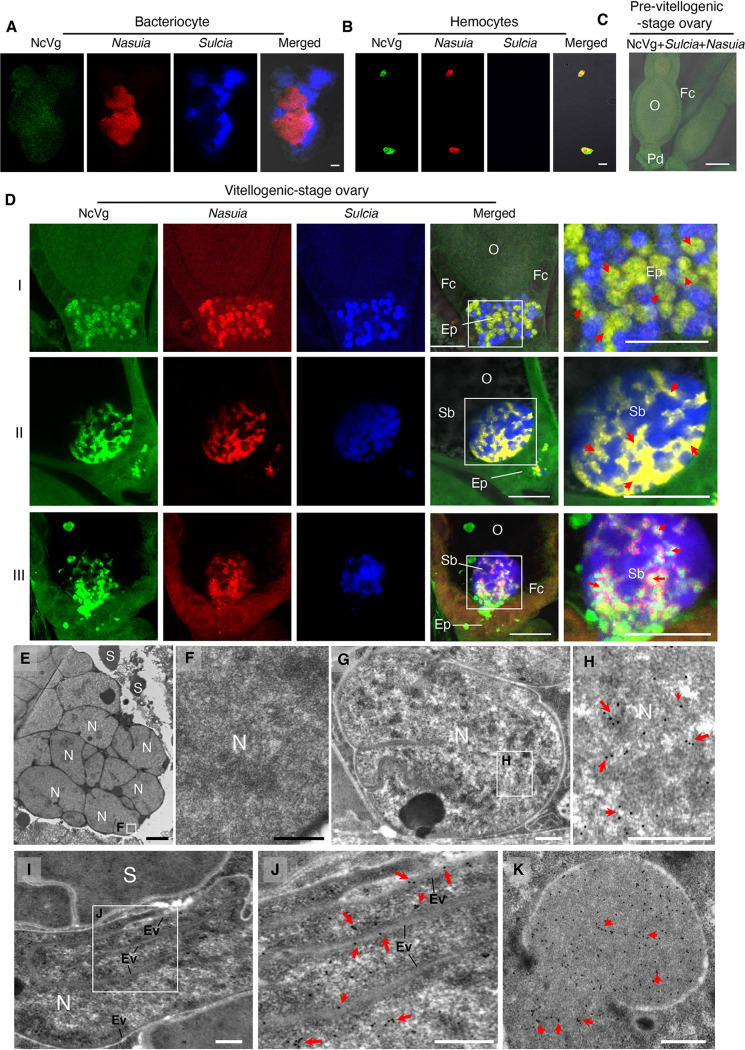
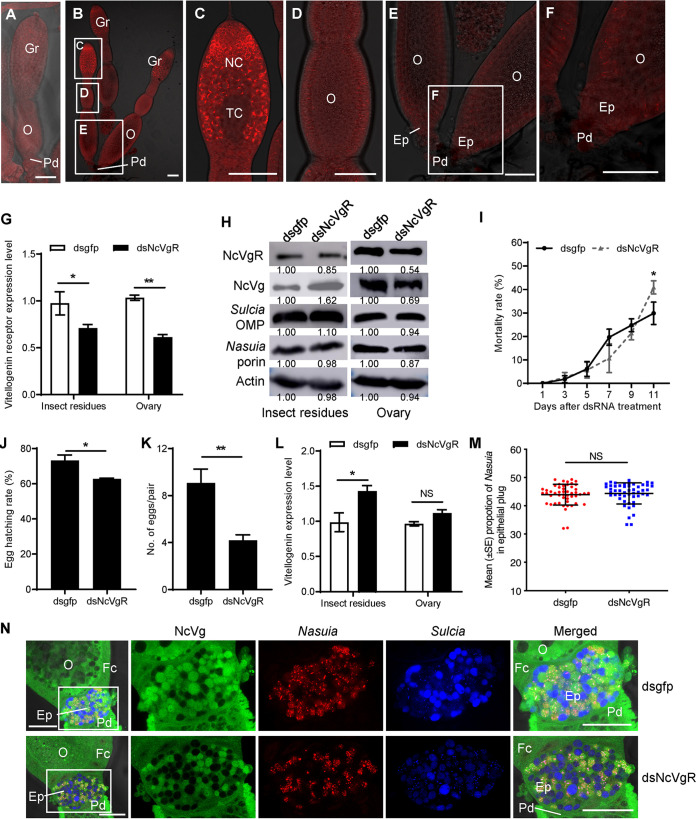
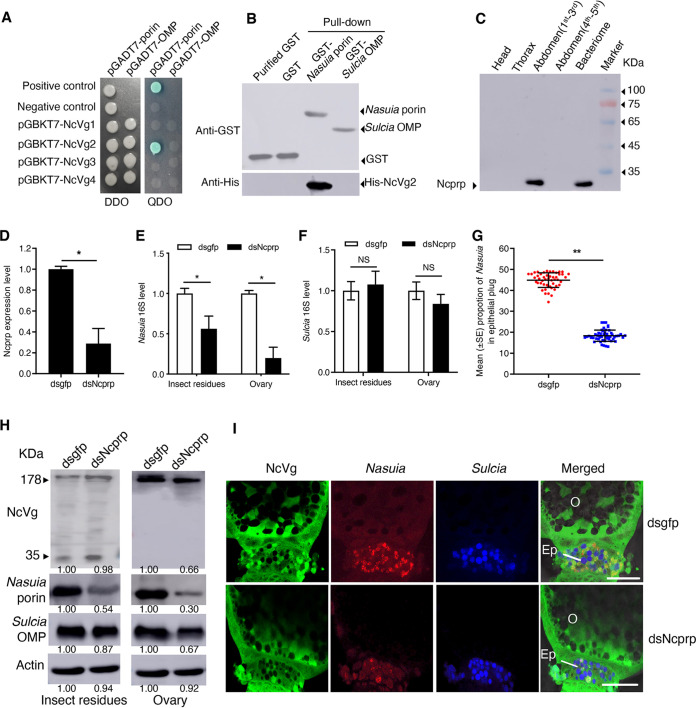
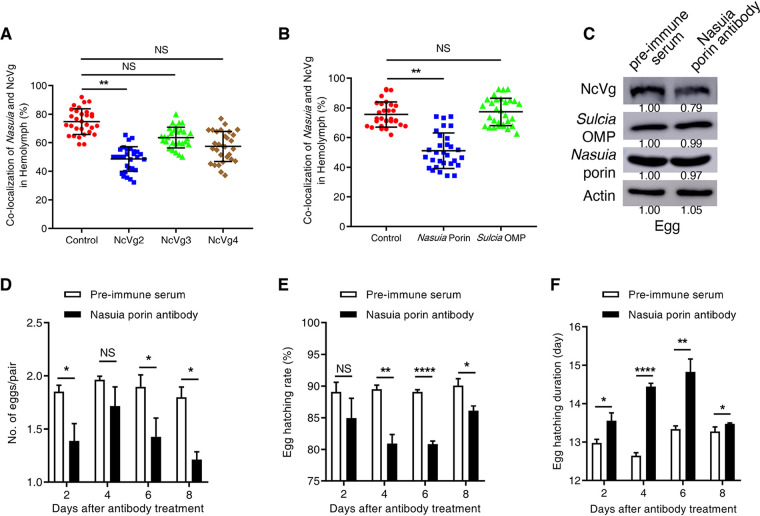
Many insect species, such as aphids, leafhoppers, planthoppers, and whiteflies harbor obligate bacterial symbionts that can be transovarially transmitted to offspring through the oocytes of female insects. Whether obligate bacterial symbionts can carry important molecules/resources to the embryos to support egg development is still unknown. Here, we show that the vitellogenin (Vg) precursor of rice leafhopper is biosynthesized by the fat body, secreted into the hemolymph and subsequently cleaved into the 35- and 178-kDa subunits, whereas only the 178-kDa subunit is taken up by the leading end of oocytes in a receptor-dependent manner or moves into the posterior pole of the terminal oocyte in association with obligate bacterial symbiont " Nasuia deltocephalinicola" (hereafter ) in a receptor-independent manner. Furthermore, the 178-kDa Vg subunit can directly interact with a surface channel molecule (porin) on the envelope of , allowing Vg to enter bacterial cytoplasm. Thus, Vg can hitchhike the ancient oocyte entry path of , the common obligate symbiont of leafhoppers. Knocking down a growth-related protein expression or treatment with porin antibody strongly prevents the ability of to carry Vgs into oocytes and impair insect egg development. -carried Vgs provide at least 20% of the total Vgs in the developing eggs. We anticipate that the bacterial symbiont-mediated Vg uptake into oocytes to support efficient egg development may be a common pattern shared by many insects. Many insects harbor obligate bacterial symbionts that can be vertically transmitted to offspring by female insects through eggs. Here, we report that leafhopper vitellogenin (Vg) recognizes and binds a surface channel molecule (porin) on the envelope of obligate bacterial symbiont , which potentially induces the opening of porin channels for Vg to access the cytoplasm of Thus, Vg can exploit bacterial symbionts as the independent carriers into the oocytes. Such -carried Vg contents support efficient insect egg development. Thus, our findings indicate that insects have evolved strategies to exploit the symbionts for carrying additional Vgs to guarantee optimal insect reproduction.
许多昆虫物种,如蚜虫、叶蝉、飞虱和粉虱,都携带有必需的细菌共生体,这些共生体可以通过雌性昆虫的卵母细胞经卵传递给后代。然而,目前还不清楚必需的细菌共生体是否可以携带重要的分子/资源到胚胎中,以支持卵的发育。在这里,我们发现水稻叶蝉的卵黄原蛋白(Vg)前体是由脂肪体合成的,分泌到血淋巴中,然后被切割成 35-和 178-kDa 亚基,而只有 178-kDa 亚基以受体依赖的方式被卵母细胞的前端摄取,或以与必需细菌共生体“Nasuia deltocephalinicola”(以下简称)无关的方式与共生体一起移动到终末卵母细胞的后极。此外,178-kDa Vg 亚基可以直接与包膜上的表面通道分子(孔蛋白)相互作用,使 Vg 进入细菌细胞质。因此,Vg 可以搭乘古老的卵母细胞进入途径,这是叶蝉的常见必需共生体。敲低生长相关蛋白的表达或用孔蛋白抗体处理会强烈阻止进入卵母细胞和损害昆虫卵发育的能力。-携带的 Vgs 提供了发育卵中总 Vgs 的至少 20%。我们预计,细菌共生体介导的 Vg 摄取到卵母细胞中以支持有效的卵发育可能是许多昆虫共有的模式。许多昆虫都携带有必需的细菌共生体,这些共生体可以通过雌性昆虫通过卵垂直传递给后代。在这里,我们报道了叶蝉卵黄原蛋白(Vg)识别并结合必需细菌共生体的包膜上的表面通道分子(孔蛋白),这可能诱导孔蛋白通道打开,使 Vg 进入的细胞质。因此,Vg 可以利用细菌共生体作为独立的载体进入卵母细胞。这种携带的 Vg 含量支持有效的昆虫卵发育。因此,我们的研究结果表明,昆虫已经进化出利用共生体携带额外 Vg 的策略,以保证最佳的昆虫繁殖。