UK Centre for Astrobiology, School of Physics and Astronomy, University of Edinburgh, Edinburgh, UK.
Department of Bioscience-Microbiology, Ny Munkegade 116, Building 1540, 129, 8000, Aarhus C, Denmark.
Nat Commun. 2020 Nov 10;11(1):5523. doi: 10.1038/s41467-020-19276-w.
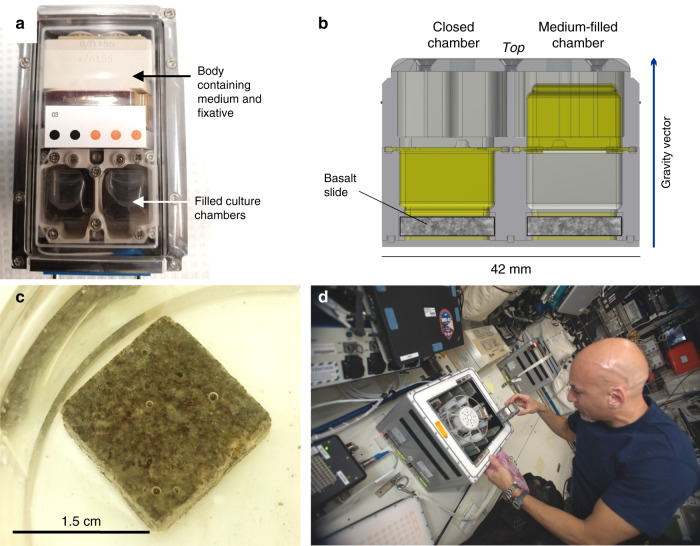
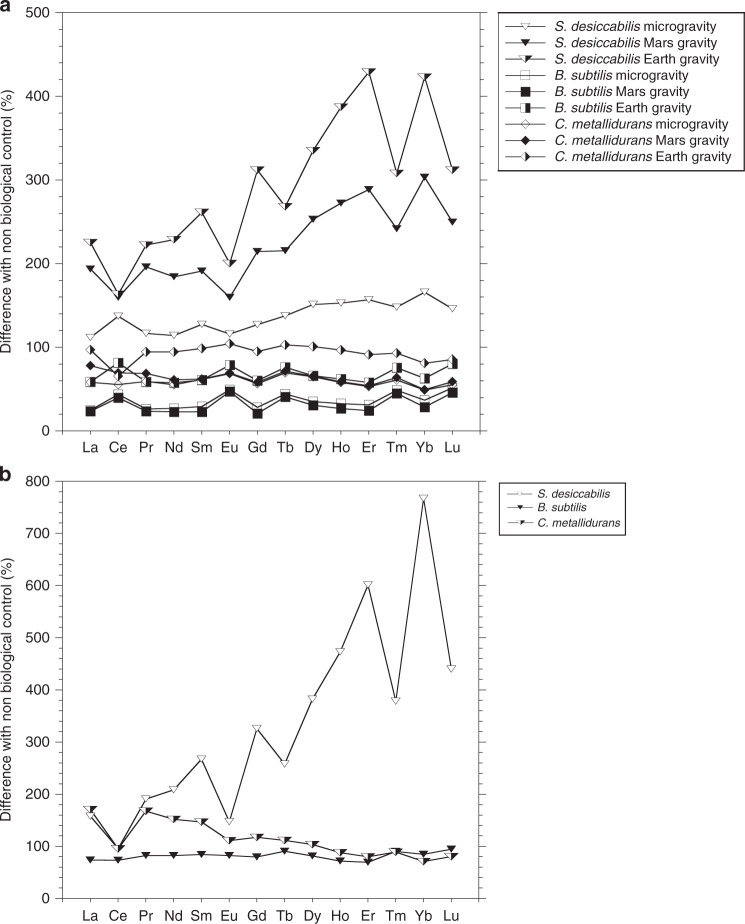
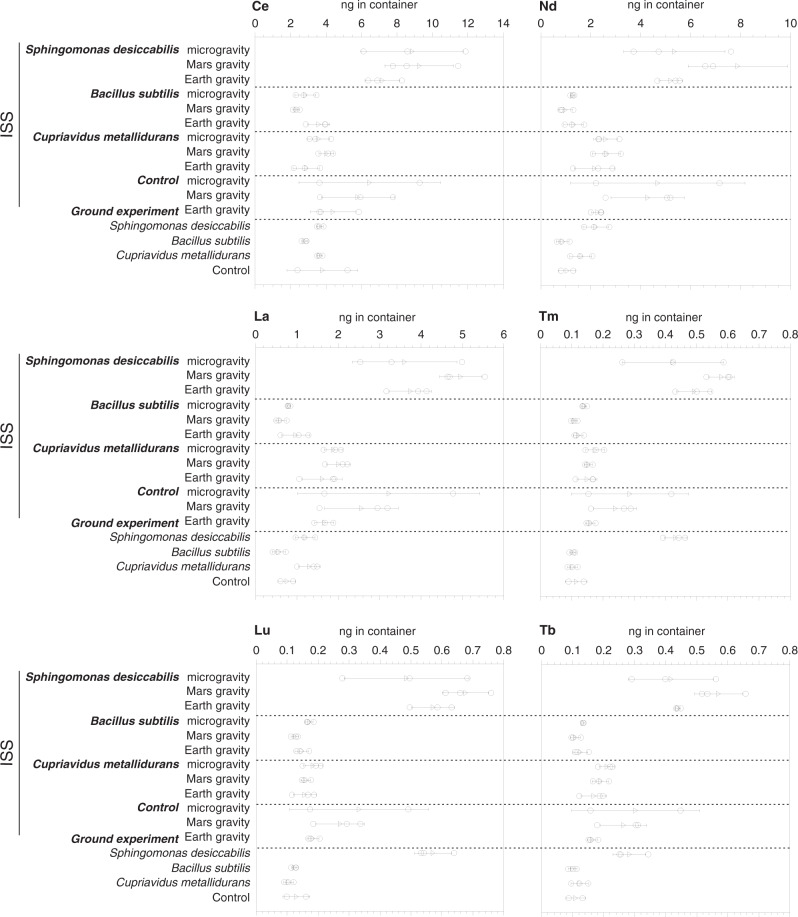
Microorganisms are employed to mine economically important elements from rocks, including the rare earth elements (REEs), used in electronic industries and alloy production. We carried out a mining experiment on the International Space Station to test hypotheses on the bioleaching of REEs from basaltic rock in microgravity and simulated Mars and Earth gravities using three microorganisms and a purposely designed biomining reactor. Sphingomonas desiccabilis enhanced mean leached concentrations of REEs compared to non-biological controls in all gravity conditions. No significant difference in final yields was observed between gravity conditions, showing the efficacy of the process under different gravity regimens. Bacillus subtilis exhibited a reduction in bioleaching efficacy and Cupriavidus metallidurans showed no difference compared to non-biological controls, showing the microbial specificity of the process, as on Earth. These data demonstrate the potential for space biomining and the principles of a reactor to advance human industry and mining beyond Earth.
微生物被用于从岩石中提取经济上重要的元素,包括用于电子工业和合金生产的稀土元素(REEs)。我们在国际空间站上进行了一项采矿实验,以测试在微重力和模拟火星和地球重力条件下从玄武岩中生物浸出 REE 的假设,使用了三种微生物和一个专门设计的生物采矿反应器。与所有重力条件下的非生物对照相比,干燥鞘氨醇单胞菌提高了 REE 的平均浸出浓度。在不同的重力条件下,最终产量没有明显差异,表明该工艺在不同的重力方案下是有效的。枯草芽孢杆菌表现出生物浸出效率降低,而铜绿假单胞菌与非生物对照相比没有差异,表明该工艺具有微生物特异性,就像在地球上一样。这些数据表明了太空生物采矿的潜力和反应器的原理,可以推动人类工业和采矿超越地球。