Molecular Biosciences, Northwestern University, Evanston, Illinois, United States of America.
Interdisciplinary Biological Sciences Program, Northwestern University, Evanston, Illinois, United States of America.
PLoS Genet. 2020 Nov 11;16(11):e1008986. doi: 10.1371/journal.pgen.1008986. eCollection 2020 Nov.
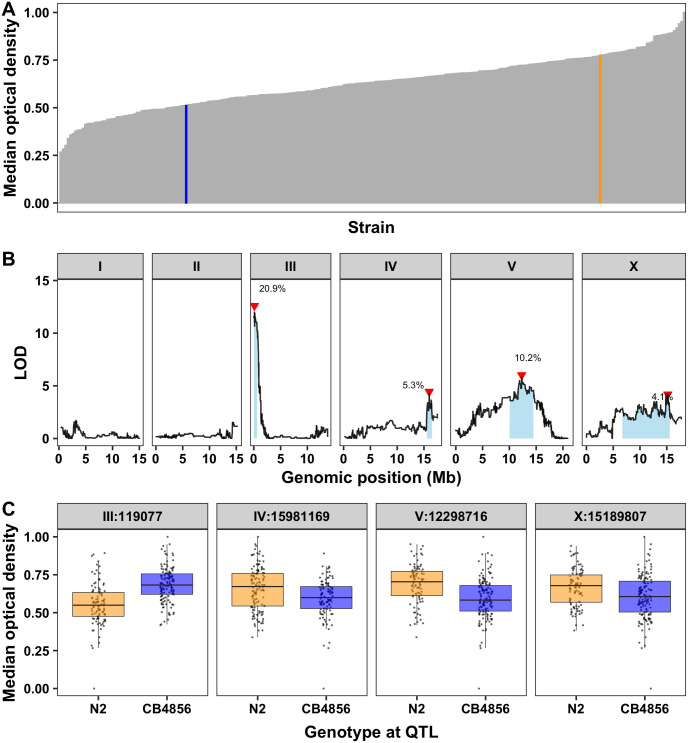
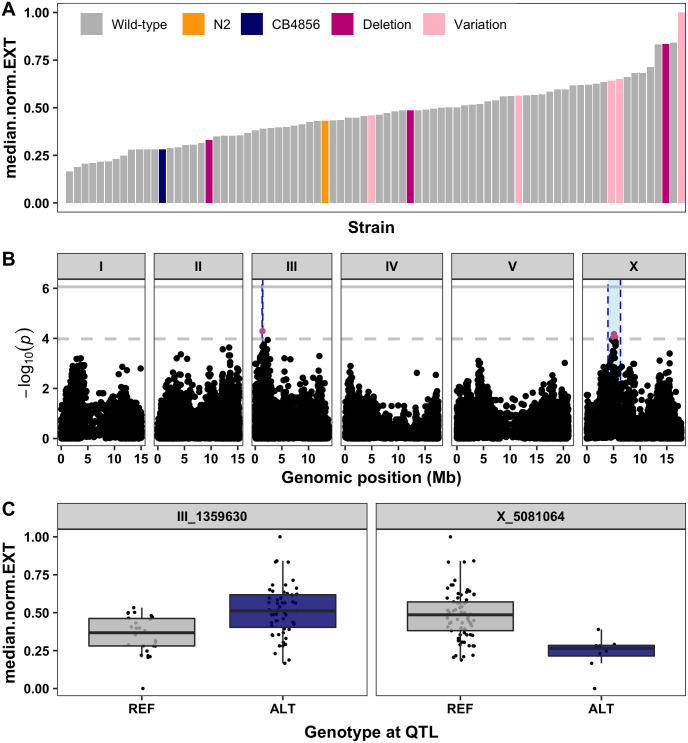
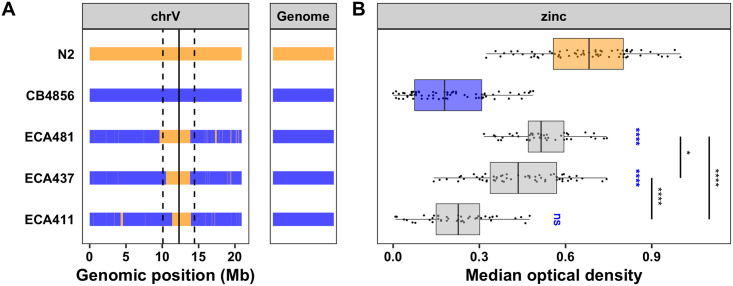
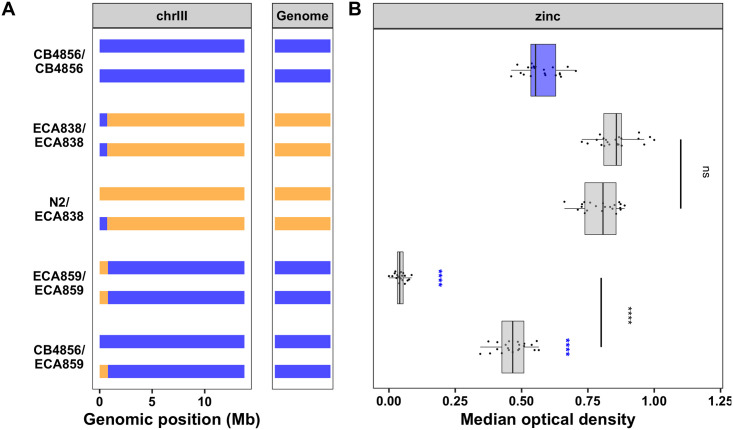
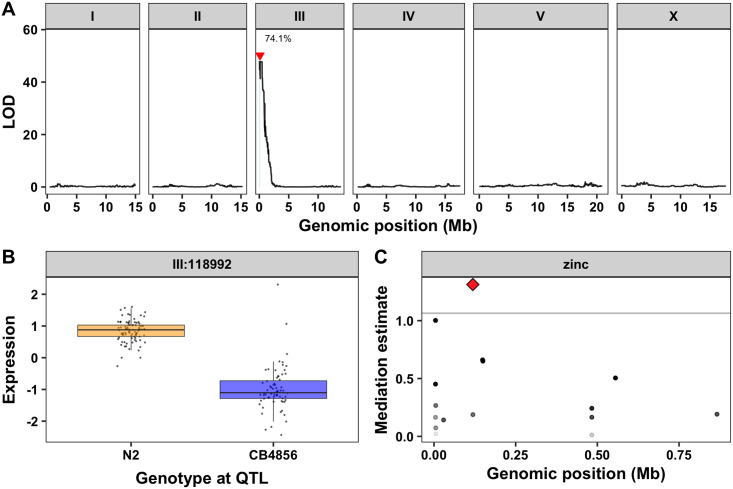
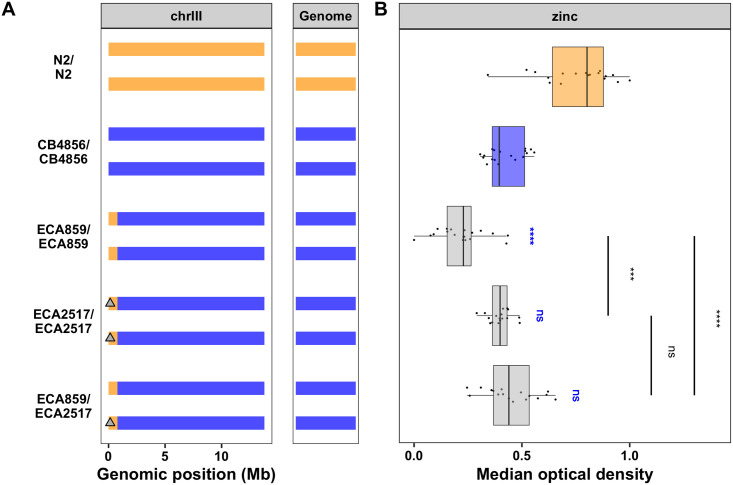
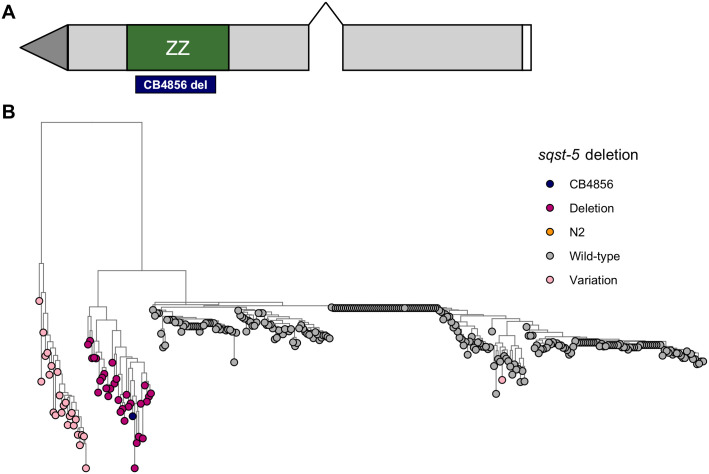
Zinc is an essential trace element that acts as a co-factor for many enzymes and transcription factors required for cellular growth and development. Altering intracellular zinc levels can produce dramatic effects ranging from cell proliferation to cell death. To avoid such fates, cells have evolved mechanisms to handle both an excess and a deficiency of zinc. Zinc homeostasis is largely maintained via zinc transporters, permeable channels, and other zinc-binding proteins. Variation in these proteins might affect their ability to interact with zinc, leading to either increased sensitivity or resistance to natural zinc fluctuations in the environment. We can leverage the power of the roundworm nematode Caenorhabditis elegans as a tractable metazoan model for quantitative genetics to identify genes that could underlie variation in responses to zinc. We found that the laboratory-adapted strain (N2) is resistant and a natural isolate from Hawaii (CB4856) is sensitive to micromolar amounts of exogenous zinc supplementation. Using a panel of recombinant inbred lines, we identified two large-effect quantitative trait loci (QTL) on the left arm of chromosome III and the center of chromosome V that are associated with zinc responses. We validated and refined both QTL using near-isogenic lines (NILs) and identified a naturally occurring deletion in sqst-5, a sequestosome-related gene, that is associated with resistance to high exogenous zinc. We found that this deletion is relatively common across strains within the species and that variation in sqst-5 is associated with zinc resistance. Our results offer a possible mechanism for how organisms can respond to naturally high levels of zinc in the environment and how zinc homeostasis varies among individuals.
锌是一种必需的微量元素,作为许多酶和转录因子的辅助因子,这些酶和转录因子对于细胞的生长和发育是必需的。改变细胞内锌的水平可以产生从细胞增殖到细胞死亡的显著影响。为了避免这种命运,细胞已经进化出了处理锌过量和缺乏的机制。锌的体内平衡主要通过锌转运体、可渗透的通道和其他锌结合蛋白来维持。这些蛋白质的变异可能会影响它们与锌相互作用的能力,导致对环境中天然锌波动的敏感性或抗性增加。我们可以利用秀丽隐杆线虫作为一种可处理的后生动物定量遗传模型,来识别可能导致对锌的反应变化的基因。我们发现,实验室适应株(N2)对微摩尔量的外源性锌补充有抗性,而来自夏威夷的天然分离株(CB4856)对其敏感。使用一组重组近交系,我们在染色体 III 的左臂和染色体 V 的中心发现了两个与锌反应相关的大效应数量性状基因座(QTL)。我们使用近等基因系(NILs)验证并细化了这两个 QTL,并确定了与高外源性锌抗性相关的 sequestosome 相关基因 sqst-5 中的一个自然缺失。我们发现,这种缺失在该物种的不同菌株中相对常见,并且 sqst-5 的变异与锌抗性有关。我们的结果提供了一种可能的机制,说明生物体如何对环境中天然存在的高水平锌做出反应,以及个体之间的锌体内平衡如何变化。