Department of Neurology, University of California, Los Angeles, Los Angeles, CA, United States.
Geriatric Research and Clinical Center, Greater Los Angeles Veterans Affairs Healthcare System, West Los Angeles VA Medical Center, Los Angeles, CA, United States.
Front Immunol. 2020 Oct 16;11:558036. doi: 10.3389/fimmu.2020.558036. eCollection 2020.
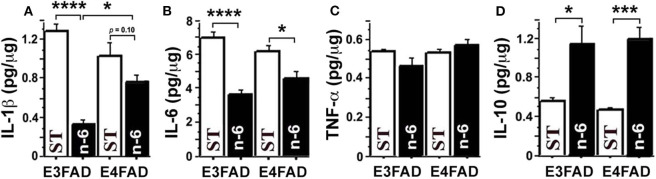
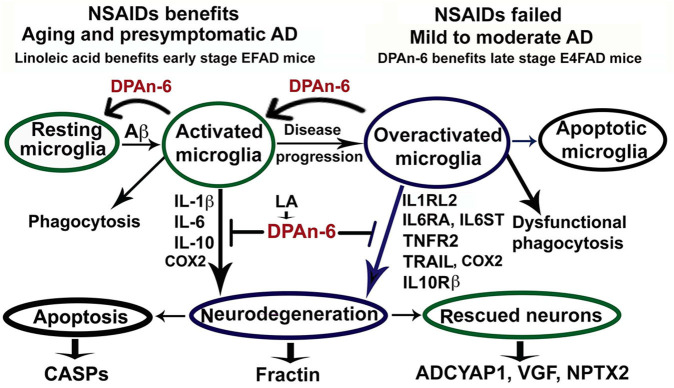
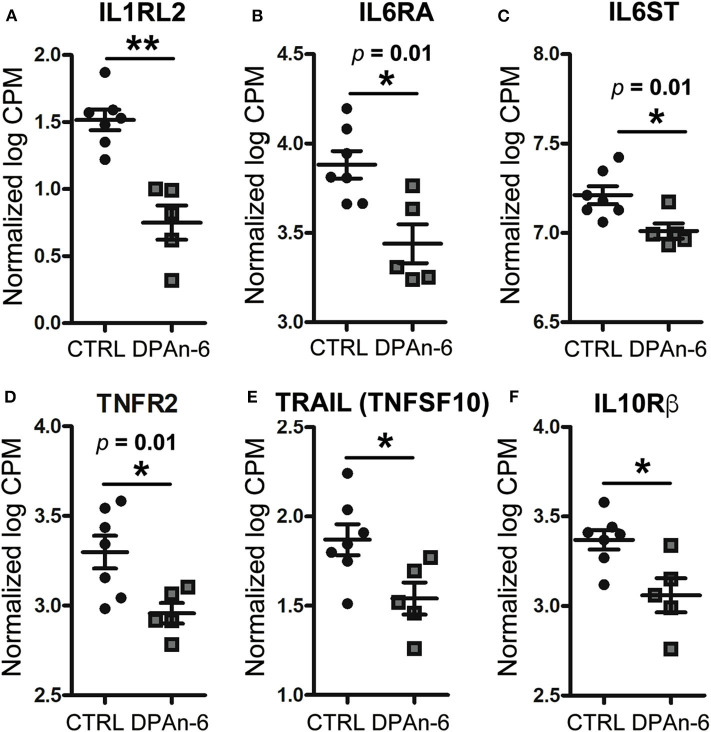
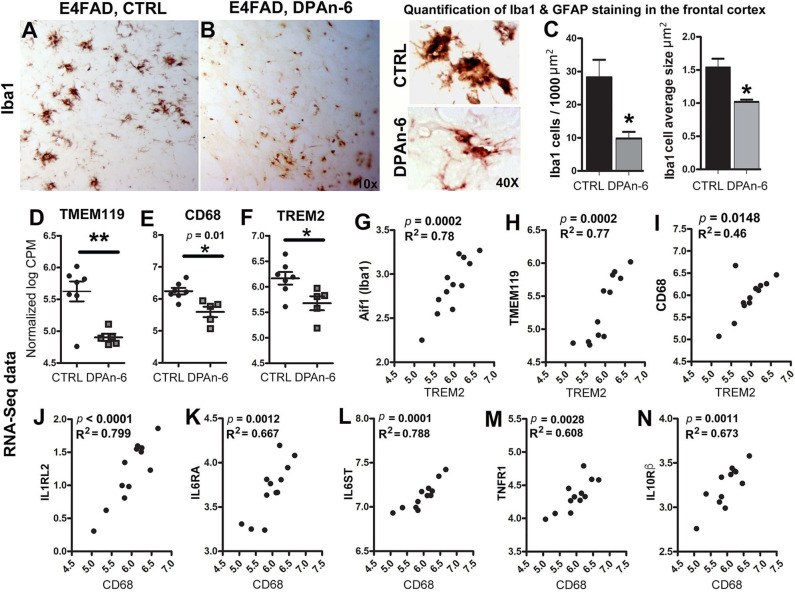
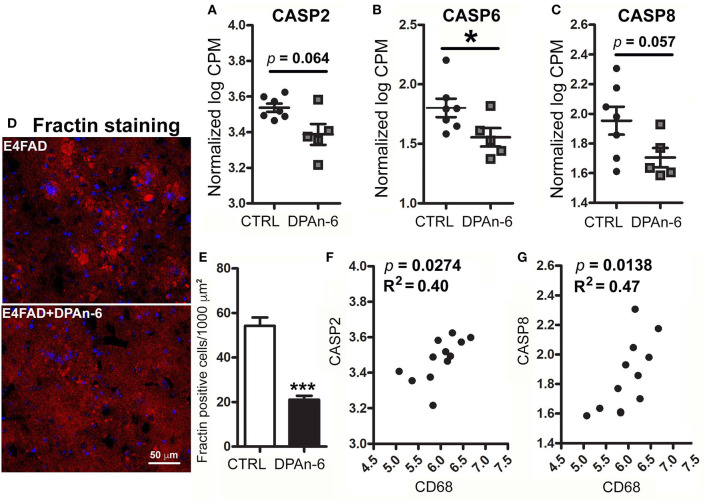
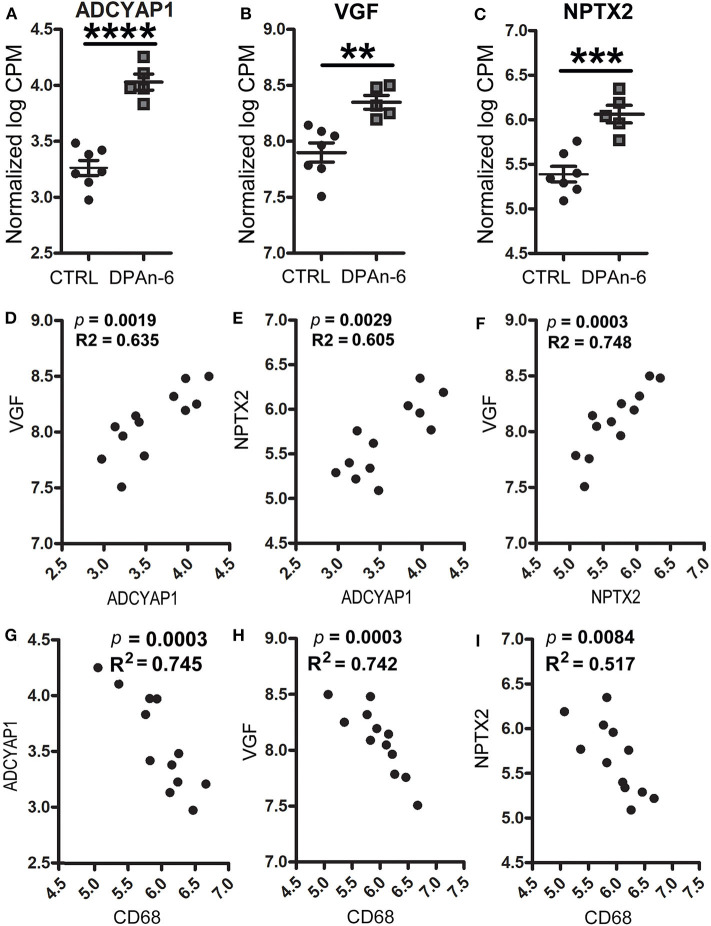
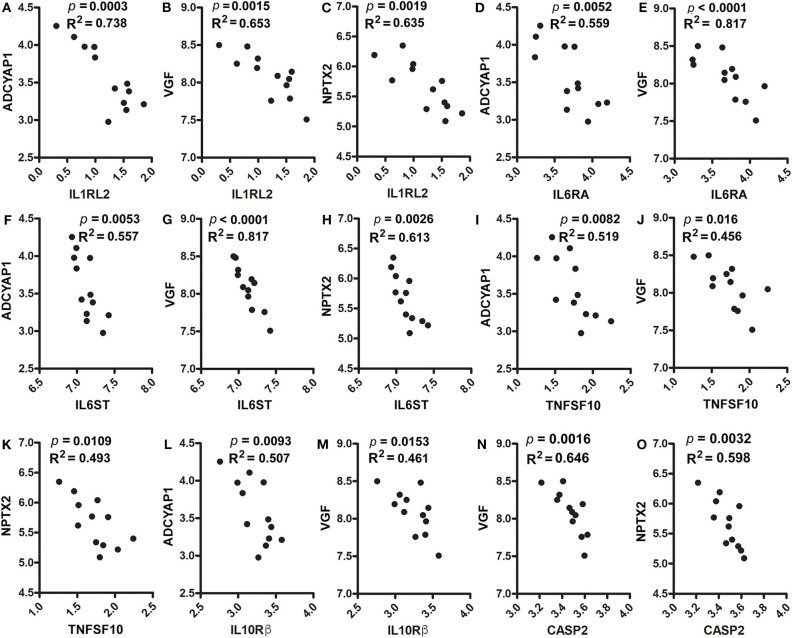
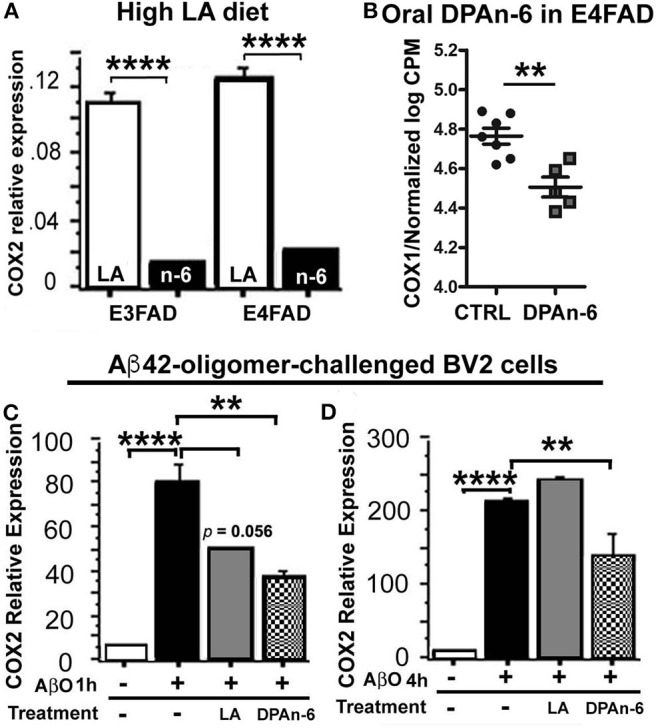
Neuroinflammation plays a crucial role in the development and progression of Alzheimer's disease (AD), in which activated microglia are found to be associated with neurodegeneration. However, there is limited evidence showing how neuroinflammation and activated microglia are directly linked to neurodegeneration . Besides, there are currently no effective anti-inflammatory drugs for AD. In this study, we report on an effective anti-inflammatory lipid, linoleic acid (LA) metabolite docosapentaenoic acid (DPAn-6) treatment of aged humanized EFAD mice with advanced AD pathology. We also report the associations of neuroinflammatory and/or activated microglial markers with neurodegeneration . First, we found that dietary LA reduced proinflammatory cytokines of IL1-β, IL-6, as well as mRNA expression of COX2 toward resolving neuroinflammation with an increase of IL-10 in adult AD models E3FAD and E4FAD mice. Brain fatty acid assays showed a five to six-fold increase in DPAn-6 by dietary LA, especially more in E4FAD mice, when compared to standard diet. Thus, we tested DPAn-6 in aged E4FAD mice. After DPAn-6 was administered to the E4FAD mice by oral gavage for three weeks, we found that DPAn-6 reduced microgliosis and mRNA expressions of inflammatory, microglial, and caspase markers. Further, DPAn-6 increased mRNA expressions of ADCYAP1, VGF, and neuronal pentraxin 2 in parallel, all of which were inversely correlated with inflammatory and microglial markers. Finally, both LA and DPAn-6 directly reduced mRNA expression of COX2 in amyloid-beta42 oligomer-challenged BV2 microglial cells. Together, these data indicated that DPAn-6 modulated neuroinflammatory responses toward resolution and improvement of neurodegeneration in the late stages of AD models.
神经炎症在阿尔茨海默病(AD)的发展和进展中起着关键作用,其中激活的小胶质细胞与神经退行性变有关。然而,目前有限的证据表明神经炎症和激活的小胶质细胞如何直接与神经退行性变相关联。此外,目前没有针对 AD 的有效抗炎药物。在这项研究中,我们报告了一种有效的抗炎脂质,亚油酸(LA)代谢物二十二碳六烯酸(DPAn-6),用于治疗具有晚期 AD 病理学的老年人类化 EFAD 小鼠。我们还报告了神经炎症和/或激活的小胶质细胞标志物与神经退行性变的关联。首先,我们发现饮食中的 LA 减少了促炎细胞因子 IL1-β、IL-6 以及 COX2 的 mRNA 表达,从而解决了成年 AD 模型 E3FAD 和 E4FAD 小鼠的神经炎症,同时增加了 IL-10。大脑脂肪酸分析表明,膳食 LA 使 DPAn-6 的含量增加了五到六倍,尤其是在 E4FAD 小鼠中,与标准饮食相比。因此,我们在老年 E4FAD 小鼠中测试了 DPAn-6。在 DPAn-6 通过口服灌胃给药给 E4FAD 小鼠 3 周后,我们发现 DPAn-6 减少了小胶质细胞增生和炎症、小胶质细胞和半胱天冬酶标志物的 mRNA 表达。此外,DPAn-6 平行增加了 ADCYAP1、VGF 和神经元五聚体 2 的 mRNA 表达,所有这些都与炎症和小胶质细胞标志物呈负相关。最后,LA 和 DPAn-6 都直接降低了淀粉样蛋白-β42 寡聚体挑战的 BV2 小胶质细胞中 COX2 的 mRNA 表达。总之,这些数据表明 DPAn-6 调节了神经炎症反应,朝着 AD 模型晚期神经退行性变的解决和改善方向发展。