Fan Jie, Fang Qigen, Yang Yang, Cui Meng, Zhao Ming, Qi Jinxing, Luo Ruihua, Du Wei, Liu Shanting, Sun Qiang
Department of Head Neck and Thyroid Surgery, Affiliated Cancer Hospital of Zhengzhou University, Henan Cancer Hospital, Zhengzhou, China.
Laboratory of Cell Engineering, Institute of Biotechnology, Beijing, China.
Front Oncol. 2020 Oct 15;10:541878. doi: 10.3389/fonc.2020.541878. eCollection 2020.
To analyze the role of frequency of heterotypic neutrophil-in-tumor structure (FNiT) in the prognosis of patients with buccal mucosa squamous cell carcinoma (BMSCC).
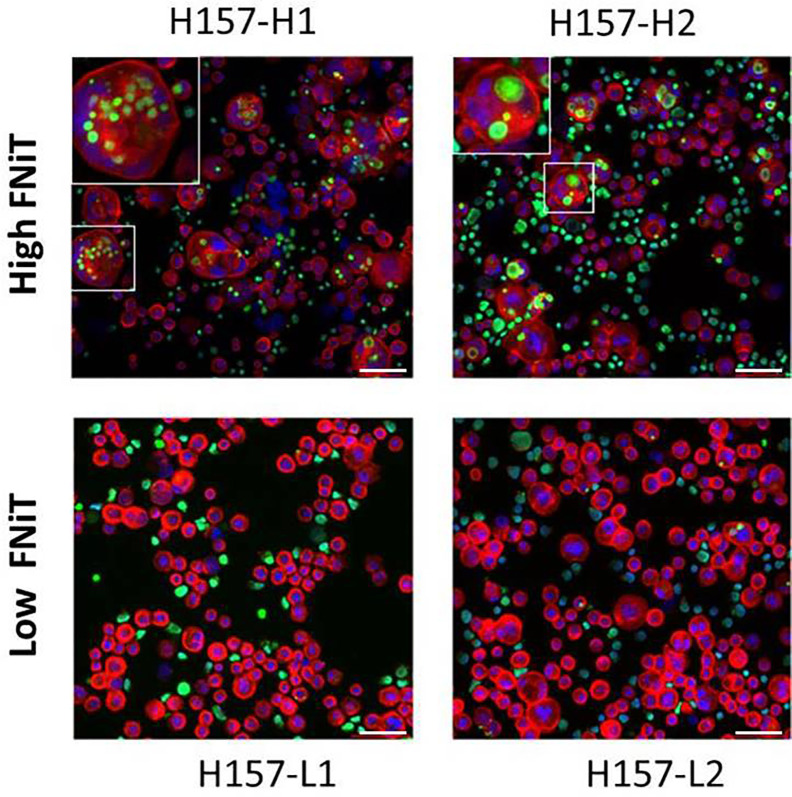
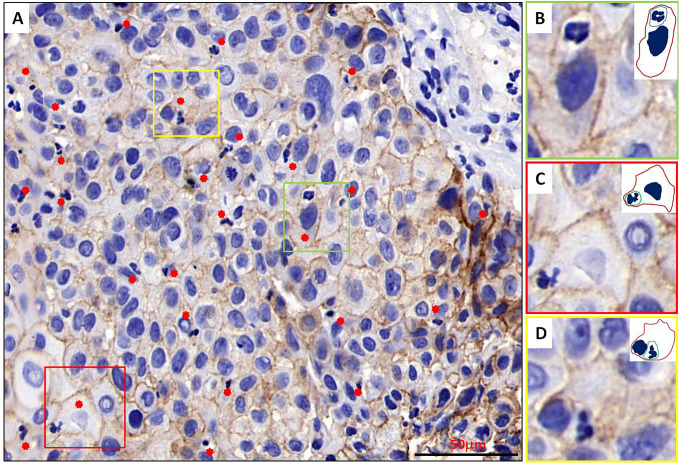
, we cocultured BMSCC cell line-H157 with neutrophils to form heterotypic neutrophil-in-tumor structures, which were then subject to fluorescence staining. Clinically, 145 patients were retrospectively enrolled. Associations between FNiT and clinicopathological variables including age, sex, smoking history, drinking history, betel nut chewing, tumor stage, node stage, metastasis, disease stage, lymphovascular invasion, extranodal extension, perineural invasion, and tumor grade were analyzed by chi-square test, and the main endpoints of interest were recurrence-free survival (RFS) and disease-specific survival (DSS) which were analyzed by the Kaplan-Meier method and Cox model.
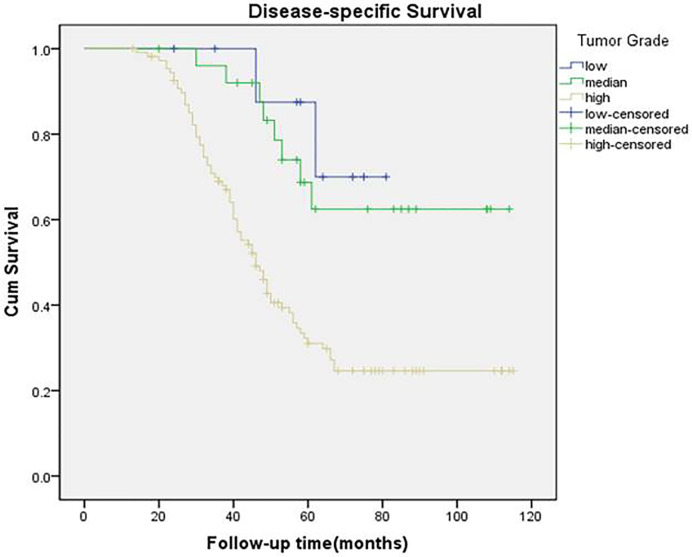
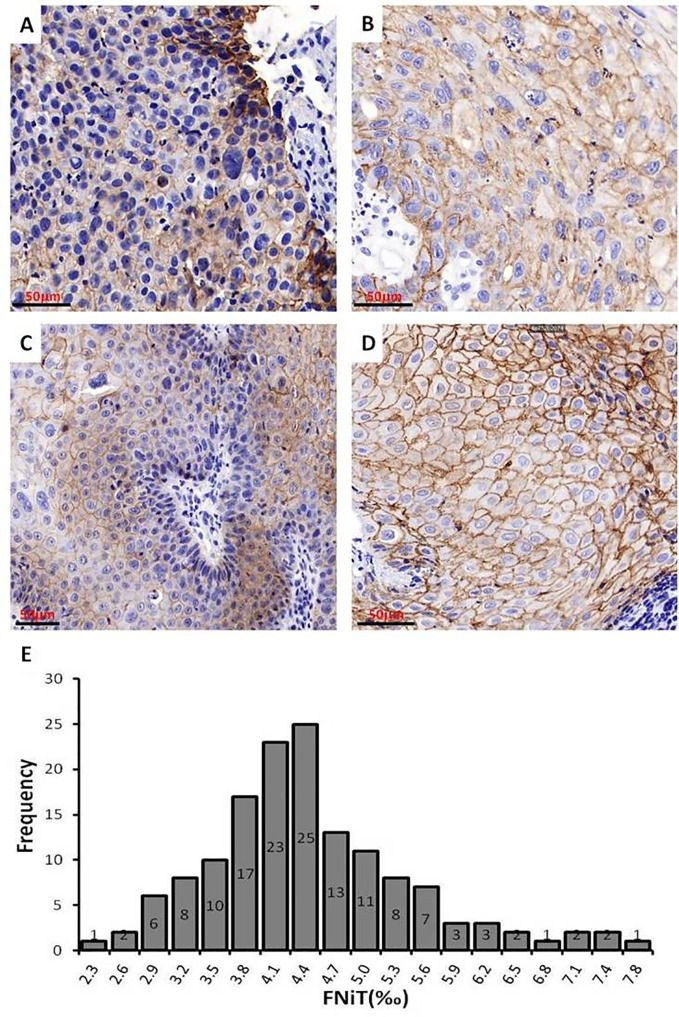
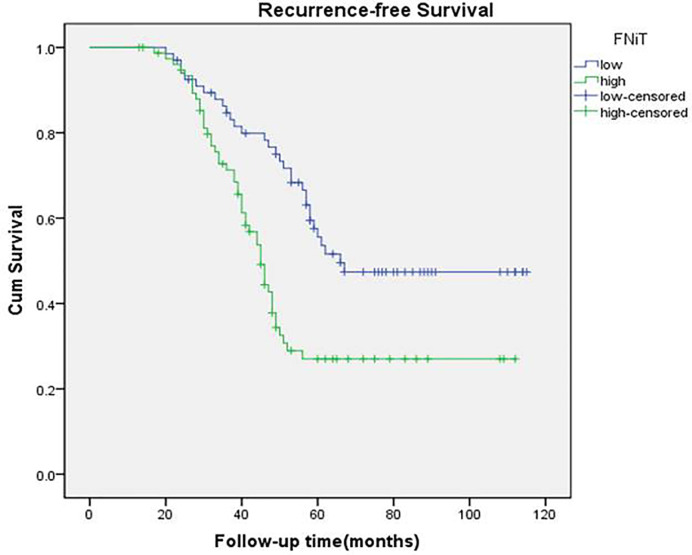
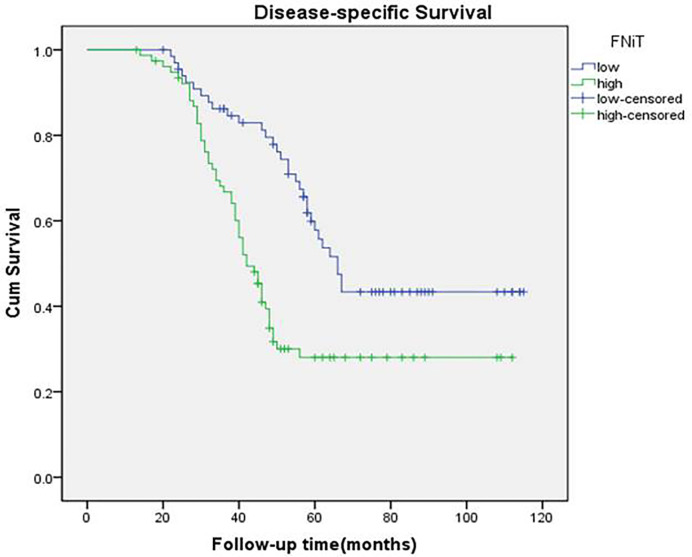
Fluorescent staining results of typical heterotypic neutrophil-in-tumor structure showed that well-differentiated H157 cells had a stronger ability to internalize more neutrophils than poorly-differentiated H157 cells, with the latter often internalizing only one neutrophil or nothing. The mean FNiT was 4.2‰, with a range from 2.3‰ to 7.8‰. A total of 80 patients relapsed and 84 patients died of the disease. The 5-year RFS and DSS rate was 42% and 42%, respectively. Patients with an FNiT≥4.2‰ had a significantly higher risk for locoregional recurrence and cancer-caused death than those with an FNiT<4.2‰ (p=0.001 and p<0.001, respectively). The FNiT alone was independently significant in predicting poor RFS, and the FNiT along with tumor grade was an independent predictor for DSS.
The FNiT as a novel predictor is significantly negatively associated with both the RFS and DSS of patients with BMSCC.
分析异型肿瘤内中性粒细胞结构频率(FNiT)在颊黏膜鳞状细胞癌(BMSCC)患者预后中的作用。
我们将BMSCC细胞系-H157与中性粒细胞共培养以形成异型肿瘤内中性粒细胞结构,然后对其进行荧光染色。临床上,回顾性纳入了145例患者。通过卡方检验分析FNiT与包括年龄、性别、吸烟史、饮酒史、嚼槟榔、肿瘤分期、淋巴结分期、转移、疾病分期、淋巴管浸润、结外扩展、神经周围浸润和肿瘤分级等临床病理变量之间的关联,主要观察终点为无复发生存期(RFS)和疾病特异性生存期(DSS),采用Kaplan-Meier法和Cox模型进行分析。
典型异型肿瘤内中性粒细胞结构的荧光染色结果显示,高分化的H157细胞比低分化的H157细胞具有更强的内化更多中性粒细胞的能力,后者通常仅内化一个中性粒细胞或不内化。FNiT的平均值为4.2‰,范围为2.3‰至7.8‰。共有80例患者复发,84例患者死于该疾病。5年RFS和DSS率分别为42%和42%。FNiT≥4.2‰的患者局部区域复发和癌症导致死亡的风险显著高于FNiT<4.2‰的患者(分别为p = 0.001和p<0.001)。单独的FNiT在预测不良RFS方面具有独立显著性,FNiT与肿瘤分级一起是DSS的独立预测因素。
FNiT作为一种新的预测指标与BMSCC患者的RFS和DSS均显著负相关。