Department of Biomedicine, University of Bergen, 5020 Bergen, Norway.
Institute of cell biology and immunology, University of Stuttgart, D-70569 Stuttgart, Germany.
Biol Open. 2020 Nov 12;9(11):bio057174. doi: 10.1242/bio.057174.
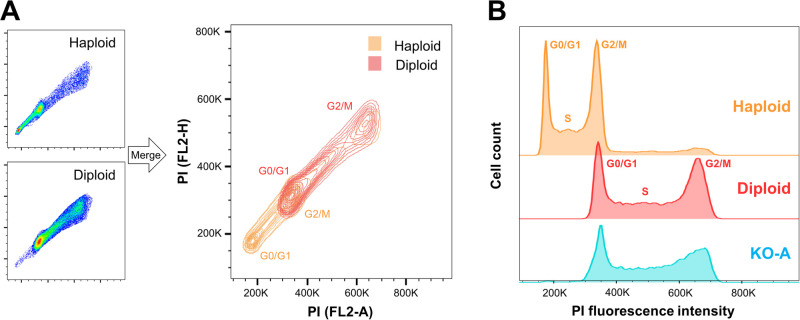
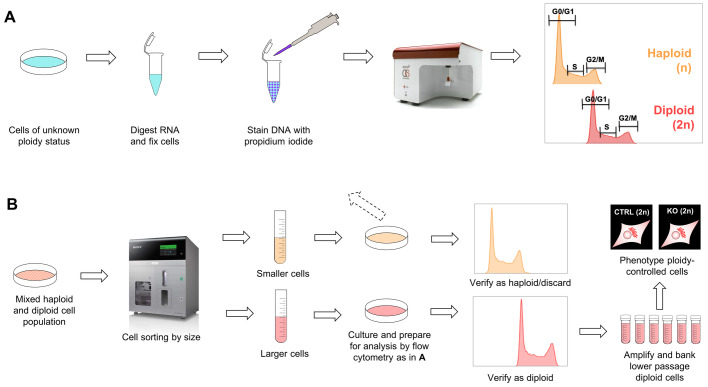
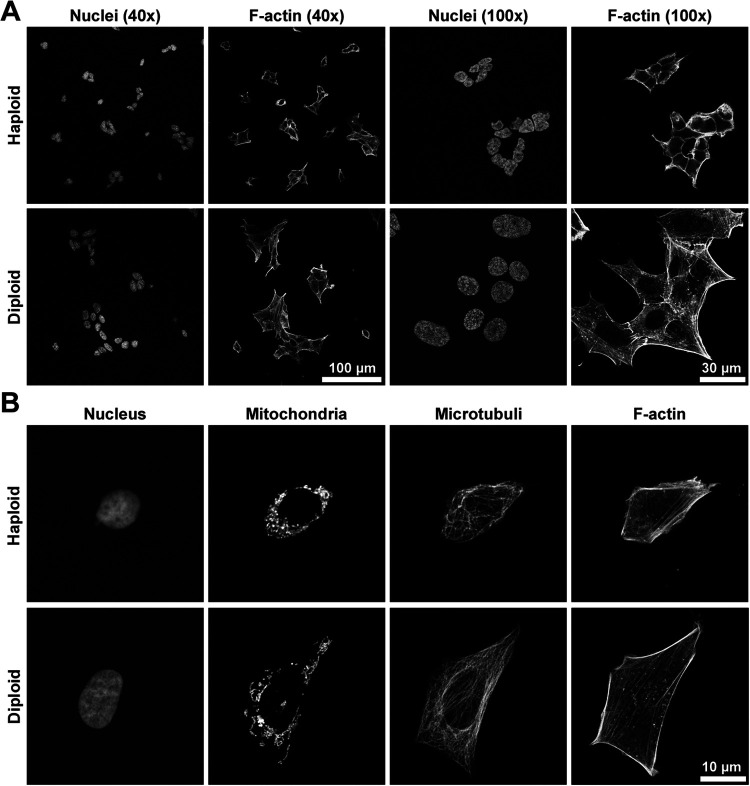
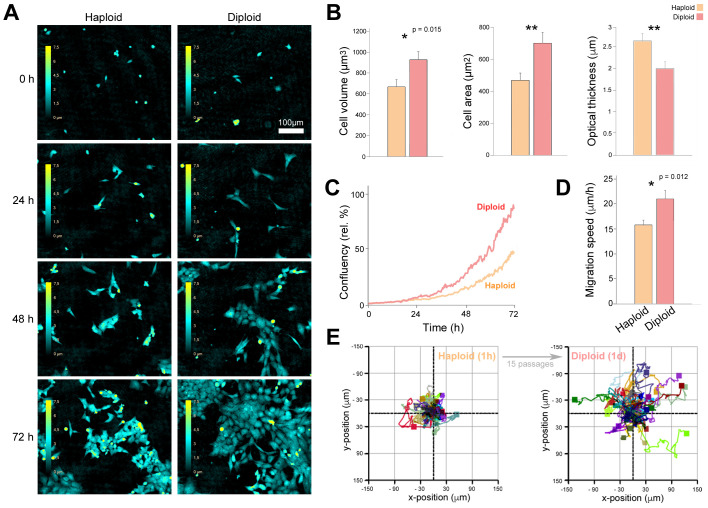
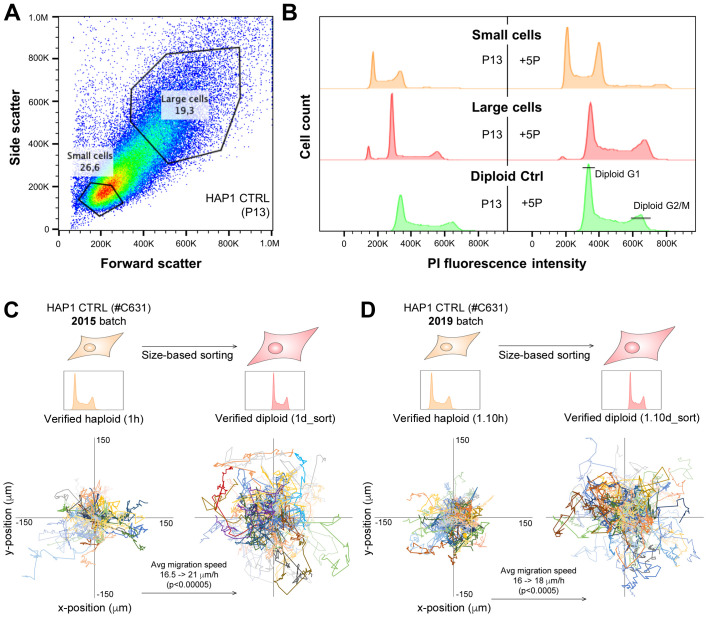
The near-haploid human cell line HAP1 recently became a popular subject for CRISPR/Cas9 editing, since only one allele requires modification. Through the gene-editing service at Horizon Discovery, there are at present more than 7500 edited cell lines available and the number continuously increases. The haploid nature of HAP1 is unstable as cultures become diploid with time. Here, we demonstrated some fundamental differences between haploid and diploid HAP1 cells, hence underlining the need for taking control over ploidy status in HAP1 cultures prior to phenotyping. Consequently, we optimized a procedure to determine the ploidy of HAP1 by flow cytometry in order to obtain diploid cultures and avoid ploidy status as an interfering variable in experiments. Furthermore, in order to facilitate this quality control, we validated a size-based cell sorting procedure to obtain the diploid culture more rapidly. Hence, we provide here two streamlined protocols for quality controlling the ploidy of HAP1 cells and document their validity and necessity.This article has an associated First Person interview with the co-first authors of the paper.
最近,近单倍体人类细胞系 HAP1 成为 CRISPR/Cas9 编辑的热门对象,因为只需修改一个等位基因。通过 Horizon Discovery 的基因编辑服务,目前已有超过 7500 种编辑细胞系,并且数量还在不断增加。随着时间的推移,HAP1 的单倍体性质变得不稳定,培养物成为二倍体。在这里,我们展示了 HAP1 单倍体和二倍体细胞之间的一些基本差异,因此在对 HAP1 细胞进行表型分析之前,需要控制其倍性状态。因此,我们优化了一种通过流式细胞术确定 HAP1 倍性的程序,以获得二倍体培养物,并避免倍性状态成为实验中的干扰变量。此外,为了便于进行这种质量控制,我们验证了一种基于大小的细胞分选程序,以更快速地获得二倍体培养物。因此,我们在这里提供了两种用于 HAP1 细胞倍性质量控制的简化方案,并证明了其有效性和必要性。本文附有该论文共同第一作者的第一人称采访。