Dosovitsky Gilly, Pineda Blanca S, Jacobson Nicholas C, Chang Cyrus, Escoredo Milagros, Bunge Eduardo L
Palo Alto University, Palo Alto, CA, United States.
Dartmouth College, Lebanon, NH, United States.
JMIR Form Res. 2020 Nov 13;4(11):e17065. doi: 10.2196/17065.
Chatbots could be a scalable solution that provides an interactive means of engaging users in behavioral health interventions driven by artificial intelligence. Although some chatbots have shown promising early efficacy results, there is limited information about how people use these chatbots. Understanding the usage patterns of chatbots for depression represents a crucial step toward improving chatbot design and providing information about the strengths and limitations of the chatbots.
This study aims to understand how users engage and are redirected through a chatbot for depression (Tess) to provide design recommendations.
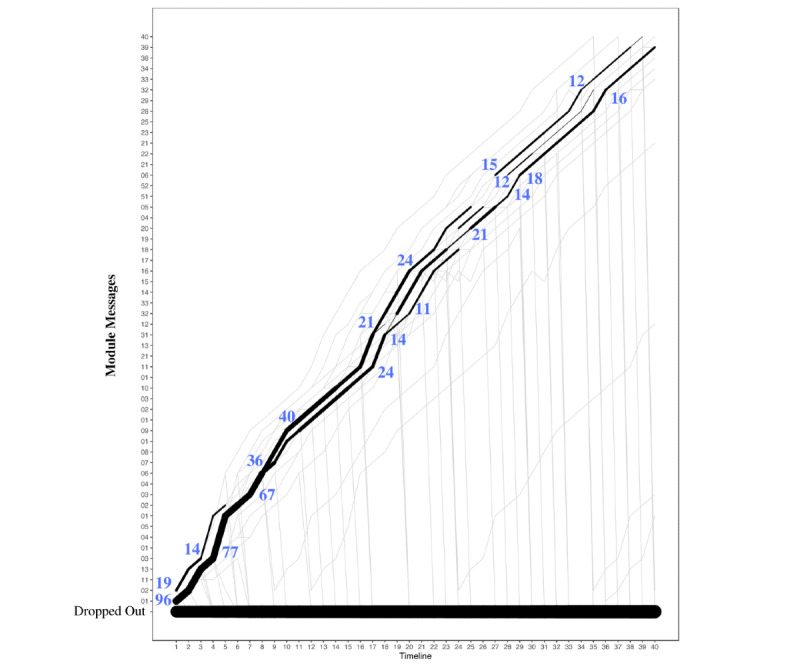
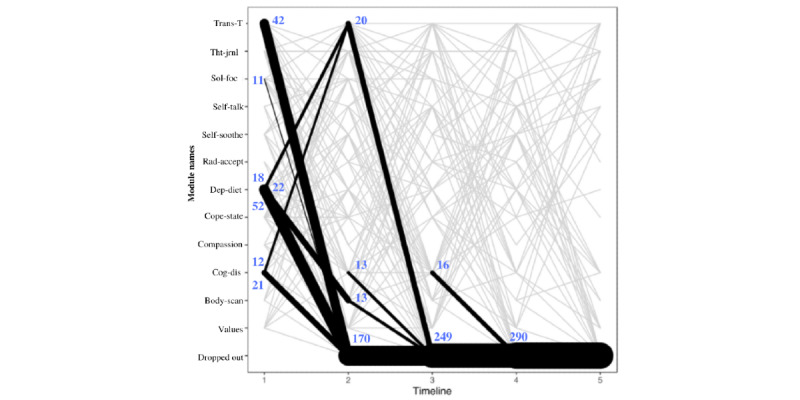
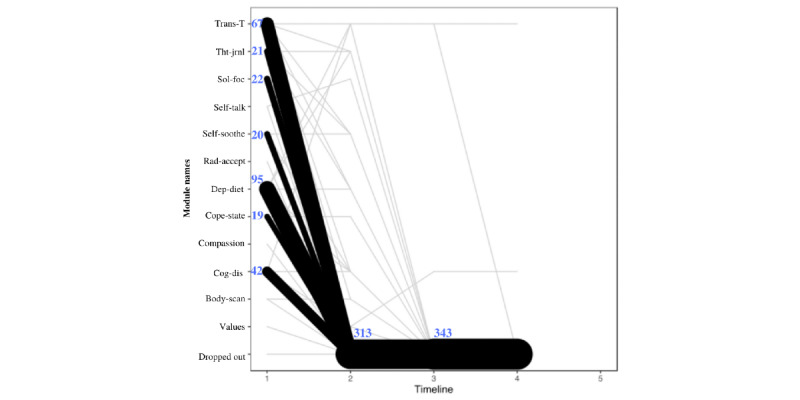
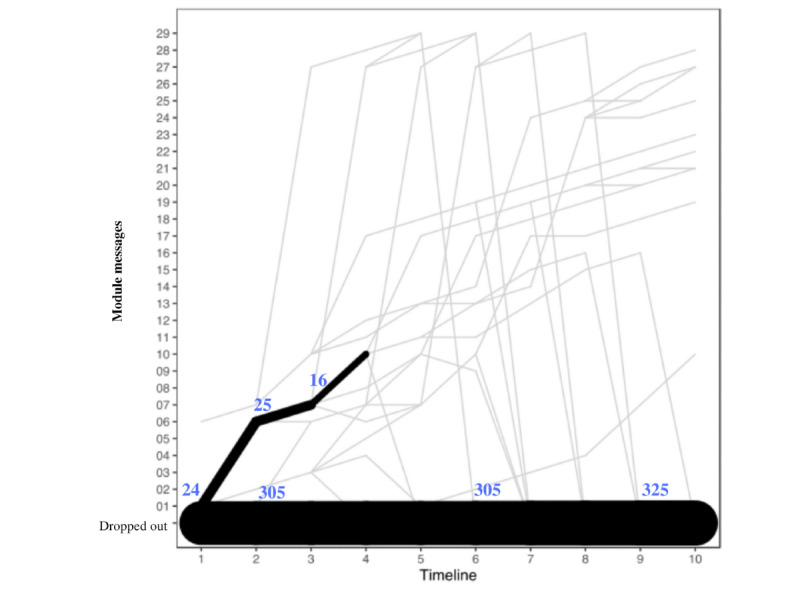
Interactions of 354 users with the Tess depression modules were analyzed to understand chatbot usage across and within modules. Descriptive statistics were used to analyze participant flow through each depression module, including characters per message, completion rate, and time spent per module. Slide plots were also used to analyze the flow across and within modules.
Users sent a total of 6220 messages, with a total of 86,298 characters, and, on average, they engaged with Tess depression modules for 46 days. There was large heterogeneity in user engagement across different modules, which appeared to be affected by the length, complexity, content, and style of questions within the modules and the routing between modules.
Overall, participants engaged with Tess; however, there was a heterogeneous usage pattern because of varying module designs. Major implications for future chatbot design and evaluation are discussed in the paper.
聊天机器人可能是一种可扩展的解决方案,它提供了一种交互式手段,让用户参与由人工智能驱动的行为健康干预。尽管一些聊天机器人已显示出早期疗效的积极结果,但关于人们如何使用这些聊天机器人的信息有限。了解用于抑郁症的聊天机器人的使用模式是改进聊天机器人设计并提供有关聊天机器人优缺点信息的关键一步。
本研究旨在了解用户如何通过用于抑郁症的聊天机器人(苔丝)参与并被重定向,以提供设计建议。
分析了354名用户与苔丝抑郁症模块的交互,以了解跨模块和模块内的聊天机器人使用情况。描述性统计用于分析每个抑郁症模块的参与者流程,包括每条消息的字符数、完成率和每个模块花费的时间。滑动图也用于分析跨模块和模块内的流程。
用户共发送了6220条消息,总计86298个字符,平均而言,他们与苔丝抑郁症模块互动了46天。不同模块的用户参与度存在很大差异,这似乎受到模块内问题的长度、复杂性、内容和风格以及模块之间路由的影响。
总体而言,参与者与苔丝进行了互动;然而,由于模块设计不同,存在异质的使用模式。本文讨论了对未来聊天机器人设计和评估的主要影响。