BMJ Glob Health. 2020 Nov;5(11). doi: 10.1136/bmjgh-2020-003416.
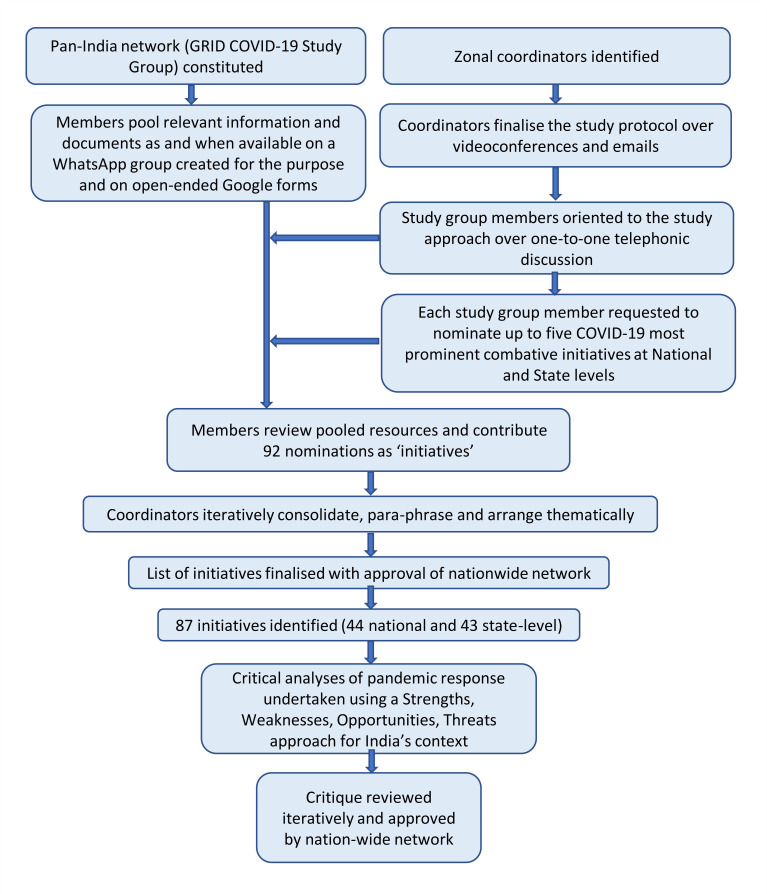
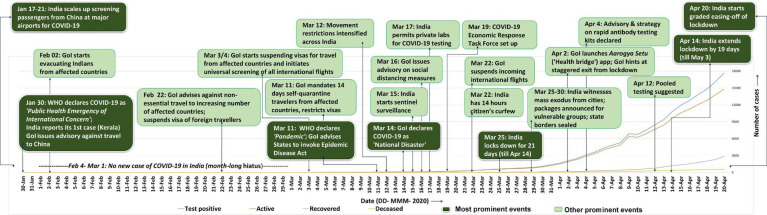
The low-and-middle-income country (LMIC) context is volatile, uncertain and resource-constrained. India, an LMIC, has put up a complex response to the COVID-19 pandemic. Using an analytic approach, we have described India's response to combat the pandemic during the initial months (from 17 January to 20 April 2020). India issued travel advisories and implemented graded international border controls between January and March 2020. By early March, cases started to surge. States scaled up movement restrictions. On 25 March, India went into a nationwide lockdown to ramp up preparedness. The lockdown uncovered contextual vulnerabilities and stimulated countermeasures. India leveraged existing legal frameworks, institutional mechanisms and administrative provisions to respond to the pandemic. Nevertheless, the cross-sectoral impact of the initial combat was intense and is potentially long-lasting. The country could have further benefited from evidence-based policy and planning attuned to local needs and vulnerabilities. Experience from India offers insights to nations, especially LMICs, on the need to have contextualised pandemic response plans.
中低收入国家(LMIC)的情况复杂多变,资源有限。印度作为一个 LMIC,在应对 COVID-19 大流行方面做出了复杂的反应。我们使用分析方法,描述了印度在最初几个月(2020 年 1 月 17 日至 4 月 20 日)期间对抗击这一大流行病所采取的措施。印度在 2020 年 1 月至 3 月期间发布了旅行建议,并实施了分级国际边境管制。到 3 月初,病例开始激增。各州逐步加强了行动限制。3 月 25 日,印度实施了全国封锁以加强准备工作。封锁暴露了背景下的脆弱性,并激发了对策。印度利用现有的法律框架、机构机制和行政条款来应对这一大流行病。尽管如此,最初应对措施的跨部门影响还是很强烈的,并且可能会持续很长时间。该国本可以从适应当地需求和脆弱性的循证政策和规划中受益更多。印度的经验为各国,尤其是 LMIC 国家提供了一个思路,即需要制定有针对性的大流行应对计划。