Kuchana Maheshwar, Srivastava Amritesh, Das Ronald, Mathew Justin, Mishra Atul, Khatter Kiran
BML Munjal University, Kapriwas, India.
IIT , Delhi, New Delhi, India.
Multimed Tools Appl. 2021;80(6):9161-9175. doi: 10.1007/s11042-020-10010-8. Epub 2020 Nov 8.
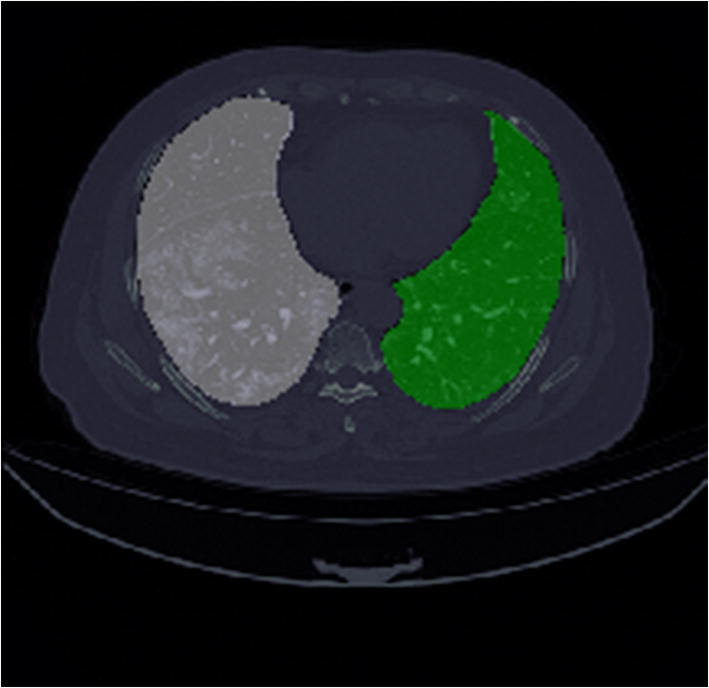
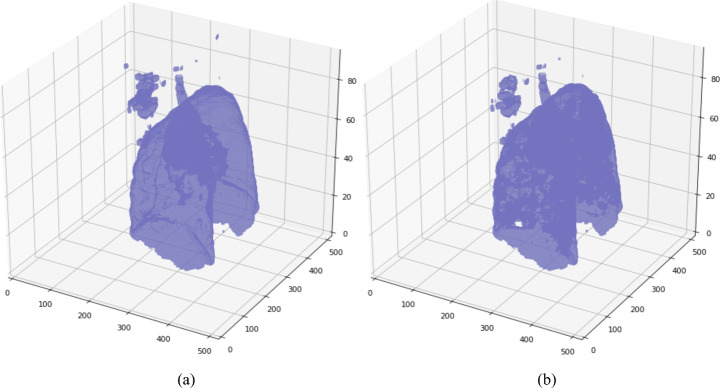
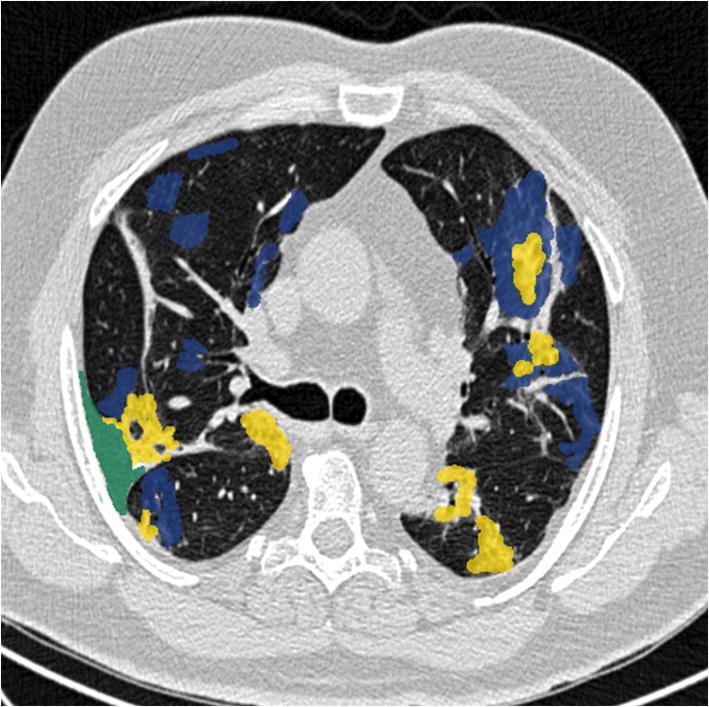
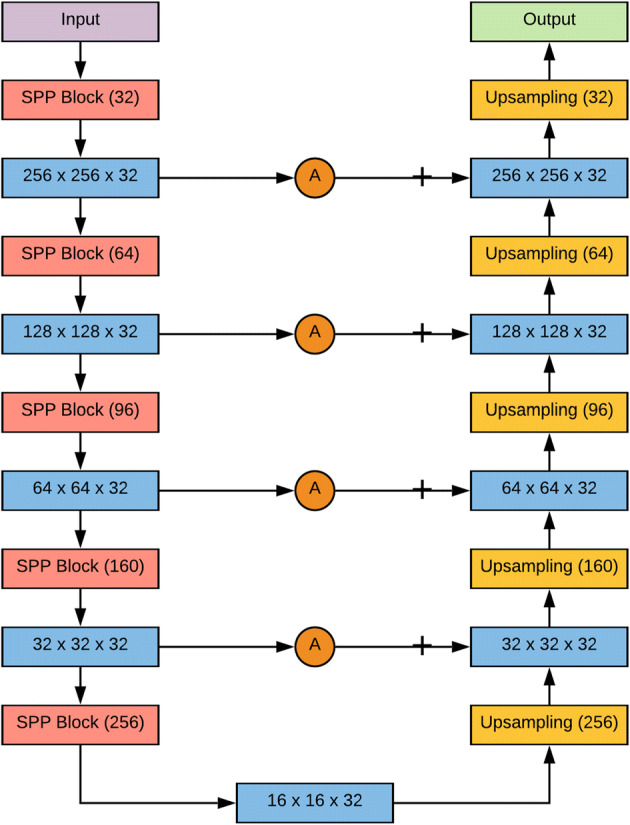
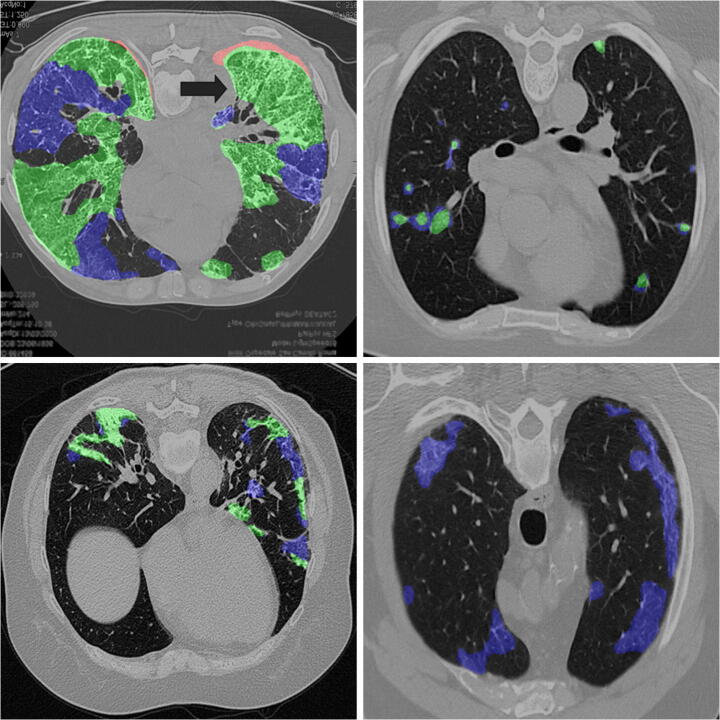
Coronavirus (COVID-19) has spread throughout the world, causing mayhem from January 2020 to this day. Owing to its rapidly spreading existence and high death count, the WHO has classified it as a pandemic. Biomedical engineers, virologists, epidemiologists, and people from other medical fields are working to help contain this epidemic as soon as possible. The virus incubates for five days in the human body and then begins displaying symptoms, in some cases, as late as 27 days. In some instances, CT scan based diagnosis has been found to have better sensitivity than RT-PCR, which is currently the gold standard for COVID-19 diagnosis. Lung conditions relevant to COVID-19 in CT scans are ground-glass opacity (GGO), consolidation, and pleural effusion. In this paper, two segmentation tasks are performed to predict lung spaces (segregated from ribcage and flesh in Chest CT) and COVID-19 anomalies from chest CT scans. A 2D deep learning architecture with U-Net as its backbone is proposed to solve both the segmentation tasks. It is observed that change in hyperparameters such as number of filters in down and up sampling layers, addition of attention gates, addition of spatial pyramid pooling as basic block and maintaining the homogeneity of 32 filters after each down-sampling block resulted in a good performance. The proposed approach is assessed using publically available datasets from GitHub and Kaggle. Model performance is evaluated in terms of F1-Score, Mean intersection over union (Mean IoU). It is noted that the proposed approach results in 97.31% of F1-Score and 84.6% of Mean IoU. The experimental results illustrate that the proposed approach using U-Net architecture as backbone with the changes in hyperparameters shows better results in comparison to existing U-Net architecture and attention U-net architecture. The study also recommends how this methodology can be integrated into the workflow of healthcare systems to help control the spread of COVID-19.
冠状病毒(COVID-19)自2020年1月至今已在全球蔓延,造成了严重破坏。由于其迅速传播且致死率高,世界卫生组织已将其列为大流行病。生物医学工程师、病毒学家、流行病学家以及其他医学领域的人员都在努力尽快控制这一疫情。该病毒在人体中潜伏五天后开始出现症状,在某些情况下,最晚可在27天后出现症状。在某些情况下,已发现基于CT扫描的诊断比RT-PCR具有更高的灵敏度,而RT-PCR目前是COVID-19诊断的金标准。CT扫描中与COVID-19相关的肺部情况有磨玻璃影(GGO)、实变和胸腔积液。在本文中,执行了两项分割任务,以从胸部CT扫描中预测肺腔(与胸腔和肌肉分隔开)以及COVID-19异常情况。提出了一种以U-Net为骨干的二维深度学习架构来解决这两项分割任务。据观察,诸如下采样层和上采样层中的滤波器数量、添加注意力门、添加空间金字塔池化作为基本模块以及在每个下采样模块后保持32个滤波器的同质性等超参数的变化带来了良好的性能。使用从GitHub和Kaggle公开获取的数据集对所提出的方法进行评估。根据F1分数、平均交并比(Mean IoU)评估模型性能。值得注意的是,所提出的方法取得了97.31%的F1分数和84.6%的平均交并比。实验结果表明,与现有的U-Net架构和注意力U-Net架构相比,以U-Net架构为骨干并进行超参数变化的所提出的方法显示出更好的结果。该研究还建议了如何将这种方法集成到医疗系统的工作流程中以帮助控制COVID-19的传播。