Agarwal Sushant, Saxena Sanjay, Carriero Alessandro, Chabert Gian Luca, Ravindran Gobinath, Paul Sudip, Laird John R, Garg Deepak, Fatemi Mostafa, Mohanty Lopamudra, Dubey Arun K, Singh Rajesh, Fouda Mostafa M, Singh Narpinder, Naidu Subbaram, Viskovic Klaudija, Kukuljan Melita, Kalra Manudeep K, Saba Luca, Suri Jasjit S
Advanced Knowledge Engineering Center, GBTI, Roseville, CA, United States.
Department of CSE, PSIT, Kanpur, India.
Front Artif Intell. 2024 Jun 28;7:1304483. doi: 10.3389/frai.2024.1304483. eCollection 2024.
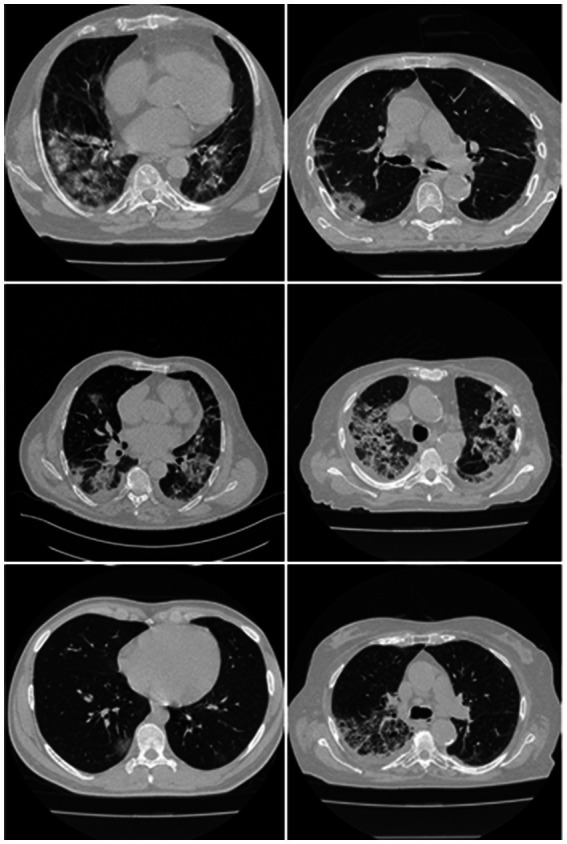
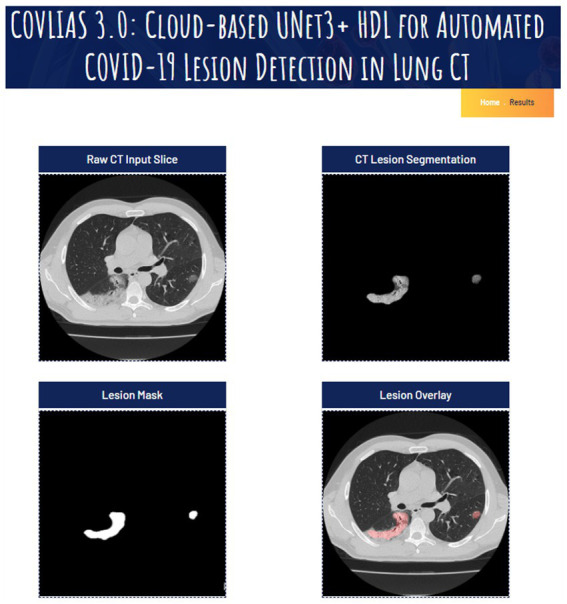
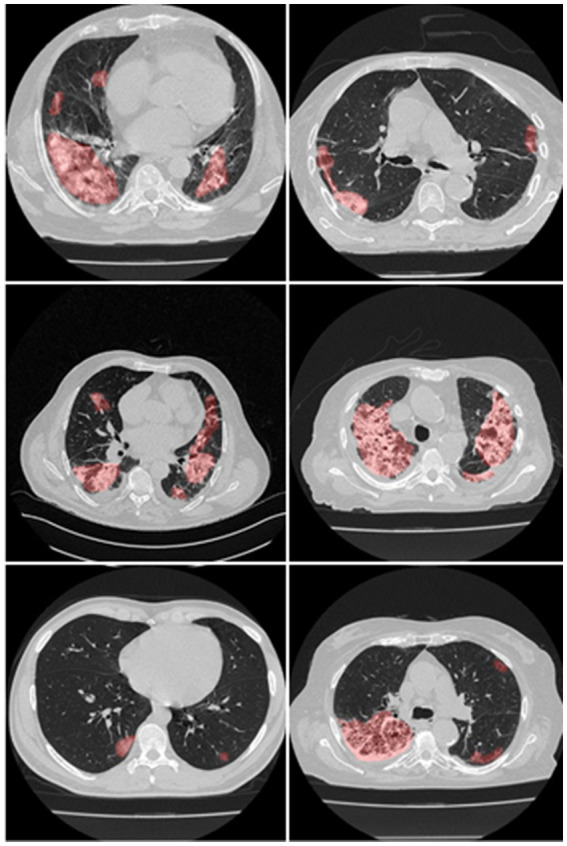
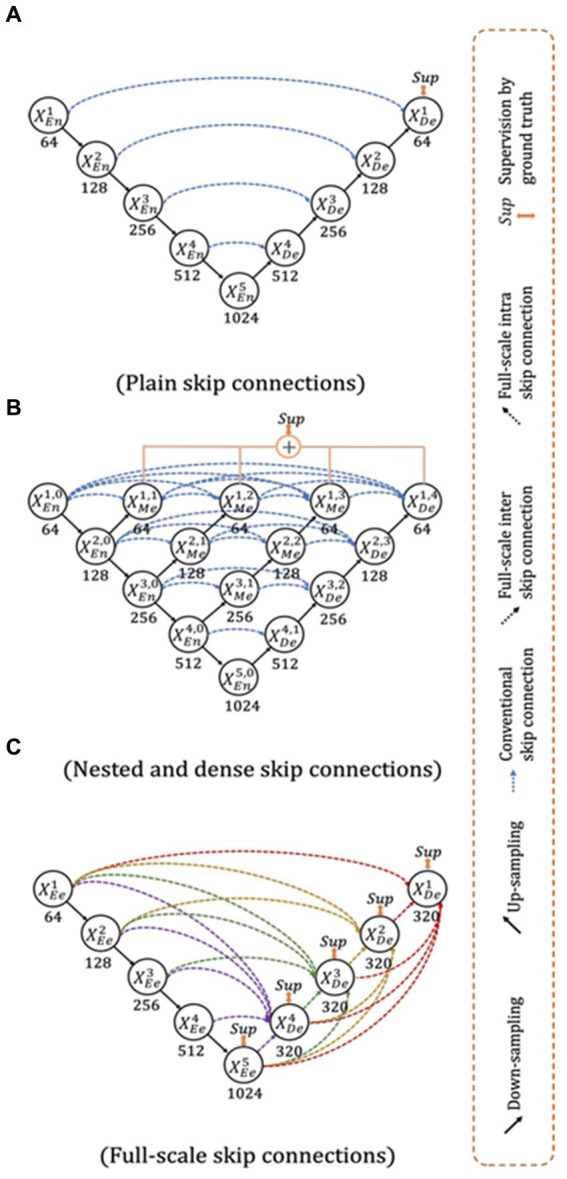
When RT-PCR is ineffective in early diagnosis and understanding of COVID-19 severity, Computed Tomography (CT) scans are needed for COVID diagnosis, especially in patients having high ground-glass opacities, consolidations, and crazy paving. Radiologists find the manual method for lesion detection in CT very challenging and tedious. Previously solo deep learning (SDL) was tried but they had low to moderate-level performance. This study presents two new cloud-based quantized deep learning UNet3+ hybrid (HDL) models, which incorporated full-scale skip connections to enhance and improve the detections.
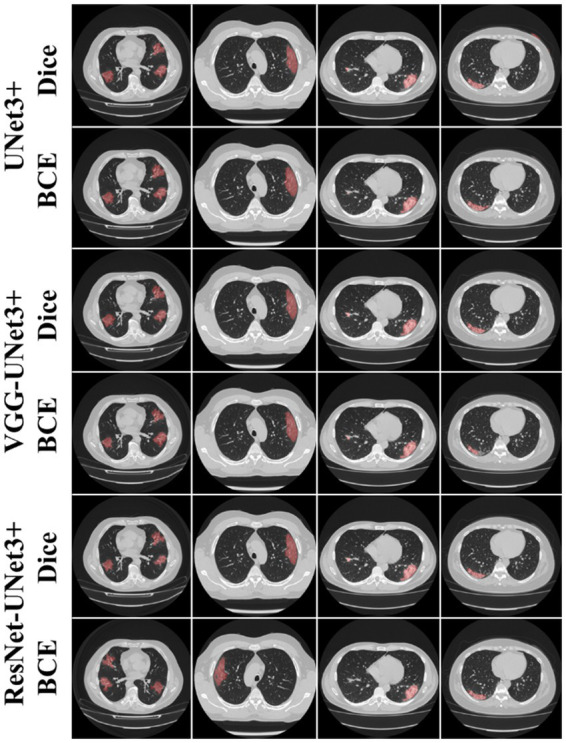
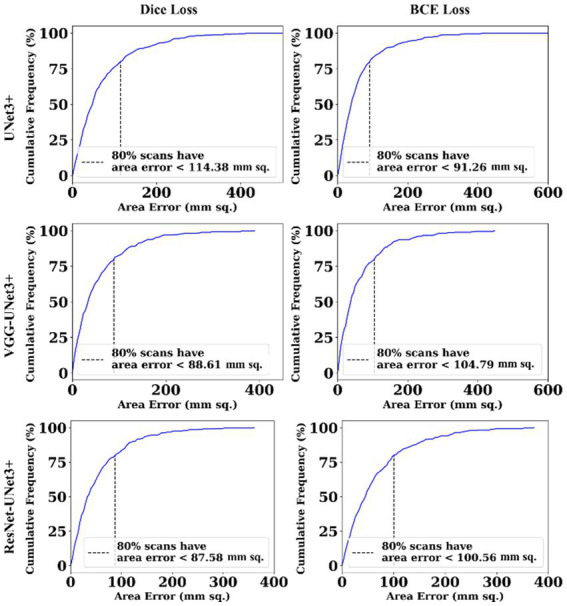
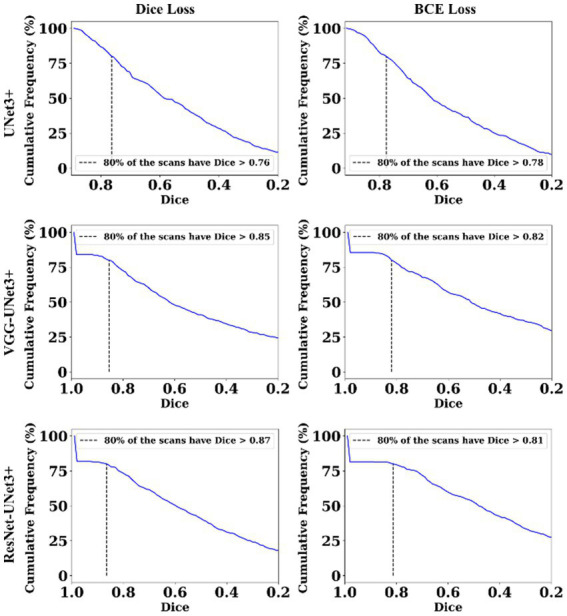
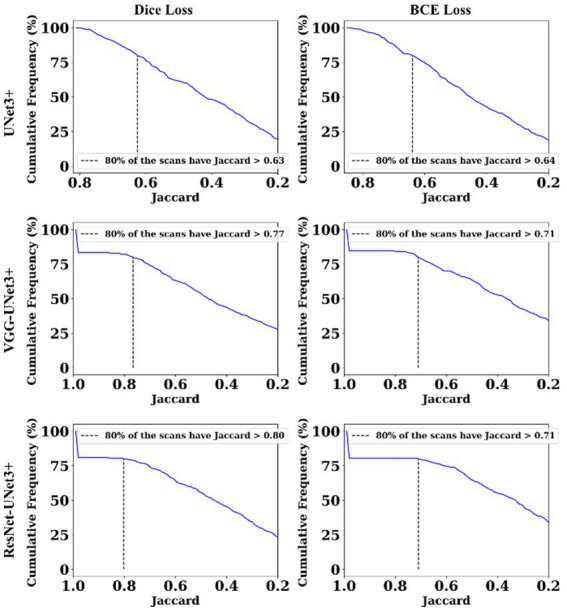
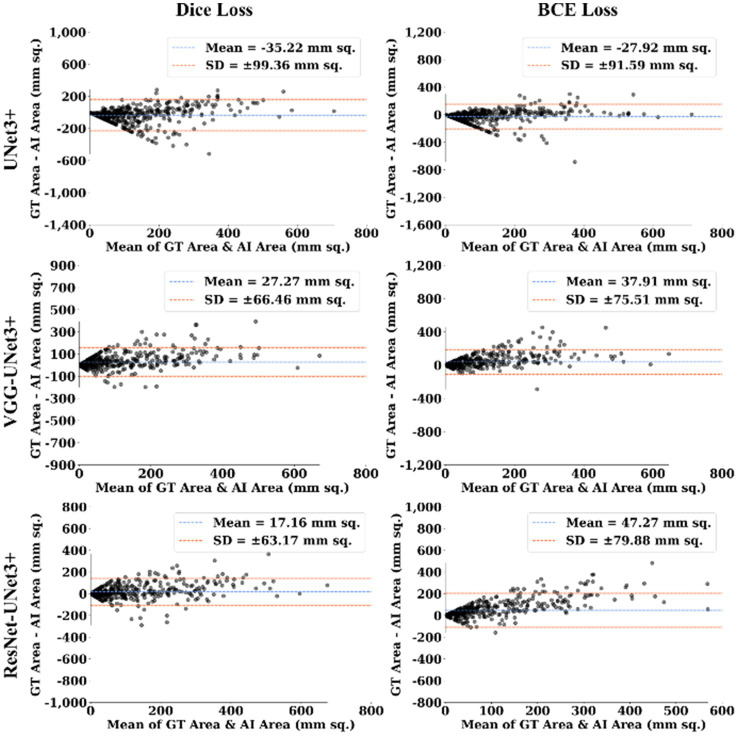
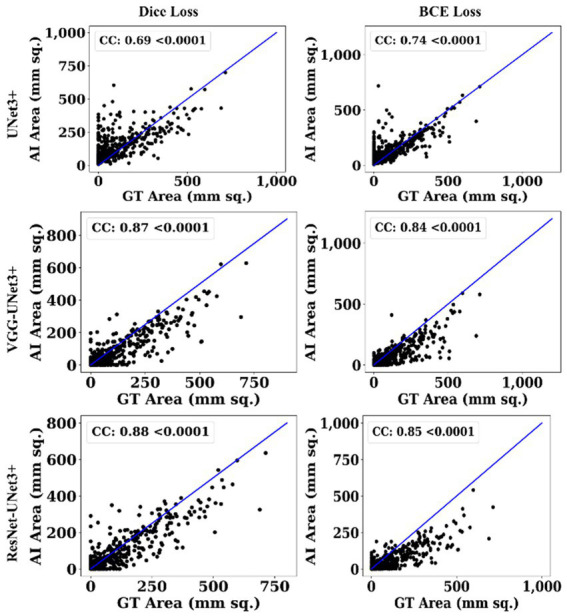
Annotations from expert radiologists were used to train one SDL (UNet3+), and two HDL models, namely, VGG-UNet3+ and ResNet-UNet3+. For accuracy, 5-fold cross-validation protocols, training on 3,500 CT scans, and testing on unseen 500 CT scans were adopted in the cloud framework. Two kinds of loss functions were used: Dice Similarity (DS) and binary cross-entropy (BCE). Performance was evaluated using (i) Area error, (ii) DS, (iii) Jaccard Index, (iii) Bland-Altman, and (iv) Correlation plots.
Among the two HDL models, ResNet-UNet3+ was superior to UNet3+ by 17 and 10% for Dice and BCE loss. The models were further compressed using quantization showing a percentage size reduction of 66.76, 36.64, and 46.23%, respectively, for UNet3+, VGG-UNet3+, and ResNet-UNet3+. Its stability and reliability were proved by statistical tests such as the Mann-Whitney, Paired -Test, Wilcoxon test, and Friedman test all of which had a < 0.001.
Full-scale skip connections of UNet3+ with VGG and ResNet in HDL framework proved the hypothesis showing powerful results improving the detection accuracy of COVID-19.
当逆转录聚合酶链反应(RT-PCR)在新型冠状病毒肺炎(COVID-19)的早期诊断及病情严重程度判断方面效果不佳时,需要进行计算机断层扫描(CT)来诊断COVID-19,尤其是对于具有高度磨玻璃影、实变及铺路石样改变的患者。放射科医生发现,在CT图像中手动检测病变极具挑战性且十分繁琐。此前尝试过单独的深度学习(SDL),但其性能处于中低水平。本研究提出了两种基于云的量化深度学习UNet3+混合(HDL)模型,该模型纳入了全尺度跳跃连接以增强和改进检测效果。
使用来自专业放射科医生的标注数据训练一个SDL(UNet3+)以及两个HDL模型,即VGG-UNet3+和ResNet-UNet3+。为了确保准确性,在云框架中采用了5折交叉验证方案,在3500例CT扫描图像上进行训练,并在500例未见过的CT扫描图像上进行测试。使用了两种损失函数:骰子相似度(DS)和二元交叉熵(BCE)。通过(i)面积误差、(ii)DS、(iii)杰卡德指数、(iii)布兰德-奥特曼分析以及(iv)相关性图来评估性能。
在两种HDL模型中,ResNet-UNet3+在骰子损失和BCE损失方面分别比UNet3+高出17%和10%。通过量化进一步压缩模型,结果显示UNet3+、VGG-UNet3+和ResNet-UNet3+模型的大小分别减少了66.76%、36.64%和46.23%。通过诸如曼-惠特尼检验、配对检验、威尔科克森检验和弗里德曼检验等统计测试证明了其稳定性和可靠性,所有这些检验的P值均<0.001。
在HDL框架中,UNet3+与VGG和ResNet的全尺度跳跃连接证明了该假设,显示出强大的效果,提高了COVID-19的检测准确性。