Suri Jasjit S, Agarwal Sushant, Chabert Gian Luca, Carriero Alessandro, Paschè Alessio, Danna Pietro S C, Saba Luca, Mehmedović Armin, Faa Gavino, Singh Inder M, Turk Monika, Chadha Paramjit S, Johri Amer M, Khanna Narendra N, Mavrogeni Sophie, Laird John R, Pareek Gyan, Miner Martin, Sobel David W, Balestrieri Antonella, Sfikakis Petros P, Tsoulfas George, Protogerou Athanasios D, Misra Durga Prasanna, Agarwal Vikas, Kitas George D, Teji Jagjit S, Al-Maini Mustafa, Dhanjil Surinder K, Nicolaides Andrew, Sharma Aditya, Rathore Vijay, Fatemi Mostafa, Alizad Azra, Krishnan Pudukode R, Nagy Ferenc, Ruzsa Zoltan, Fouda Mostafa M, Naidu Subbaram, Viskovic Klaudija, Kalra Manudeep K
Stroke Diagnostic and Monitoring Division, AtheroPoint™, Roseville, CA 95661, USA.
Advanced Knowledge Engineering Centre, GBTI, Roseville, CA 95661, USA.
Diagnostics (Basel). 2022 May 21;12(5):1283. doi: 10.3390/diagnostics12051283.
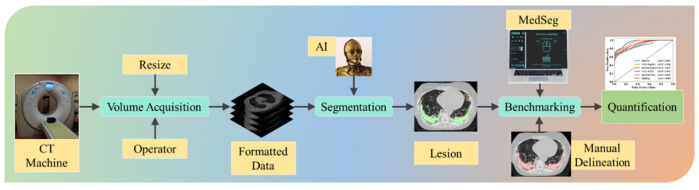
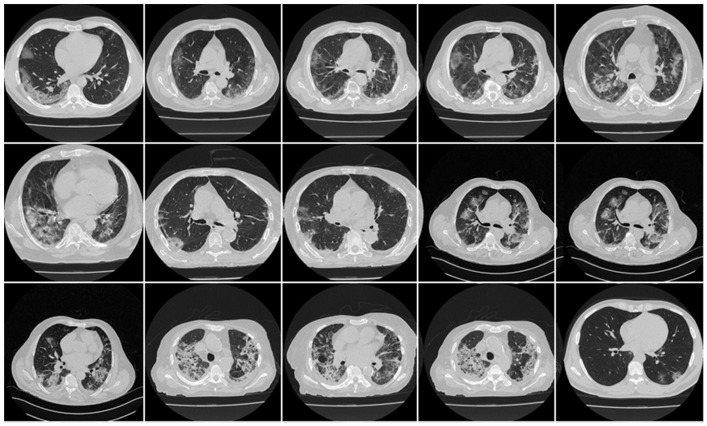
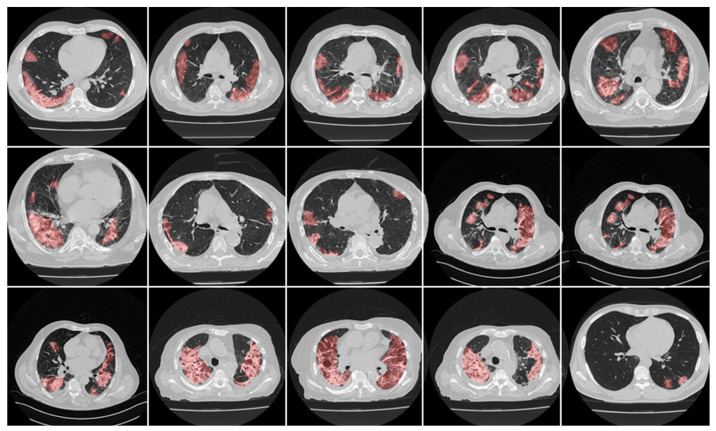
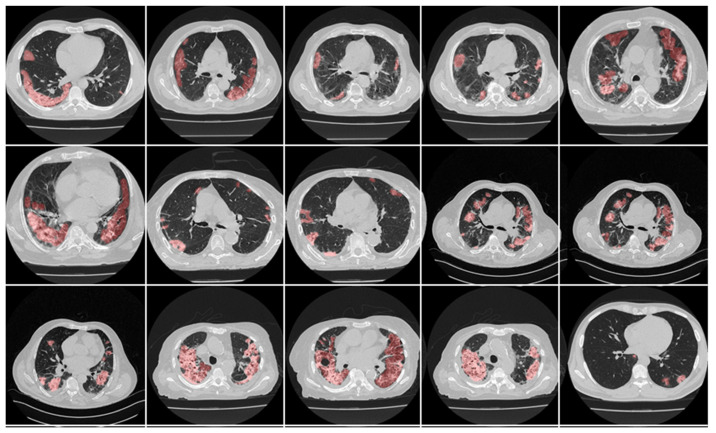
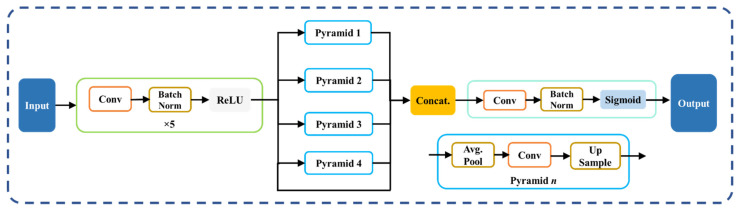
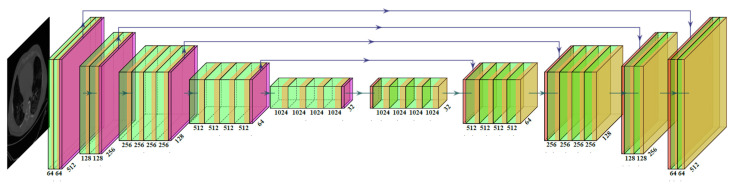
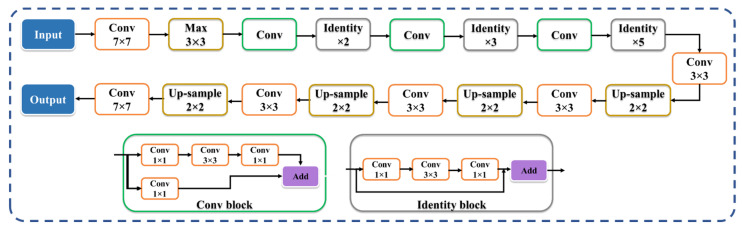
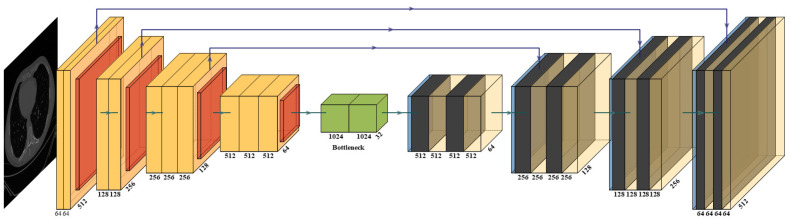
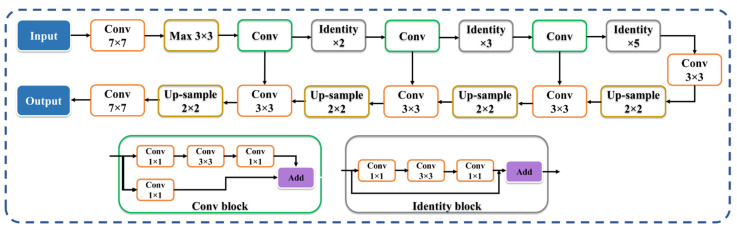
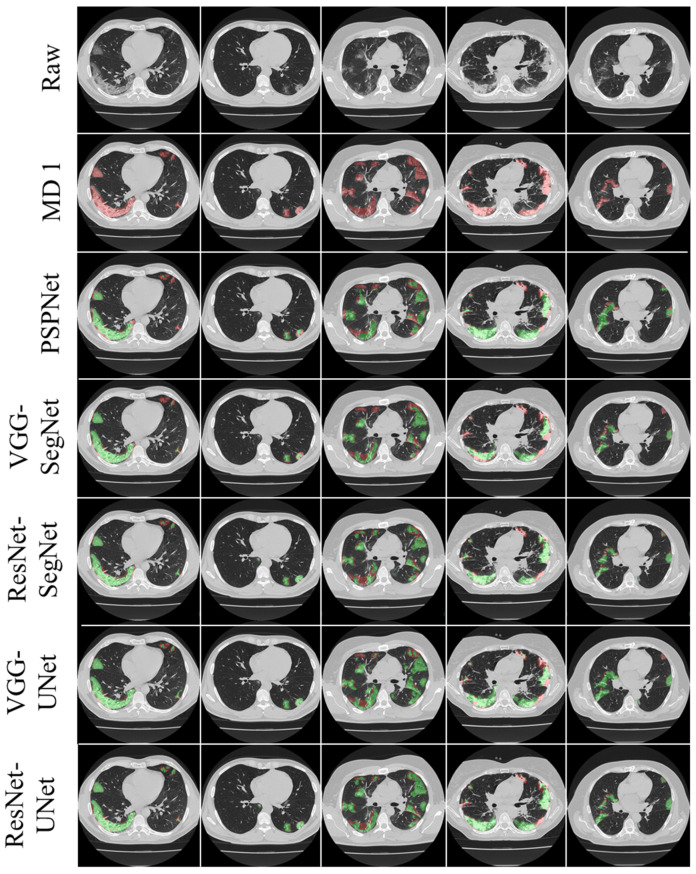
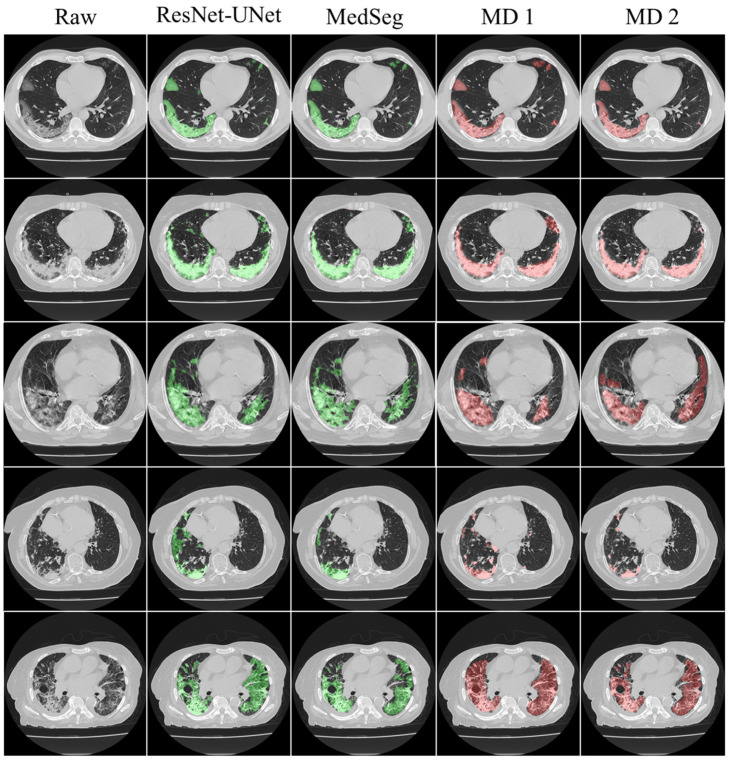
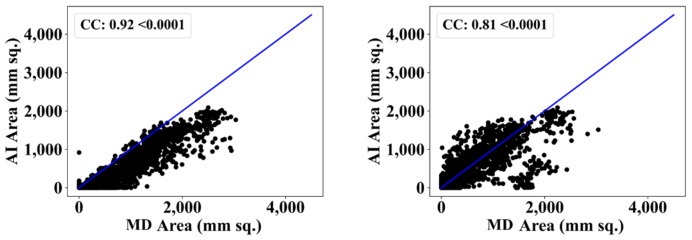
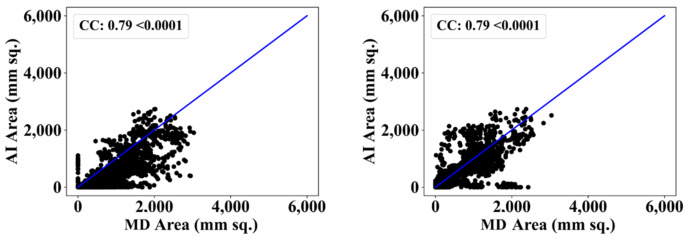
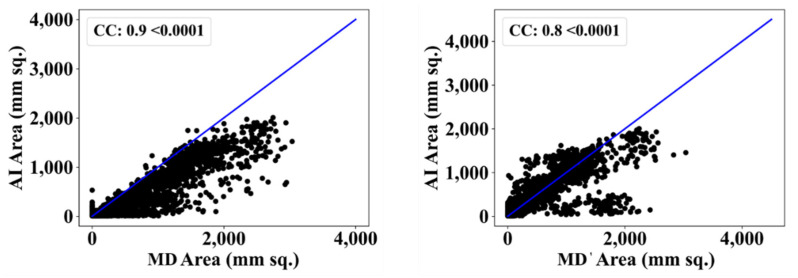
Background: COVID-19 is a disease with multiple variants, and is quickly spreading throughout the world. It is crucial to identify patients who are suspected of having COVID-19 early, because the vaccine is not readily available in certain parts of the world. Methodology: Lung computed tomography (CT) imaging can be used to diagnose COVID-19 as an alternative to the RT-PCR test in some cases. The occurrence of ground-glass opacities in the lung region is a characteristic of COVID-19 in chest CT scans, and these are daunting to locate and segment manually. The proposed study consists of a combination of solo deep learning (DL) and hybrid DL (HDL) models to tackle the lesion location and segmentation more quickly. One DL and four HDL models—namely, PSPNet, VGG-SegNet, ResNet-SegNet, VGG-UNet, and ResNet-UNet—were trained by an expert radiologist. The training scheme adopted a fivefold cross-validation strategy on a cohort of 3000 images selected from a set of 40 COVID-19-positive individuals. Results: The proposed variability study uses tracings from two trained radiologists as part of the validation. Five artificial intelligence (AI) models were benchmarked against MedSeg. The best AI model, ResNet-UNet, was superior to MedSeg by 9% and 15% for Dice and Jaccard, respectively, when compared against MD 1, and by 4% and 8%, respectively, when compared against MD 2. Statistical tests—namely, the Mann−Whitney test, paired t-test, and Wilcoxon test—demonstrated its stability and reliability, with p < 0.0001. The online system for each slice was <1 s. Conclusions: The AI models reliably located and segmented COVID-19 lesions in CT scans. The COVLIAS 1.0Lesion lesion locator passed the intervariability test.
新型冠状病毒肺炎(COVID-19)是一种具有多种变体的疾病,正在全球迅速传播。尽早识别疑似患有COVID-19的患者至关重要,因为在世界某些地区疫苗尚未广泛可得。方法:在某些情况下,肺部计算机断层扫描(CT)成像可作为逆转录聚合酶链反应(RT-PCR)检测的替代方法用于诊断COVID-19。肺部区域磨玻璃影的出现是胸部CT扫描中COVID-19的一个特征,而手动定位和分割这些磨玻璃影具有挑战性。本研究提出将单深度学习(DL)模型和混合深度学习(HDL)模型相结合,以更快地解决病变定位和分割问题。一位放射科专家训练了一个DL模型和四个HDL模型,即PSPNet、VGG-SegNet、ResNet-SegNet、VGG-UNet和ResNet-UNet。训练方案对从40名COVID-19阳性个体的一组图像中选出的3000幅图像采用五折交叉验证策略。结果:所提出的变异性研究使用了两名训练有素的放射科医生的描记图作为验证的一部分。将五个人工智能(AI)模型与MedSeg进行了基准测试。最佳AI模型ResNet-UNet与MD 1相比,在Dice和Jaccard指标上分别比MedSeg高出9%和15%,与MD 2相比,分别高出4%和8%。统计检验,即曼-惠特尼检验、配对t检验和威尔科克森检验,证明了其稳定性和可靠性,p<0.0001。每幅切片的在线系统用时<1秒。结论:AI模型在CT扫描中可靠地定位和分割了COVID-19病变。COVLIAS 1.0病变定位器通过了变异性测试。