Vigneswari Sevakumaran, Chai Jun Meng, Kamarudin Khadijah Hilmun, Amirul Al-Ashraf Abdullah, Focarete Maria Letizia, Ramakrishna Seeram
Faculty of Science and Marine Environment, Universiti Malaysia Terengganu, Kuala Terengganu, Malaysia.
School of Biological Sciences, Universiti Sains Malaysia, George Town, Malaysia.
Front Bioeng Biotechnol. 2020 Oct 27;8:567693. doi: 10.3389/fbioe.2020.567693. eCollection 2020.
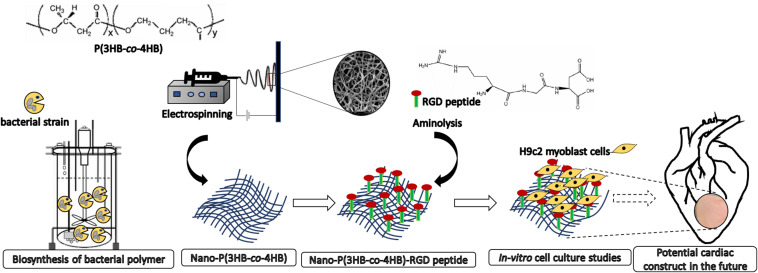
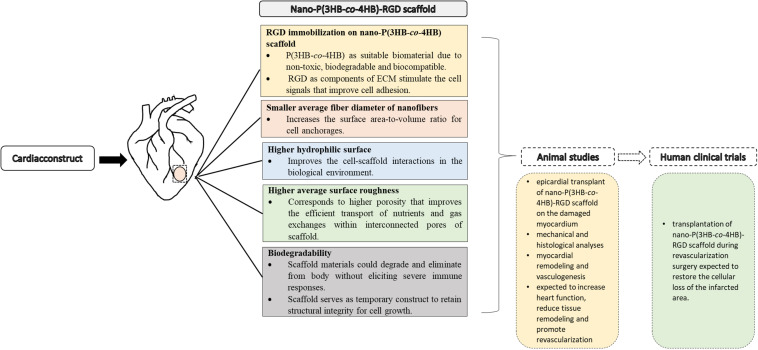
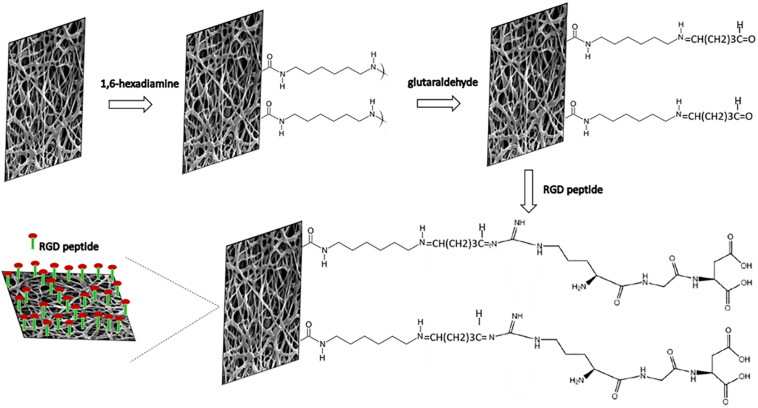
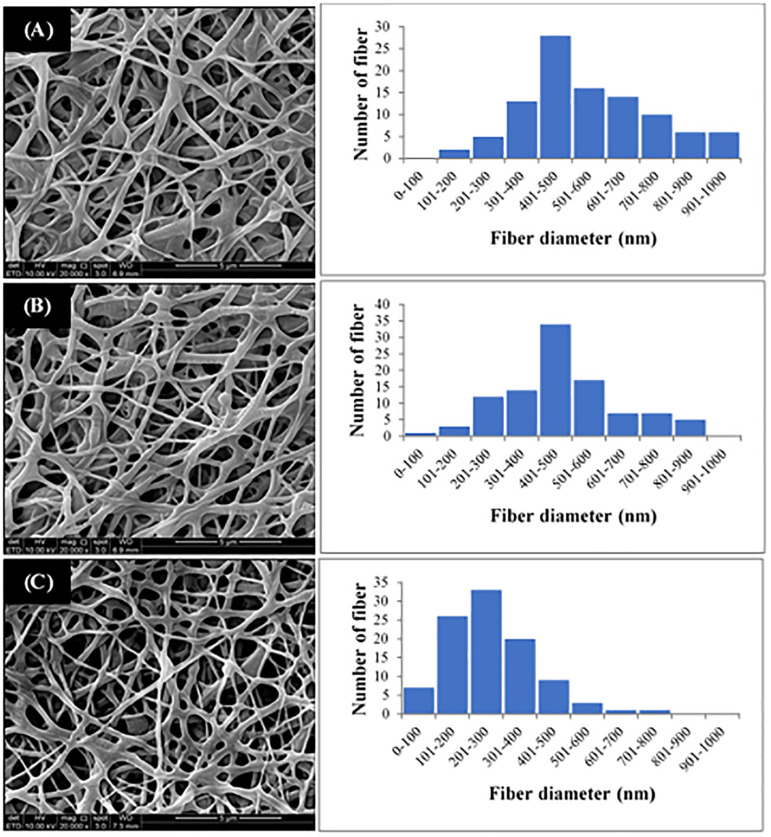
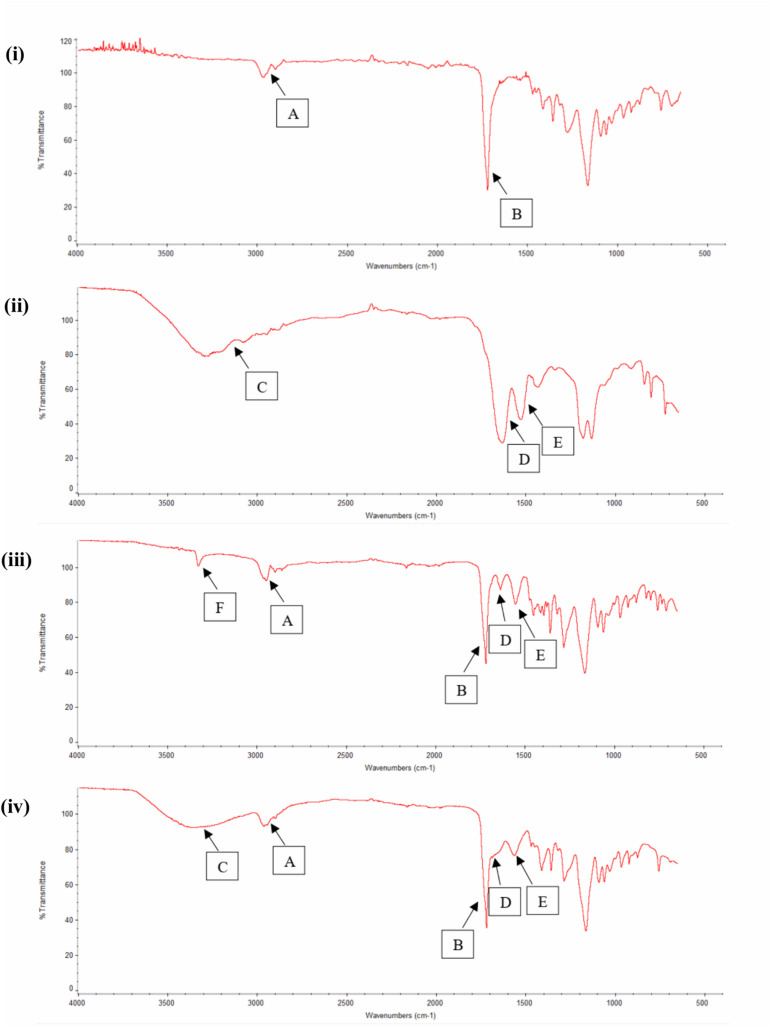
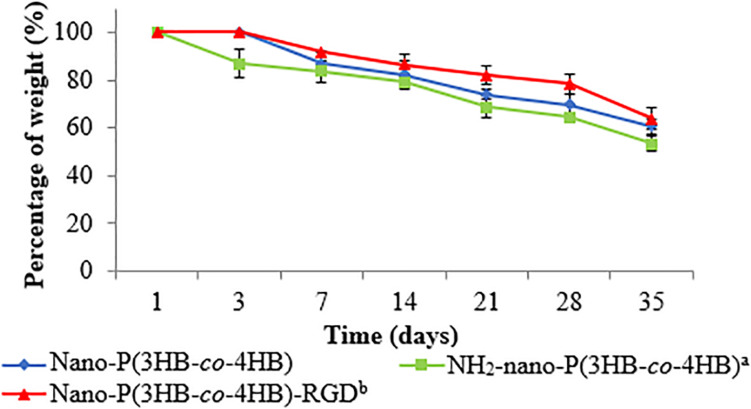
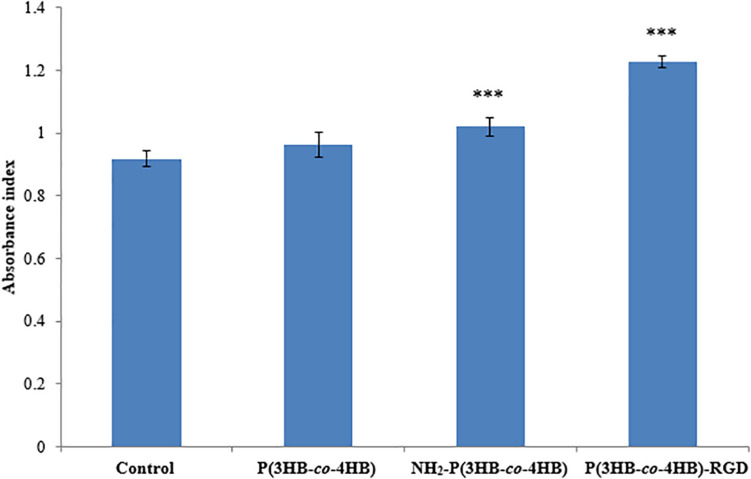
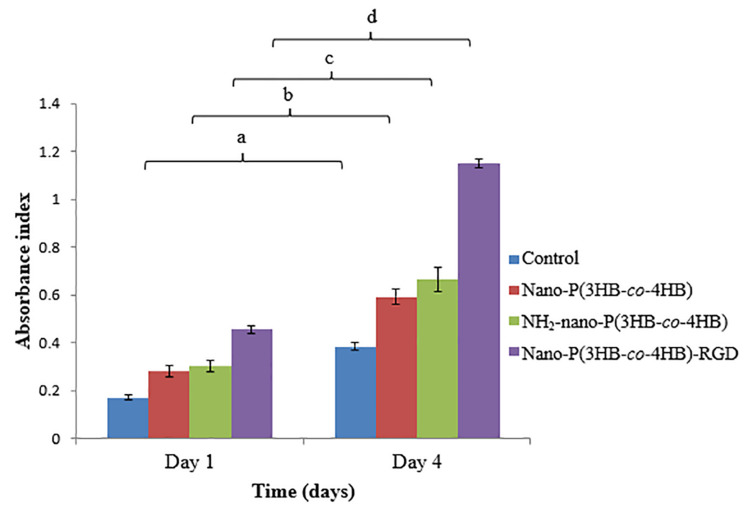
Biomaterial scaffolds play crucial role to promote cell proliferation and foster the regeneration of new tissues. The progress in material science has paved the way for the generation of ingenious biomaterials. However, these biomaterials require further optimization to be effectively used in existing clinical treatments. It is crucial to develop biomaterials which mimics structure that can be actively involved in delivering signals to cells for the formation of the regenerated tissue. In this research we nanoengineered a functional scaffold to support the proliferation of myoblast cells. Poly(3-hydroxybutyrate--4-hydroxybutyrate) [P(3HB--4HB)] copolymer is chosen as scaffold material owing to its desirable mechanical and physical properties combined with good biocompatibility, thus eliciting appropriate host tissue responses. In this study P(3HB--4HB) copolymer was biosynthesized using USMAA1020 transformant harboring additional PHA synthase gene, and the viability of a novel P(3HB--4HB) electrospun nanofiber scaffold, surface functionalized with RGD peptides, was explored. In order to immobilize RGD peptides molecules onto the P(3HB--4HB) nanofibers surface, an aminolysis reaction was performed. The nanoengineered scaffolds were characterized using SEM, organic elemental analysis (CHN analysis), FTIR, surface wettability and their degradation behavior was evaluated. The cell culture study using H9c2 myoblast cells was conducted to assess the cellular response of the engineered scaffold. Our results demonstrated that nano-P(3HB--4HB)-RGD scaffold possessed an average fiber diameter distribution between 200 and 300 nm, closely biomimicking, from a morphological point of view, the structural ECM components, thus acting as potential ECM analogs. This study indicates that the surface conjugation of biomimetic RGD peptide to the nano-P(3HB--4HB) fibers increased the surface wettability (15 ± 2°) and enhanced H9c2 myoblast cells attachment and proliferation. In summary, the study reveals that nano-P(3HB--4HB)-RGD scaffold can be considered a promising candidate to be further explored as cardiac construct for building cardiac construct.
生物材料支架在促进细胞增殖和培育新组织再生方面发挥着关键作用。材料科学的进步为新型生物材料的产生铺平了道路。然而,这些生物材料需要进一步优化才能有效地应用于现有的临床治疗中。开发能够模仿可积极参与向细胞传递信号以形成再生组织的结构的生物材料至关重要。在本研究中,我们通过纳米工程制备了一种功能性支架以支持成肌细胞的增殖。聚(3-羟基丁酸酯-4-羟基丁酸酯)[P(3HB-4HB)]共聚物因其理想的机械和物理性能以及良好的生物相容性而被选作支架材料,从而引发适当的宿主组织反应。在本研究中,使用携带额外PHA合酶基因的USMAA1020转化体生物合成了P(3HB-4HB)共聚物,并探索了用RGD肽进行表面功能化的新型P(3HB-4HB)电纺纳米纤维支架的活力。为了将RGD肽分子固定在P(3HB-4HB)纳米纤维表面,进行了氨解反应。使用扫描电子显微镜(SEM)、有机元素分析(CHN分析)、傅里叶变换红外光谱(FTIR)对纳米工程支架进行了表征,并评估了其表面润湿性和降解行为。使用H9c2成肌细胞进行细胞培养研究以评估工程支架的细胞反应。我们的结果表明,纳米P(3HB-4HB)-RGD支架的平均纤维直径分布在200至300纳米之间,从形态学角度来看,与细胞外基质(ECM)结构成分极为相似,因此可作为潜在的ECM类似物。本研究表明,仿生RGD肽与纳米P(3HB-4HB)纤维的表面结合增加了表面润湿性(15±2°),并增强了H9c2成肌细胞的附着和增殖。总之,该研究表明纳米P(3HB-4HB)-RGD支架有望作为构建心脏结构的心脏构建物被进一步探索。